 Follow Us on Google News
 Follow Us on Google Discover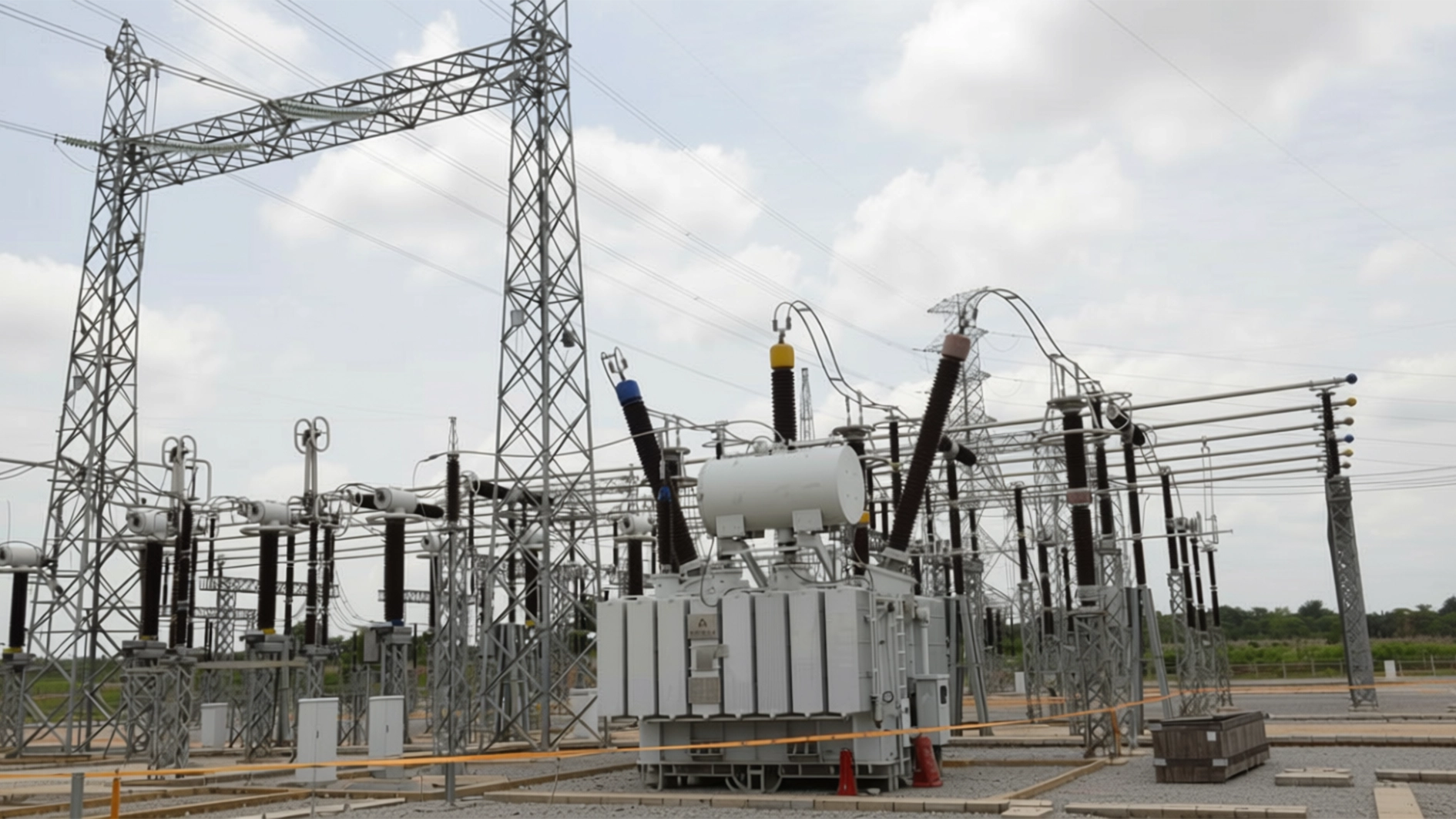
Nigeria electricity distribution companies (DisCos) received only 2,830 megawatts (MW) of electricity yesterday as persistent gas shortages forced limitations across power plants, throwing most homes and industries into darkness.
However, Nigeria will add more than 200MW of solar electricity to its power system as the Federal Government moves ahead with over 1,000 mini-grid projects under a nationwide rural electrification programme.
Managing Director of the Rural Electrification Agency (REA), Abba Aliyu, disclosed yesterday in Abuja during a visit by the National Judicial Institute (NJI) that the projects form part of a $750 million public programme
Operational data from the Nigerian Independent System Operator (NISO) showed that generation on the grid stood at 3,940.53MW about 05:00 hours on March 5, 2026.
Between 06:00 and 08:00 hours, many generation units were forced offline because of inadequate gas supply, resulting in an additional 292MW drop in available generation.
The reduced output sharply constrained electricity available for distribution companies, leaving the 11 DisCos with a combined load allocation of 2,830MW, according to system dispatch data. The generation was as low as 1,490MW at about 6.00 p.m.

The largest share of electricity went to Abuja Electricity Distribution Company (AEDC), which received 490MW, followed by Ikeja Electric (IE) with 484MW and Eko Electricity Distribution Company (EEDC) with 413MW.
Other allocations included 306MW to Ibadan DisCo, 207MW to Benin DisCo and 198MW to Enugu DisCo.
Further down the allocation list were 178MW to Port Harcourt DisCo, 173MW to Kano DisCo, 161MW to Kaduna DisCo, 144MW to Jos DisCo, and 76MW to Yola DisCo.
The limited supply, which shows the severity of Nigeria’s gas shortage and which continues to cripple electricity production despite the country’s vast natural gas reserves, is coming at a time when the crisis in the Middle East is making gas export more attractive, especially as prices skyrocketed globally but are regulated in Nigeria to stay low.
According to NISO, thermal power plants across the country require about 1,588.61 million standard cubic feet (MMSCF) of gas per day to operate at optimal capacity. However, the plants received only 652.92 MMSCF, representing about 40 per cent of the required supply.
This supply gap has significantly restricted generation from gas-fired plants, which account for the majority of electricity production on the national grid.
ALIYU disclosed that the solar initiative is expected to mobilise about $1.1 billion in private sector investment while deploying 1,350 mini-grids across Nigeria, including 250 interconnected systems that will feed power into existing electricity networks.
He described the initiative as the first large-scale, structured effort by the Federal Government to address the country’s long-standing electricity deficit.
“For decades, successive governments promised to solve Nigeria’s electricity challenge, yet the narrative hardly changed,” Aliyu said. “Today we are implementing one of the largest publicly funded renewable electricity programmes in the world.”
According to him, the projects will inject more than 200MW of additional electricity through interconnected mini-grids while extending off-grid supply to rural and underserved communities.
Aliyu noted that the programme marks the largest concentration of mini-grid development within an African country, with more than 1,000 installations underway.
The agency is also expanding its Energising Education Programme, which provides solar-powered electricity to tertiary institutions.
He said 15 projects have already been completed, including a 12MW solar power system at the University of Maiduguri, supplying electricity to the university, its teaching hospital and surrounding infrastructure.
Other institutions that have benefited from the scheme include the Federal University Oye-Ekiti, the Federal University of Agriculture Akure, and universities in Nasarawa, Kogi, Uyo, Port Harcourt and Calabar.
The scheme may also move the National Judicial Institute (NJI) off the national grid after the institute formally requested solar power support from REA.
Administrator of the NJI, Justice Babatunde Adejumo, said the institute, located within a rural area of the Federal Capital Territory (FCT), houses nearly 900 staff and their families within its premises.
He requested solar infrastructure to power the institute’s facilities, including staff quarters, hostels, a library, a developing ICT laboratory and a planned medical clinic.

