 Follow Us on Google News


 Follow Us on Google Discover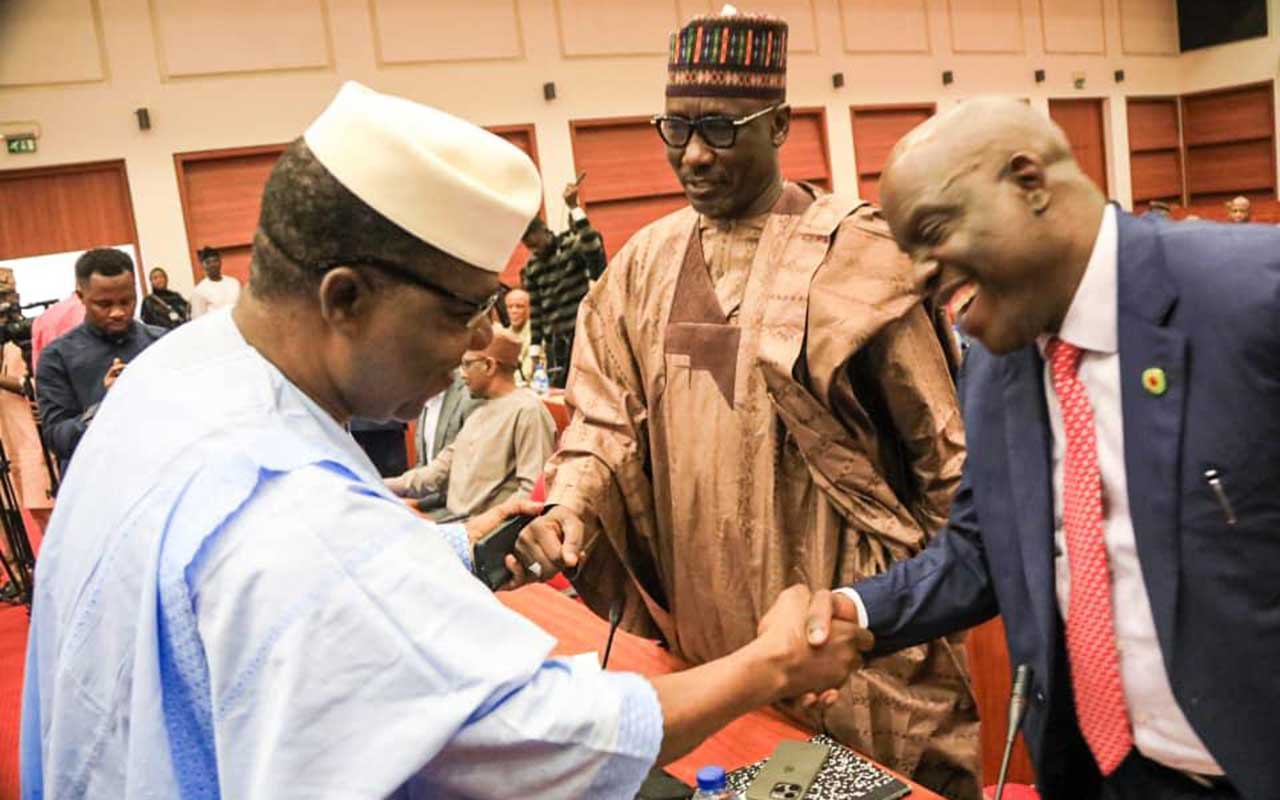

• Kyari: We are not thieves, most problems in petroleum industry not NNPC’s fault
• Executive, National Assembly settle for live coverage of probe panel
• Local refineries need protective measures from regulators, says Dangote
Smarting from increasing allegations of economic sabotage in the petroleum industry, the Senate has raised questions over the $1.5 billion approved in 2021 under the administration of former President Muhammadu Buhari for the turn-around maintenance of the Port Harcourt Refinery with little or no result.
[ad]
Major stakeholders in Nigeria’s oil and gas industry yesterday, vowed to speak up on the dirty deals, regulatory breaches and other malpractices in the sector that had defied solutions over years as the Senate opened another round of probe. They demanded that the investigation should be conducted on live television broadcasts so that Nigerians would hear and know the truth about the happenings in the industry.
The upper chamber lamented that it is “unfair and wrong to treat government businesses or public companies as an orphan while private businesses were flourishing and thriving.”
The Senate Leader and Chairman, Senate ad-hoc Committee assigned to investigate the alleged economic sabotage in the Nigerian petroleum industry, Opeyemi Bamidele, raised the questions at a session with stakeholders in the industry at the National Assembly Complex, Abuja yesterday.
The session was attended by the Minister of Finance and Coordinating Minister of the Economy, Mr. Wale Edun; Group Managing Director, Nigerian National Petroleum Corporation Limited (NNPCL), Mele Kyari; Chief Executive, Nigerian Upstream Petroleum Regulatory Commission (NUPRC), Mr. Gbenga Komolafe and the Chief Executive Office, Nigerian Midstream and Downstream Petroleum Regulatory Authority (NMDPR), Mr. Farouk Ahmed, among others.
Despite the huge investment, the government-owned refinery is yet to function effectively, a situation that compelled the country to depend almost entirely on the importation of petroleum products.

Bamidele observed that the federation “is undergoing a truly challenging period,” pointing out that the distribution and supply of refined petroleum products “has been irregular and problematic in the recent history of our fatherland.
[ad]
“We also have at hand a grievous issue of national concern that directly borders on the importation of hazardous petroleum products and dumping of substandard diesel into the country.”
While insisting that nobody will be untouchable, Bamidele said the task of ridding the petroleum industry of malfeasance “is urgent and must be carried out in the spirit of nationalism and patriotism. We are ready to carry it out with all senses of honour and responsibility.”
Responding, NNPCL boss, Kyari said most problems in the country’s petroleum industry have nothing to do with his organization, adding that NNPC is protecting the country’s interest.
“NNPCL is loyal and faithful to the country. Most problems in the petroleum industry have nothing to do with NNPCL. We are faithful and loyal to the economic interests of this country. We are not criminals. We are not thieves, but we will protect our dignity and honour,” he said.
In his remarks, Edun said the increase in the crude would stabilise the country’s foreign exchange market while expressing confidence in the leadership of the ad-hoc committee to conduct an unbiased and impartial investigation.
The Group Strategy Officer of Dangote Refinery, Aliyu Suleiman, in his presentation, said: “We would like to basically ask three questions that we think we should look at, ask the committee and also ask Nigerians. The first question is do local refineries deserve protection? The second question is should Nigeria protect its infant industries to improve the investment? And the third is should local refineries have preferential access to Nigeria?
[ad]
“Those really are the questions that we want this committee to consider. On the first one, as I’ve said, we produced five million tons of products, but of those five million tons, about 90 per cent of it had to be exported.
“While at the same time, products we were producing had been imported into Nigeria. We find ourselves competing against Russian products that have been produced with oil that is valued at $60 and those products are being sent in large quantities into Africa to compete with products that are produced in refineries that buy crude at $90.
“We don’t think this will be a fair competitive environment and I think on that, even on that when you have such unfair competition, it is normal to put protective measures.
“Right now, we bought about 50 million barrels of crude. About 60 per cent of that comes from NNPC, and we are thankful to them for their support. And we’re grateful to them for their support. Essentially, all we are asking for, and let’s be very clear, we are happy to pay fair prices. We don’t complain about that.”
[ad]

