 Follow Us on Google News
 Follow Us on Google Discover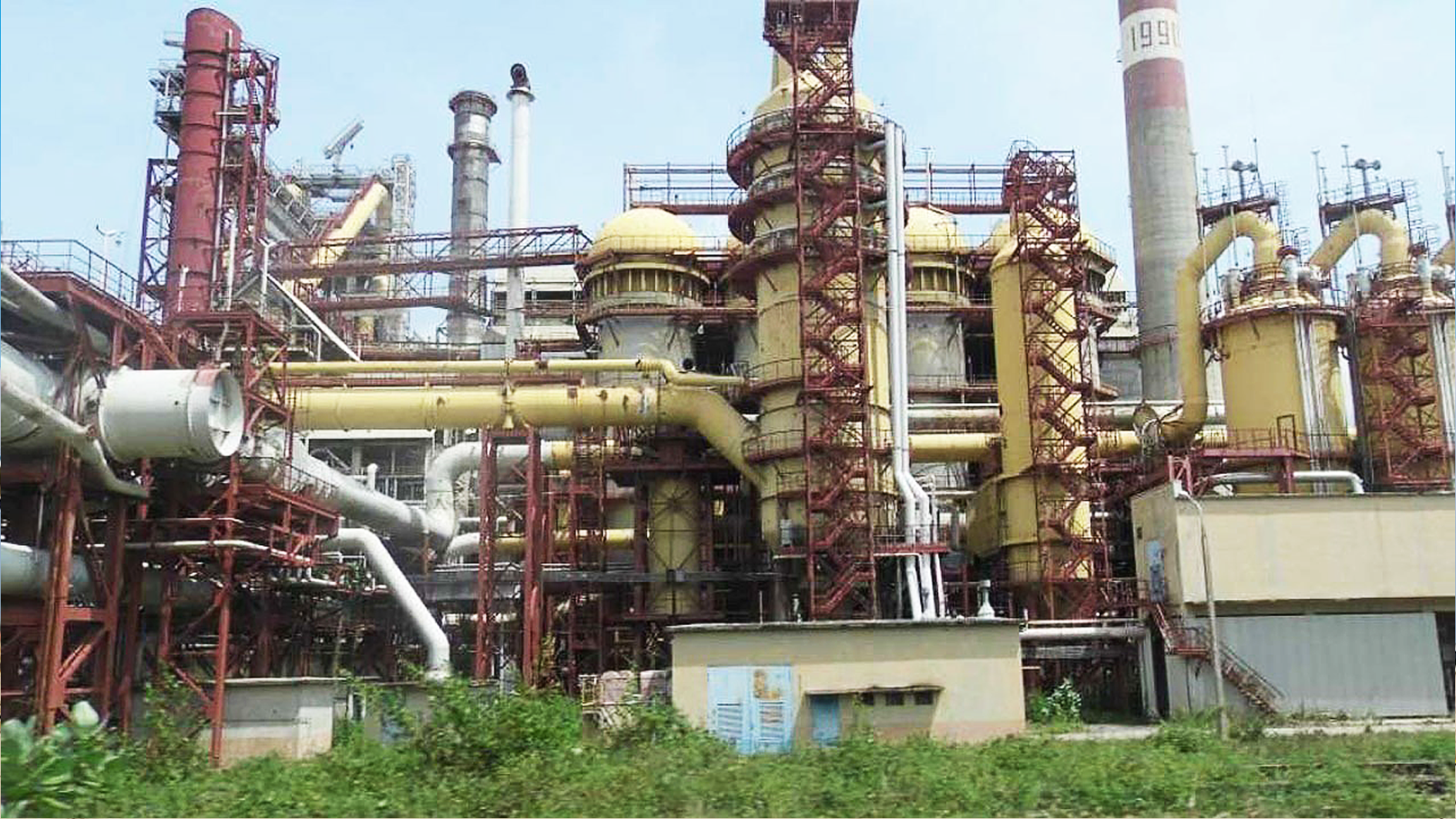
Nearly 47 years after Nigeria launched its flagship integrated steel project, with investments estimated at over $6 billion according to development economist and former Presidential Adviser, Dan Kunle, the Ajaokuta Steel Company Limited (ASCL) has yet to produce commercial steel, renewing scrutiny of decades of public spending, policy reversals and repeated promises of revival.
In a second open letter addressed to the President, Kunle challenged successive administrations’ handling of the projects, contending that after 47 years, Nigeria’s flagship steel complex has remained largely unproductive despite decades of public investment, policy reversals, rehabilitation plans and repeated assurances of imminent revival.
He argued that the central question confronting government is no longer how to revive Ajaokuta but whether the current corporate structures should continue to exist.
Kunle urged President Bola Tinubu to take what he described as a “final decision” on the future of the Ajaokuta Steel Company Limited (ASCL) and the National Iron Ore Mining Company (NIOMCO), arguing that the country had continued to commit public resources to assets that have never delivered commercial steel production.
The intervention reopens debate over one of Nigeria’s most expensive and longest-running industrial projects at a time the Federal Government is pursuing economic reforms, privatisation and industrialisation.
Although official estimates of total public expenditure on Ajaokuta vary, Kunle said the project had consumed over $6 billion in investments over several decades, in addition to the Federal Government’s about $490 million settlement paid following arbitration arising from the failed Global Steel Holdings concession.

According to him, despite the scale of investment, the integrated steel complex has yet to commence sustained commercial production.
Kunle also questioned the economic rationale for continued budgetary allocations to maintain facilities that had yet to achieve their original mandate.
His argument mirrors a broader concern among economists over the opportunity cost of prolonged public financing of non-performing state-owned enterprises, particularly at a period of fiscal constraints.
Rather than another rehabilitation programme, Kunle proposed that the government should first undertake a comprehensive commercial valuation of every asset owned by Ajaokuta and NIOMCO through the Bureau of Public Enterprises (BPE).
He recommended that engineers, estate surveyors, accountants, lawyers and environmental experts independently value production facilities, land, housing estates, utilities, workshops, hospitals, warehouses and other infrastructure before any policy decision is taken.
After such a valuation, he called for the dissolution of both entities in their present forms and the separation of their various business units for transparent privatisation.
He listed incomplete railway corridors linking Ajaokuta to major raw material sources and ports, unfinished standard gauge connections, and the non-operationalisation of logistics infrastructure as major impediments to integrated steel production.
Kunle urged President Tinubu to apply the same political resolve demonstrated in fuel subsidy removal, exchange rate liberalisation and tax reforms to the steel sector.

