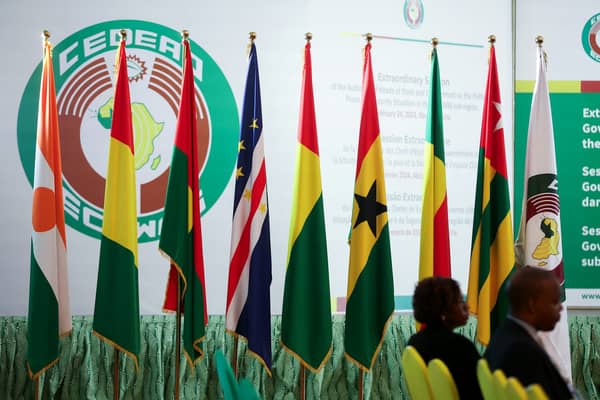
In an endeavour to foster seamless regional integration and bolster economic activities, the Economic Community of West African States (ECOWAS) Commission has commenced the third iteration of its information and awareness campaign, specifically targeting small-scale cross-border traders operating along the dynamic Abidjan-Lagos corridor.
The sensitisation drive, jointly developed by the Human Development and Social Affairs Department and the Economic Affairs and Agriculture Department, is slated to run from June 30 to July 15, 2025.
This latest initiative builds upon the foundational successes of the 2023 and 2024 editions, which focused on the Tema-Paga and Dakar-Banjul-Bissau corridors, respectively.
The core objective remains to simplify and facilitate cross-border trade for small-scale merchants, primarily by enhancing their understanding of the various regional texts governing commerce and related community initiatives.
Beyond mere regulation, the campaign is designed to spotlight strides made by ECOWAS across the sub-region in advancing women’s rights, particularly within the trading sphere.
According to ECOWAS, this particular focus is critical in its aims to lay the groundwork for a robust regional trade facilitation programme specifically tailored for women and young people, who collectively form the backbone of small-scale cross-border commerce.
The 2025 iteration of the campaign spans the entire Abidjan-Lagos axis, commencing its journey in Abidjan from June 30 to July 2, before proceeding to Lomé (July 3-6), Cotonou (July 6-9), and culminating in Lagos from July 10 to 14, 2025.
The Commission explained that each stop is planned to include a series of high-impact engagements. These encompass official launching ceremonies designed to galvanise support from authorities and key stakeholders, public town hall meetings dedicated to dissecting ECOWAS trade policies and strategies, and intensive training workshops specifically focused on women’s rights within the complex dynamics of cross-border trade.
Furthermore, the programme integrates practical site visits to local markets, pivotal trading hubs, and women-run small and medium-sized enterprises (SMEs). These on-the-ground observations are vital for assessing immediate challenges and identifying tangible opportunities for traders.
The campaign also prioritises direct engagement with administrative and local authorities, serving as a critical forum for lobbying efforts to cultivate an environment more conducive to the growth of commercial activities by small-scale women traders.
Through these interactions, ECOWAS aims to gather pertinent information to enhance its database on women entrepreneurs, while also assessing the practical implementation status of existing mechanisms and infrastructures developed to facilitate the flow of agricultural products across borders.