 Follow Us on Google News


 Follow Us on Google Discover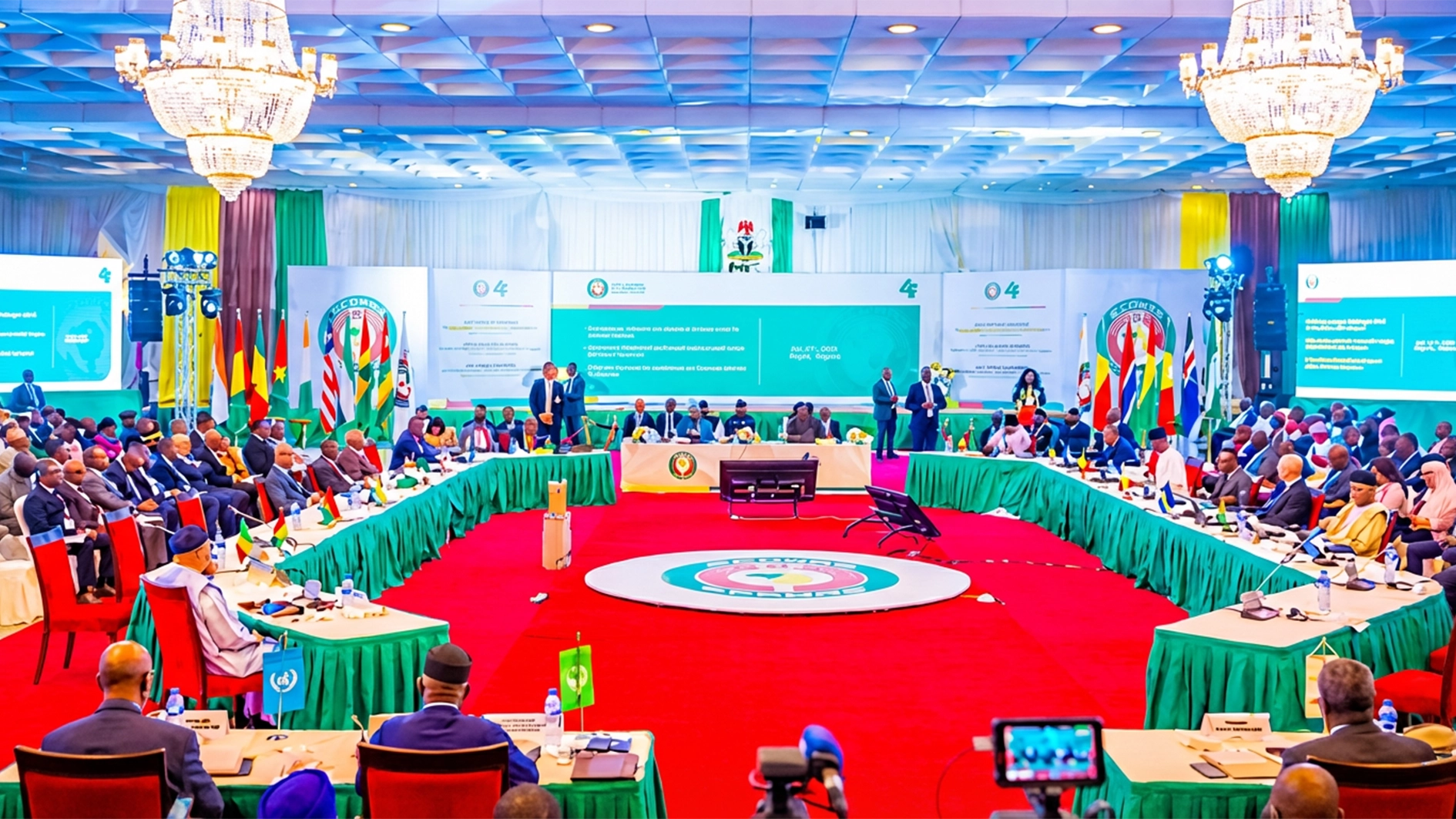
* Expresses need to ratify AU Protocol on Free Movement of People
WORRIED by the lingering xenophobic attacks in South Africa against non-citizens, the ECOWAS Parliament has directed its committee on Political Affairs to wade into the matter and present proposals to the plenary for adoption.
Speaking yesterday during the ongoing First Ordinary Session of the Parliament for the year, the regional legislature also directed the committee to look into the prevailing violence extremism in the Sahel, especially in Mali and Burkina Faso. The house feared that although both countries may have withdrawn their membership from the Economic Community of West African States (ECOWAS), their proximities to ECOWAS member states calls for concern.
The Parliament warned that failure to collaborate with Mali and Burkina Faso to tackle insecurity will definitely affect the regional bloc, especially countries that share boundaries with the affected countries.
They equally called for ratification of African Union Protocol on Free Movement of People, decrying the failure of the continental government to rise to the situation.
Still on xenophobia, the Parliament urged every country to summon South African High Commissioner in their respective countries over the killings and harassment, describing as disappointing, the fact that South Africa easily forgot the support of African countries during its trying period.

“We stood by them in the fight against apartheid. It is disappointing that the same country we all supported have turned around to harass citizens of the same countries that helped them. This is something we have to discuss”, the parliamentarians said.
In his presentation titled, ‘Accountability, Justice, Free Movement and Regional Solidarity’, the Third Deputy Speaker of the Parliament, Alexander Kwamena Afenyo-Markins, held that the killing of West African citizens, the xenophobic attacks and the persistent violation of the protocol on free movement of persons and goods within the African continent require direct and profound importance.
Standing on the Rule 71 of the ECOWAS Parliament, he warned that a regional community that cannot protect its citizens in transit has not yet earned its name.
“Ghanaians, Nigerians, Zimbabweans, Ethiopians and other African nationals have been attacked, looted, displaced and killed. The Nigerian consulate in Johannesburg has confirmed the death of two citizens this year. An Ethiopian national was shot dead at a busy intersection. Ghanaian shops have been shattered under threat.
“Vigilante groups have stopped people outside hospitals and schools. Footage of foreign nationals being beaten and subjected to verbal assault has circulated on every street across this continent. Ghana’s foreign minister, Honourable Samuel Kutetra-Blackburn, summoned South Africans acting as hostages in traffic over a documented incident in which a Ghanaian legal resident was confronted and told to leave and fix his country.
“Nigeria similarly summoned South Africans envoy in Abuja, stressing that the situation is deteriorating and that earlier engagements have not yielded any outcome.”
The Deputy Speaker said that although S/African government had warned against citizens taking laws into their hands but “words delivered from a ceremonial platform do not address a single perpetrator.”
Adding: “Condemnations, however eloquent, do not bring a single attacker before an attacker. Calls to uphold the law raise questions when the perpetrators of gun violence, assault, looting, assault and metal work freely their faces visible in video that every African has seen.”
He noted that the Freedom Day speech of President Cyril Ramaphosa described African nationals as guests, whose welcome is conditioned on respectful South African homes, a statement that provided militant groups with conditional hospitality.
“A government cannot simultaneously condemn mob justice and deploy the language that mobs use to justify their actions”, Afenyo-Markins said.
They held that South Africa must move from speeches to action and that the Police Service, National Prosecuting Authority and the Independent Police Investigating Directorate must investigate every documented incident.
“The perpetrators, many of whose faces are known, must be identified, arrested, charged and prosecuted for mischief without option of bail, without selectivity and without impunity.
“South Africa was liberated by African solidarity. Frontlines paid for enormous costs, economic, political, and military, to bring apartheid to its knees. West African nationals stood with the liberation movement for decades.
To repay their solidarity with mob violence against African nationals is a betrayal, not only of the victims, but of every African, who sacrificed so that South Africa could be free.”
In his submission, he recommended an establishment of a special committee on the safety and protection of ECOWAS citizens abroad; that the house passes a resolution on the agency of African Union movement protocol rights and that West African parliamentary action plan on free movement and border governance be developed.
He also suggested that the house transmit a formal statement on deep concerns to South African Parliament, its government and the African Commission on Human Rights and Freedom.

