 Follow Us on Google News


 Follow Us on Google Discover
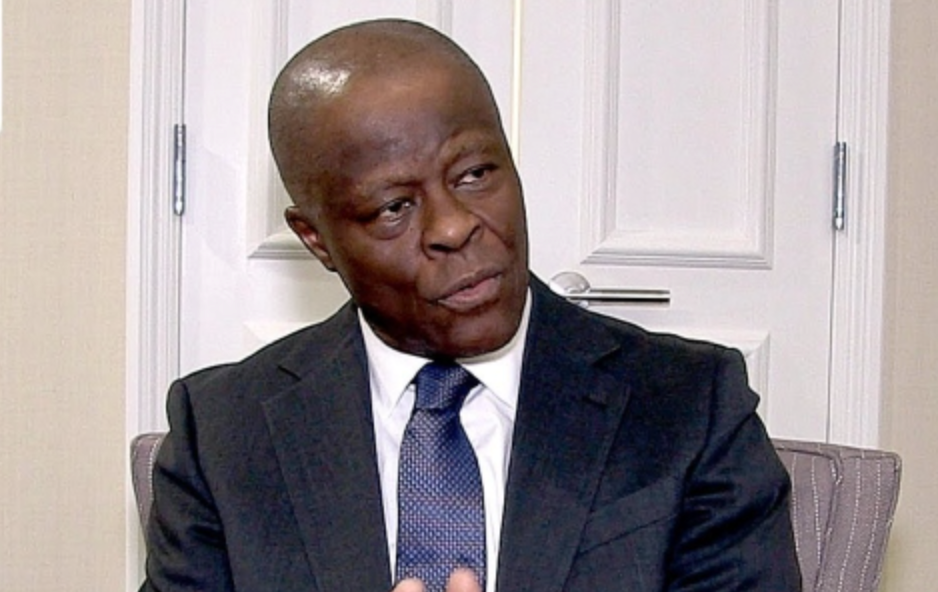
Don’t sacrifice Nigeria’s education system on IMF altar, ASUU warns Tinubu
The Minister of Finance and Coordinating Minister of the Economy, Wale Edun, has identified inflation as one of the biggest challenges in the efforts to stabilise the Nigerian economy.
[ad]
However, the Academic Staff Union of Universities (ASUU), Ibadan Zone, yesterday, charged President Bola Tinubu not to sacrifice the country’s educational system in blind obedience to the International Monetary Fund (IMF)-directed policies.
During a recent media interview, the minister also noted a resurgence of investor confidence in the economy following the measures adopted by the Federal Government.
Speaking on a wide range of issues concerning the economy, the minister, who expressed optimism over the country’s economic trajectory in 2025 and beyond, said projections provided by the IMF, the World Bank and other forecasters agreed on improved growth and retarded inflation, noting that this year, the issues around economic stability would be largely resolved.
He stated, “Perhaps the biggest issue with stabilising our economy is to reduce inflation and keep it low. We are clear that very significant progress will be achieved in this regard in the months ahead. If nothing else, we expect the downward path of fuel prices, a major element in stoking higher prices, to continue.”
Nigeria’s inflation has remained high for too long, fuelled by rising costs of food, energy and the fluctuating exchange rate.
Efforts by the Central Bank of Nigeria (CBN) to keep the inflation down by tightening the monetary policy rate could not yield much result, as inflation maintained an upwards trajectory. Throughout last year, the CBN consistently raised the interest rate, hitting 27.50 per cent in its efforts to reduce money supply and check rising inflation which hit 34.80 per cent in December 2024.

Experts had warned that rising inflation could not be checked using only monetary policy measures, insisting that fiscal authorities also need to step up their game as the major drivers of inflation such as high food and energy prices, especially fuel, were within the control of fiscal authorities.
The minister said it was wrong to see the economy in recession, as since the Tinubu administration took office at the end of May 2023 the economy has consistently grown and this growth is broad-based.
He said, “The latest data for output growth show the economy grew by just under 3.5 per cent between July and September 2024. Between January and September it grew at an average of 3.23 per cent.
“Data published by the National Bureau of Statistics (NBS) for Q3 2024 shows that 97 per cent of our economy continues to grow.”
On the next steps the government intends to take, the minister said the government at the moment was concerned about dealing with and addressing what he described as “our pain points” around enabling protection for vulnerable citizens, sharply improving food supply, reducing costs and supporting key sectors to grow even faster than they are presently doing.
THE Ibadan Zone of ASUU, in a briefing, drew the attention of the Federal Government to the inherent dangers in the proposed abolition of TETFund and its replacement with NELFUND in the proposed Public Benefit and Taxation Bill (PBTB) of 2024.
The zone comprises the University of Ibadan, University of Ilorin, Ladoke Akintola University of Technology, Ogbomoso; Osun State University, Osogbo; Kwara State University, Malete; and Emmanuel Alayande University of Education, Oyo.
[ad]
Led by the coordinator, Prof Oyegoke Oyebamiji, the zone noted that “TETFund, which is the brainchild of the union, has greatly helped in improving infrastructural development in Nigerian tertiary institutions, aided capacity building of members of academic staff, contributed immensely to promotion of cutting-edge researches, assisted in organising seminars, workshops and learned conferences both locally and internationally, helped in equipping scanty scientific and engineering laboratories, helped in purchasing books to stock obsolete libraries and useful in providing state-of-art e-libraries in Nigerian tertiary institutions, to mention but a few”
The chairpersons of ASUU in the zone stated that replacing TETFund with NELFUND was tantamount to cutting one’s nose to spite their face, adding that “it is retrogressive and inimical to the desirable future of the Nigerian public education system.”
ASUU noted that taking any percentage out of the Education Tax (Development Levy) to service other agencies not known to the TETFund Act 2011 is not only illegal but should not be allowed to stand especially when no visible priority has been given to funding public education through budgetary allocation by successive federal and state governments.
Oyebamiji stated that a “government that allocates seven per cent of budget to education, as against the 15 per cent in its manifesto during campaign and over 20 per cent recommended by UNESCO should be resisted from commercialising public education they had benefited so much from to be who and where they are in Nigeria and the rest of the world.”
While opposing any plan to destroy TETFund and its replacement with NELFUND, ASUU urged the Federal Government to reconsider this proposal and work to strengthen TETFund and ensure its continued relevance in supporting tertiary education in Nigeria.
[ad]

