 Follow Us on Google News
 Follow Us on Google Discover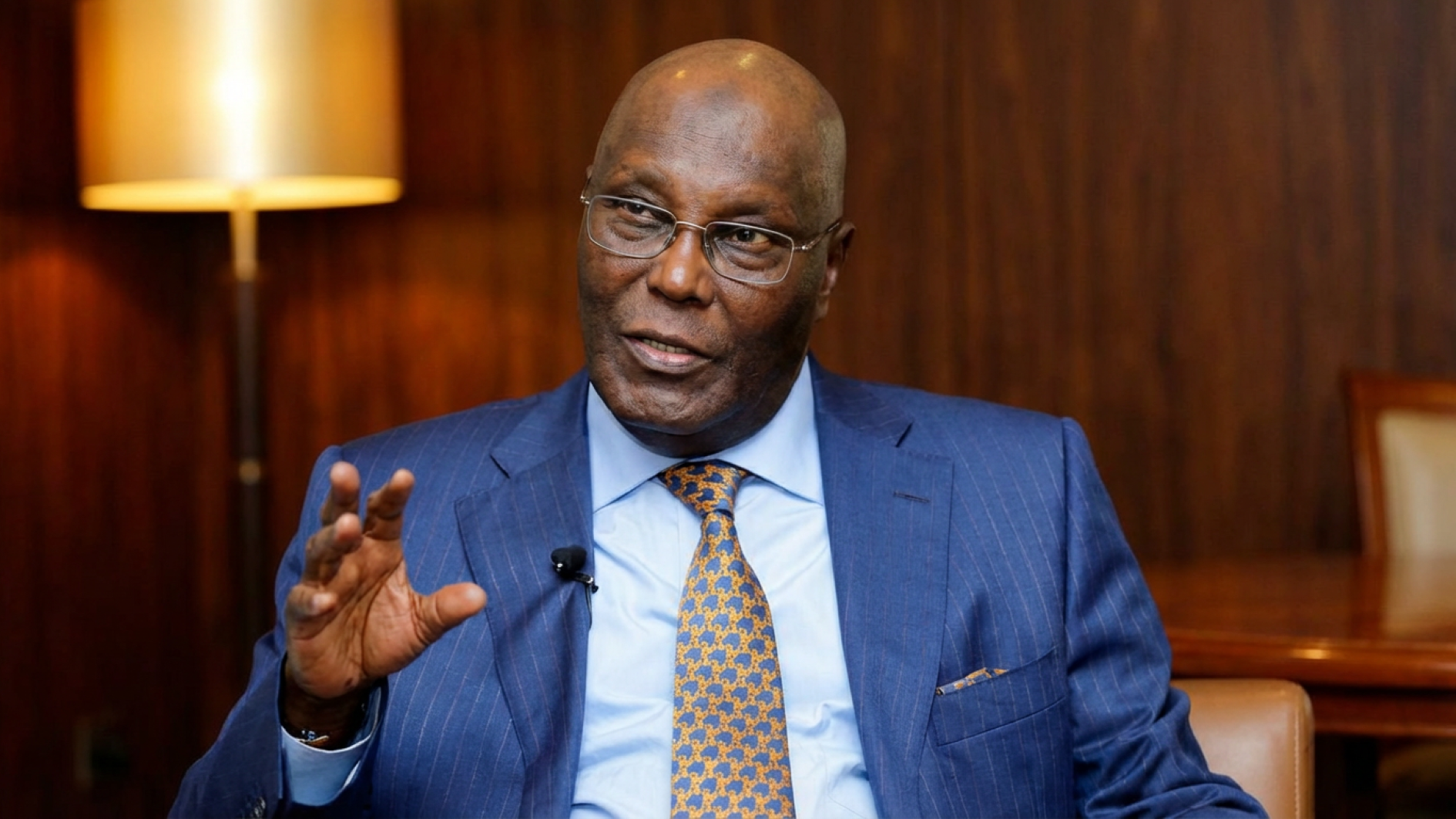
Atiku promises stable, affordable electricity by ADC govt
Nigeria’s electricity market is facing one of its worst liquidity crises in recent years as the federal government’s outstanding electricity subsidy obligation surged to N1.78 trillion within just 11 months, while debts owed to gas suppliers have risen to N986.45 billion, threatening the stability of power generation across the country.
This comes as the presidential candidate of the African Democratic Congress (ADC), Atiku Abubakar, has promised that an ADC-led government would provide stable and affordable electricity through a diversified and decentralised power generation strategy.
He made the pledge in a statement yesterday by his Senior Special Assistant on Public Communication, Phrank Shaibu, stating that Nigeria’s electricity challenges could only be solved by moving away from overdependence on large, centralised power plants and embracing multiple energy sources.
Official data exclusively obtained from the Nigerian Bulk Electricity Trading Plc (NBET) detailed the monthly subsidy and the indebtedness under the Gas Stabilisation Fund (GSSF), which was launched in 2022 as a strategic financial intervention mechanism to offset the upstream debts.
While the government’s current band programme relates to the legacy debts in the power sector, the electricity tariff shortfall from the frozen band B-E continues to climb as the federal government continues to default.

The figures show that between April 2025 and April 2026, electricity distribution companies (DisCos) were issued invoices worth N3.16 trillion. Of this amount, the federal government was expected to shoulder N1.86 trillion, representing 58.84 per cent of the total invoices, under the electricity tariff shortfall arrangement.
However, only N76.95 billion was released during the period, translating to a payment rate of just 4.14 per cent, leaving an unpaid subsidy bill of N1.782 trillion.
While the federal government had budgeted about N958 billion in 2026, poor budget implementation meant that the only payment made during the entire period in the power sector, as the data show, was the N76.95 billion released under the 2025 budget, which was applied solely to April 2025 invoices.
After that intervention, no further payments were recorded between May 2025 and April 2026, thereby allowing unpaid obligations to accumulate month after month.
In April 2025, the federal government’s tariff obligation stood at N175.35 billion, out of which N76.95 billion was paid, leaving N98.40 billion outstanding, which translates to a 43.88 per cent payment ratio.
From May 2025 onward, however, government payments completely stopped. Consequently, its obligation rose to N177.02 billion in May, the highest monthly figure during the review period, yet no payment was made.
Outstanding obligations subsequently stood at N162.13 billion in June, N163.71 billion in July, N153.32 billion in August, N143.12 billion in November, N123.32 billion in December, N126.48 billion in January 2026, N116.34 billion in February, N115.50 billion in March, and N108.40 billion in April 2026.
Quarterly data further shows that the outstanding tariff shortfall reached N437.54 billion in the second quarter of 2025, before rising to a peak of N458.76 billion in the third quarter. Although the shortfall moderated to N419.68 billion in the fourth quarter and N358.32 billion in the first quarter of 2026, the liabilities remained substantial, with another N108.40 billion recorded in the second quarter of 2026.
Ironically, the data suggest that the DisCos were gradually improving collections from customers, going by their DisCos’ Remittance Obligation. This arrangement put a cap on their minimum payment but still creates a market shortfall, which shows that only about 40 per cent of invoices are collected.
The weighted distribution recovery rate improved from 37.01 per cent in the second quarter of 2025 to 45.54 per cent in the first quarter of 2026, while total market remittances reached N1.22 trillion out of N1.30 trillion, leaving a comparatively smaller market outstanding balance of N83.08 billion.
This indicates that the growing liquidity challenge is increasingly driven by unpaid government obligations rather than solely by weak market collections.
The financial strain is also evident upstream in the gas supply segment, where unpaid invoices have continued to mount despite the strategic importance of natural gas to electricity generation.
Analysis of GSSF settlement records covering July 2022 to April 2026 shows that approved gas invoices amounted to N1.79 trillion, but actual payments reached only N801.36 billion, representing a settlement rate of 44.82 per cent. Consequently, the outstanding obligations to gas suppliers have climbed to N986.45 billion, equivalent to 55.18 per cent of approved invoices.
However, between July 2022 and August 2023, every approved gas invoice was settled in full, with suppliers receiving 100 per cent of their payments. Nevertheless, the pattern changed abruptly in September 2023, when N19.83 billion was approved, but nothing was paid.
Settlement performance continued to weaken through the remainder of 2023, falling to 48.39 per cent in October, 44.72 per cent in November and 42.76 per cent in December, with the crisis intensifying during the first quarter of 2024.
In January 2024, only N3.65 billion was paid against the approved invoices of N38.23 billion, representing a settlement rate of 9.54 per cent. February and March recorded similarly weak payment rates of 9.27 per cent and 9.32 per cent, despite approved invoices exceeding N128.64 billion during the quarter.
Though payment performance improved somewhat from April 2024, monthly settlements generally remained between 33 per cent and 42 per cent, leaving gas producers consistently underpaid.
The highest payment ratio after the crisis emerged in April 2025, when settlements rose to 67.63 per cent, largely due to a N21.29 billion tariff shortfall funded through the 2025 budget. However, the gains proved temporary.
Between May 2025 and April 2026, settlement rates largely fluctuated between 35 per cent and 45 per cent, with January 2026 recording 44.96 per cent, February 40.05 per cent, March 41.63 per cent and April 43.02 per cent. The twin debts underscore the deepening liquidity crisis confronting Nigeria’s electricity value chain.
Meanwhile, thermal power plants generate over 70 per cent of the country’s electricity and depend almost entirely on uninterrupted gas supplies. Consequently, persistent underpayment to gas producers reduces their ability to finance production, maintain pipelines and invest in new gas development, creating a direct risk to electricity generation.
At the same time, the accumulation of N1.78 trillion in tariff subsidies suggests the government’s current electricity pricing framework remains financially unsustainable, with public finances increasingly unable to bridge the gap between cost-reflective tariffs and consumer prices.
In the meantime, Atiku said an ADC administration under his leadership would prioritise electricity generation while expanding transmission infrastructure, improving distribution networks and encouraging private sector investment.
“An ADC administration under my leadership will pursue a diversified and decentralised electricity generation strategy driven by hydro, gas, solar and other viable energy sources, while expanding transmission infrastructure, strengthening distribution networks and encouraging private sector participation to guarantee stable and affordable electricity across the country,” he said.
Atiku also criticised the administration of President Bola Tinubu, saying it took nearly three years to embrace a policy direction he had advocated for more than two decades. According to him, “It should not take a government three years in office to discover what was obvious more than two decades ago.”
He argued that the government increased electricity tariffs before fixing the problems in the power sector, adding, “A government that thinks before it acts would have fixed the system before asking citizens to pay more.
“Unfortunately, this administration has done the exact opposite, raising tariffs first and only now beginning to think about the reforms required to justify those increases.”

