 Follow Us on Google News


 Follow Us on Google Discover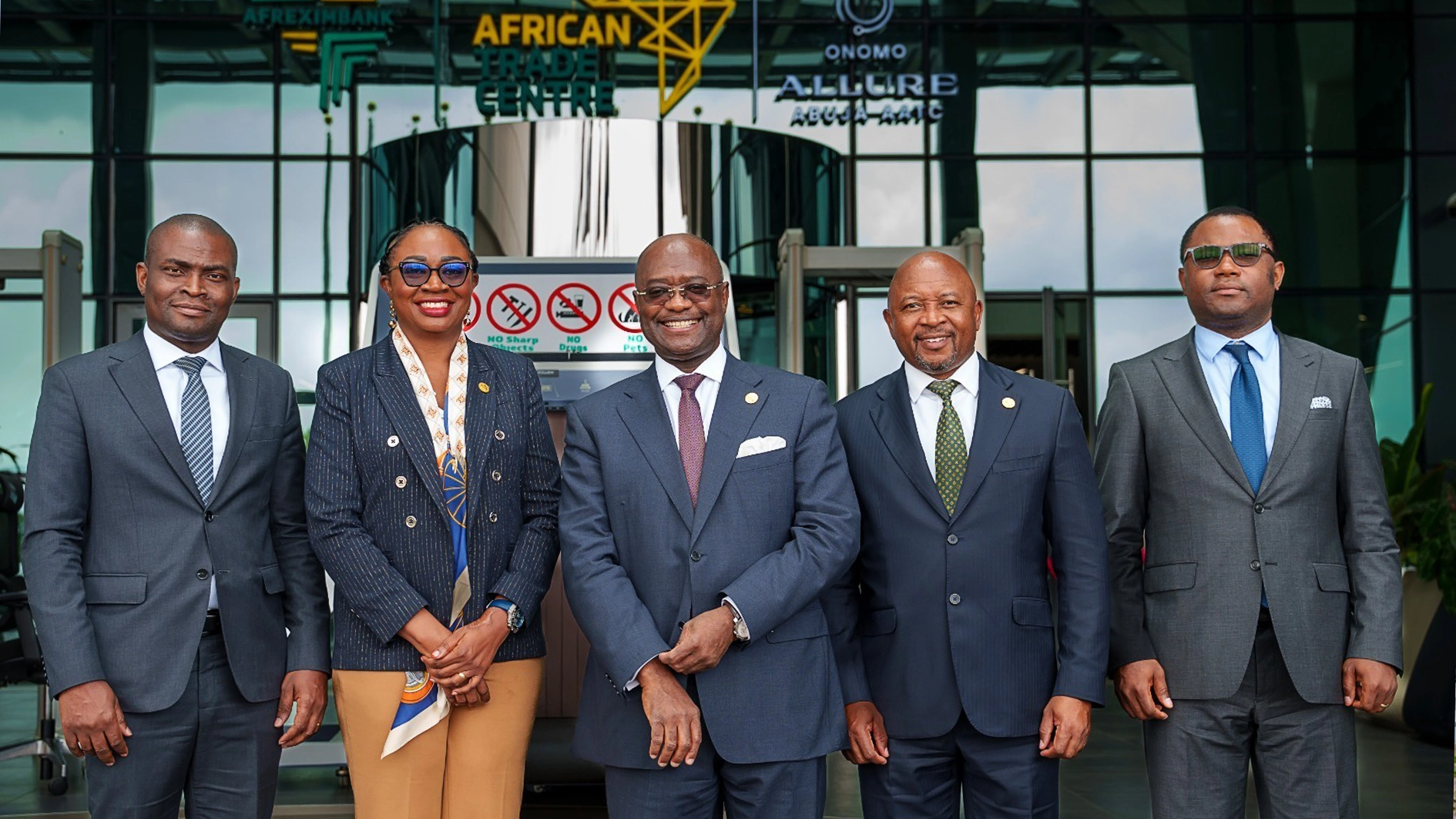
The President and Chairman of the Board of Directors of African Export-Import Bank (Afreximbank), Dr George Elombi, has said that Africa’s economic sovereignty will only be achieved when the continent industrialises at scale, processes its own resources and secures fair access to capital to finance its development priorities – on its own terms.
Speaking during a media briefing in Abuja, Nigeria, Dr Elombi said Africa could no longer rely on a development model built around extraction and export of raw materials and importing finished goods.
He said the continent’s next phase of growth must be driven by value addition, manufacturing, regional trade and stronger African financial institutions capable of strong domestic capital and resource mobilization for transformation.
“Africa’s sovereignty will not be secured by exporting more of what we do not process. It will be secured when we build the industries that turn African resources into African value. But industrialisation requires capital, and that capital must be accessible on terms that are fair, evidence-based and reflective of Africa’s true potential.”
Elombi said Afreximbank’s mandate is focused on helping the continent make that transition – from commodity dependence to industrial capacity, from fragmented markets to integrated trade, and from external vulnerability to greater African resilience.
Directly through debt financing and indirectly through its equity vehicle, the Fund for Export Development in Africa (FEDA), and in partnership with industrial partners such as ARISE IIP, Afreximbank is facilitating the development of multipurpose industrial parks and special economic zones and dedicated towards supporting minerals processing, agro-processing, automotive, textiles and pharmaceuticals.
The bank is scaling these strategic investments with the view to build competitive manufacturing hubs and deepen regional production linkages across the continent.
Elombi said that if Africa is to industrialise, the continent must also address the cost and availability of capital.
Credit ratings, he noted, influence how much institutions pay to raise funding, the investors they can access and, ultimately, the cost at which they can finance trade, infrastructure and industry.
“Fair credit assessment is part of Africa’s sovereignty agenda,” he said, adding that “when African institutions are assessed properly, they can raise capital more competitively. When they raise capital more competitively, they can finance Africa’s industrial growth, and accelerate African trade and job creation.”
He said Afreximbank’s recent investment-grade rating from S&P Global Ratings, which assigned the Bank a BBB+ long-term and A-2 short-term issuer credit rating, showed the importance of assessing African institutions in their proper context.
S&P’s assessment comes after Afreximbank’s strong Q1 2026 performance, with total assets and contingencies rising to US$49.4 billion, shareholders’ funds of US$8.6 billion, a capital adequacy ratio of 23% and a non-performing loan ratio of 2.40%.
Elombi said rating agencies must properly recognise Afreximbank’s treaty-based structure, Preferred Creditor Status, shareholder support and central role in financing African trade.
He added that shareholders’ perception of the bank is driven by their conviction and belief in the institution they created and not just by rating perceptions.
He said African multilateral institutions should be assessed on verified evidence, their real institutional structures and the development role they play across the continent.
Despite a complex global environment, Afreximbank has continued to demonstrate strong investor confidence, including through successful Samurai and Panda bond issuances and a US$2 billion equivalent dual-tranche syndicated facility raised in Q1 2026 from 31 lenders across Europe, the Middle East, Asia and Africa.
Elombi added that industrialisation will only deliver sovereignty if African goods can move across African markets.
He said Afreximbank would continue supporting trade-enabling infrastructure, payment systems, logistics corridors and AfCFTA implementation to reduce the barriers that make it difficult for African businesses to trade with one another.
“Capital, industry and trade must work together,” he said. “Africa must finance its production, process its resources and move its goods across its own markets. That is how we create value, retain value in Africa and build sovereignty that is practical, not theoretical.”
He welcomed the idea of a New African Financial Architecture (NAFA) and the urgency to build capacity to mobilise resources from the continent to support its development.
Looking ahead, Elombi said Afreximbank would remain focused on financing the systems Africa needs to stand more firmly on its own foundations including industrial capacity, value addition, strategic minerals processing, trade-enabling infrastructure, digital payments, energy security and intra-African trade.

