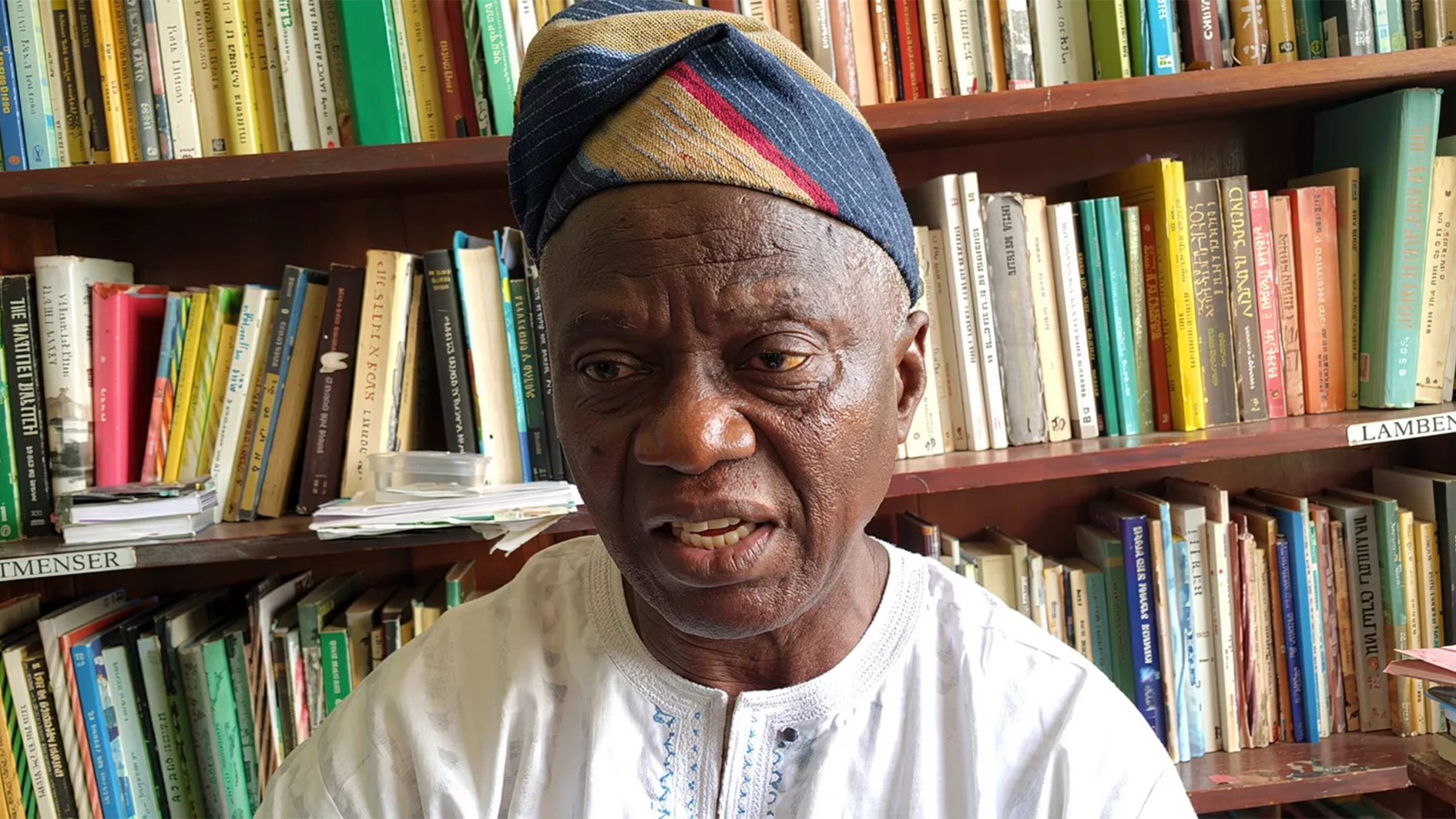
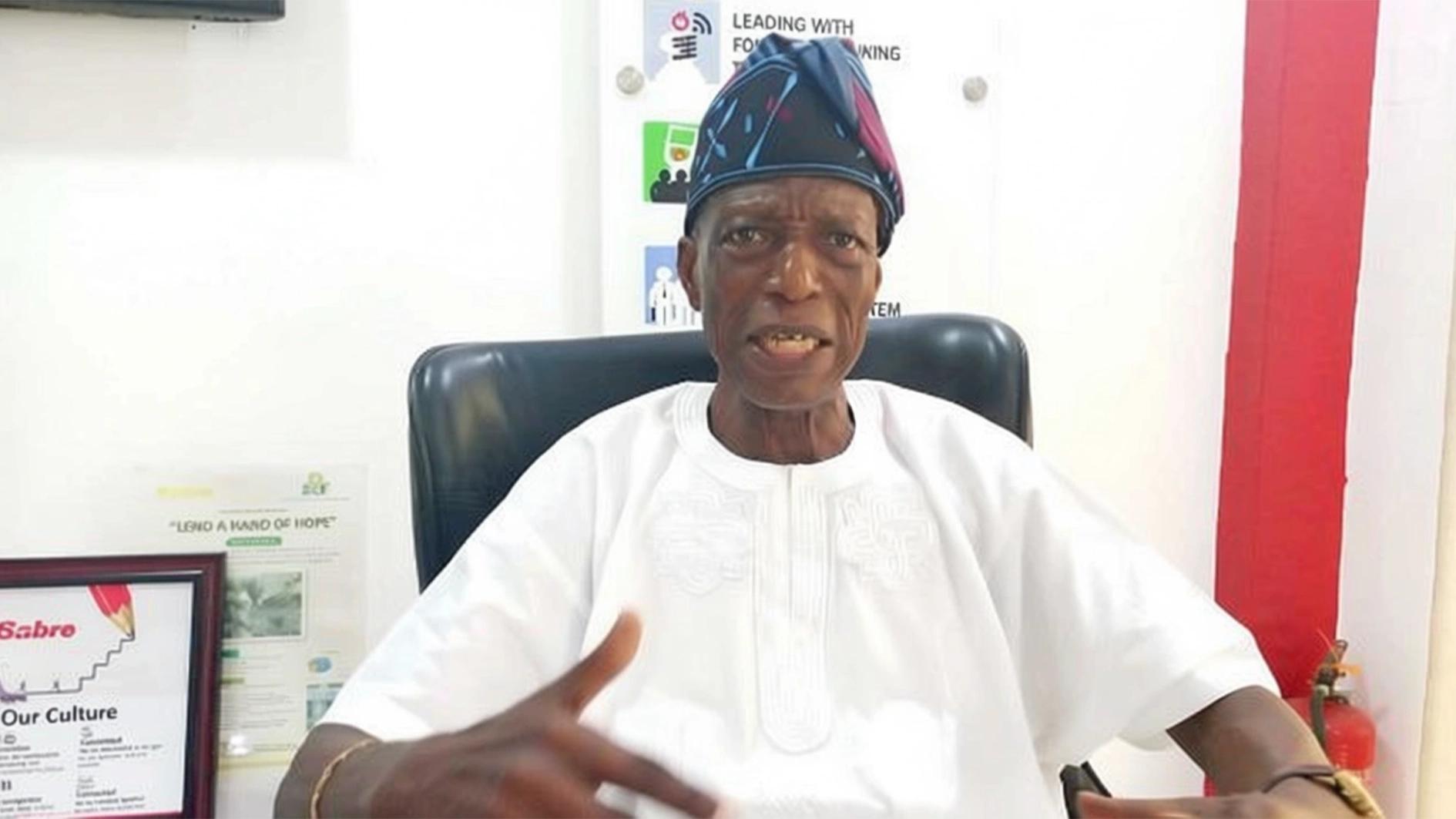
Dr. Sunday Zaccheaus Saanu is a shining example of what could be accomplished through hard work, perseverance and relentless pursuit of purpose. He studied Mass Communication and obtained a Higher National Diploma (HND) from Ogun State Polytechnic, now Moshood Abiola Polytechnic, Abeokuta. However, after practising print journalism for 10 years, Saanu returned to the University of Ibadan (UI) to start his undergraduate programme, citing certificate discrimination as his major reason. This was immediately after he completed a professional Masters programme in Communication and Language Arts (MCA). In this interview with OLUDARE RICHARDS, Saanu shares the experience of his tortuous journey, lamenting the dichotomy between HND and university degree holders, while urging the government to address the issue once and for all.
Congratulations on your doctoral degree programme. How does it feel becoming a PhD holder years after you obtained a HND?
The feeling is good. The sentiment is sweet. I am happy. This is a glorious harvest of consistent hard work, unsparing self-discipline and unflinching commitment to a worthy pursuit. To me, this is an achievement of a monumental feat made possible by single mindedness, purposefulness, doggedness and the grace of God. I return all the glory to God.
Indeed, there is no better sense of fulfillment in me right now than the attainment of this academic feat. My intellectual curiosity and passion for knowledge have been satisfied. I have been able to brave the odds and dare the obstacles. It is glaring now that success belongs to those who refuse to settle for anything less than greatness.
I decided to create my own recovery plan, after all the embarrassment of possessing HND. And God assisted me. I have been able to swim ashore successfully. I fell in love with the process of becoming the best version of myself and it has been so proven. I am triumphant with a sense of fulfillment and accomplishment.
It is a thrilling testimony of triumph of faith over fear. I can see that the grimaces and groans of yesterday are now giving ways to beautiful smiles. Today, my ugly caterpillar has turned into a beautiful butterfly. This is, therefore, a celebration of perseverance. It is so thrilling to witness how dedication and passion can transform a dream into a reality. I did this to refract my fate. In reality, believing comes before becoming. I am excited.
What do you mean by creating a recovery plan? Recovery from what and where?
I am talking about my academic background. I started my academic career by attending Ogun State Polytechnic, Abeokuta, now Moshood Abiola Polytechnic. I studied Mass Communication up to a Higher National Diploma (HND) level. At that time, I never knew that the discrimination against polytechnic graduates was so pronounced in society. It was after my graduation that I began to see the way HND graduates are being treated. They deride your dignity the moment you say you went to a polytechnic; meanwhile polytechnic education is not bad in itself because it is practically oriented.
I was taught what I do for a living today at Ogun Poly, but some people don’t see it that way. They see polytechnic education as inferior.
However, of all the odds against HND holders, discrimination is perhaps the most insidious.
I observed that with HND, one may not succeed as much as one has capacity to, particularly in an academic environment where I find myself. In work places, they make HND look like a road to nowhere, a kind of academic cul-de-sac! Today, across the country, many people have been bruised and battered on account of holding HND certificates. It hardly needs to be said that the consequence of carrying HND certificates around is unflattering.
Closely related to the widespread discrimination those of us with HND certificates suffer is the lack of social parity of esteem. How can four of us meet at an occasion and three will say they finished from the university and I will say I finished from Ogun Poly? You can see that there is no parity of esteem.
In life, some barriers could constrict your ability to exhibit your full potential. And, indeed, it rankles when you are discriminated against because of the kind of certificate you possess. This was the reason I charted my own recovery plan by going back to school. It was my former employer, Champion newspaper, which transferred me from Lagos to Oyo State. I capitalised on the advantage, went to University of Ibadan (UI) where I did a professional Masters degree in 2002/2003. Immediately after the MCA, I took a Direct Entry form and went back to 200 level for an undergraduate degree, leading to Bachelor of Arts in 2007. By 2009, I was done with Master of Arts (M.A). After that, UI gave me a contract appointment, which was later regularised by Prof. Isaac Folorunso Adewole in 2012.
But what and who was inspiring you? From where was the motivation coming?
I was tired of the condescending attitude the society was displaying towards HND graduates. I, therefore, became intensely motivated, doggedly driven, relentlessly inventive and remorselessly tenacious. I knew if I could pay the price, I could get the prize. I knew that nothing worth achieving comes without a price.
My greatest asset is my belief in myself, while God remains my constant confidence booster. It was a compelling necessity towards holistic self-recovery. When I considered many advantages awaiting me with a PhD, I became tough-minded, strong-willed and self-possessed.
I became irredeemable bibliomaniac, knowing that good luck only visits the relentlessly persistent. Any time the situation turned topsy-turvy; I called on God. There was that high level of willpower to trade away comfort for results. It hardly needs to be said that my passion was driven by my desire to leave an impact that creates a footprint of change and transformation. I decided to unlock my latent potential and inspire others to aspire to achieve greater accomplishments. It was indeed a painful path to profound impact.
I think my major motivation stemmed from the realisation that to bag a PhD from UI, one must have some pertinacious astuteness and commitment to academic ideals.
I, therefore, pursued my goal with zest and zeal. I knew that if I could survive the dark, I would become the light. I resolved that I would not allow one cloud of HND to obliterate the whole sky of my beautiful life. Consequently, I focused all my energy on my healing, growing, and learning. Above all, I have always liked to approach my life with deliberate intentionality, authenticity and unrelenting consistency as I hate self-deception.
What were the challenges you faced running through these academic programmes?
The path was not easy, but the impact has been remarkable. We could say it was a painful path to a profound effect. For a range of reasons, I knew my desire would not be cheap in coming.
This PhD comes with a heavy price tag. But my consolation today is that my payoff is way bigger than my cost. In the process, I suffered so much humiliation, mischief and malice.
I encountered so much vendetta and vindictiveness. There was paucity of funds. I struggled and suffered. I faced obstacles of different dimensions. I ran without a backward glance. I decided to pay the price of crucifixion in order to enjoy the glory of resurrection. For good seven intervening years, I had no paid job. Yet, I must pay for my children’s school fees, house rent and sundry expenses.
However, I must confess that God is faithful. God raises men and women of goodwill for me. Perhaps this is where I should thank people that God uses for me. From Otunba Olusegun Runsewe, who practically sponsored my first degree programme, to Chief Wole Olanipekun, who gave me scholarship twice among other sundry financial interventions for higher degrees, to a one-time Managing Director of Keystone Bank, Mr. Niran Olayinka; Barrister Chima Nnaji, who has been giving me money without having seen me in flesh and blood, my school mates, as well as Mr. and Mrs. Iskilu Sodipo, among others.
These people and many others, particularly my senior colleagues in the media, deserve my eternal gratitude. God has really used these people for me. I can never be less grateful.
Let us look at the significance of your doctoral study. What is it all about?
The title of the work is ‘Survival Strategies of Selected Newspapers in Nigeria.’ Let me attempt a condensed chronicle of the study. It looked at shifting dynamics and emerging trends that have far-reaching consequences for the print media.
We looked at how print media could continue to survive in the face of the onslaught of the internet and other variables threatening print media. We looked at various strategies adopted by the three oldest newspapers in Nigeria including Nigerian Tribune, The Punch and The Guardian newspapers.
The study was predicated on the fact that the survival of newspapers had received far less research attention. The depth of the scholarship and the significance of the study to the continued relevance of print media cannot be over-emphasised.
As part of the recommendations of the study, we said for a newspaper to continue to survive, media managers could diversify into other economic areas such as real estate, hospitality, and banking, among others, because there is no law that says you must be limited to only media ecology. More so, journalists must learn how to adapt continuously to the ever-evolving technological landscape.
Journalists must continuously be updating and embracing every learning opportunity. It was a media study that I feel every media professional must read. It is a useful addition to the corpus of literature in media studies.
What has life taught you?
The major lesson I have learned in life is that most valuable achievements in life demand self-discipline, struggle, time, energy, persistence and God factor. I have learned that struggle strengthens, persistence pays, and hard work always wins.
In life, a king’s path is never easy, but his victory is always undeniable. Yes, it is true that the road to this victory was bumpy and curvy with hard turns. I know I travelled a hard road. I kept reminding myself that to navigate challenges of life, one must cultivate resilience, spiritual strength through prayers, and emotional intelligence.
I learned several lessons in the course of this academic enterprise. I spent 14 years on a hard road, pursuing my passion. Each time I became weary, I would simply remind myself that what is to give light must endure burning.
I saw it as a commitment to self-accountability. I, therefore, resolved that I would rather bend than break in this life’s tempestuous fire. I kept telling myself that those who give up don’t go up. You know there is a difference between interest and commitment. When you are interested in doing something, you do it only when circumstances permit. But when you are committed to doing something, you accept no excuses, but results.
Let me state here that this doctoral degree has taught me how to safeguard facts from fantasies; how to separate knowledge from illusions and cherish intelligence over aberration. Indeed, true wealth is not only limited to material possessions, but knowledge and wisdom.
What is your advice for today’s youth?
Many youth today expect success without sacrifice! They want rewards without work. They want to harvest without sowing. No. Life is not designed that way. Success is not an overnight creation.
I have seen many youths who are driven by short-term survival strategies, rather than long-term sustainability. I see so many of them with so much energy expended towards almost no discernible purpose.
I think this wrong mentality must change. They must change for the better. They should read because serious reading remains the best nourishment for the mind and the foundation for clear thinking and sound planning.
They must know that there is a process before prosperity. More importantly, living without purpose is like traveling without destination. But with passion, preparations, and perseverance and persistence, we can make marks in life.