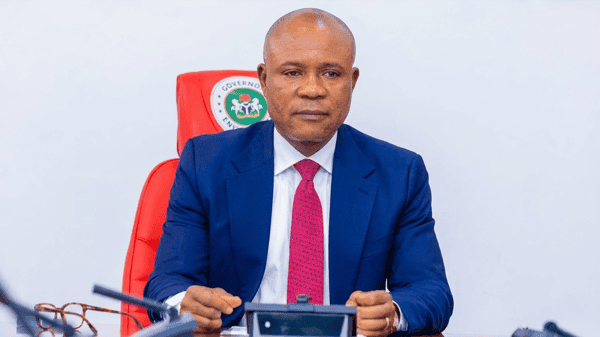
The Enugu State Government has said that the use of quality materials remains the backbone of durable and resilient infrastructure, adding that enhanced collaboration among regulators, professionals, contractors and material suppliers would help guarantee the longevity of public assets and boost public confidence in government projects.
The State Commissioner for Works and Infrastructure, Ben Osy Okoh, reaffirmed the government’s commitment to strengthening construction standards through improved regulatory compliance, enhanced testing and supervision, and the consistent use of quality construction materials across the state.
Okoh stated this at a one-day stakeholders’ workshop in Enugu, noting that quality assurance of construction materials aligns with the ongoing infrastructural development drive of Governor Peter Ndubuisi Mbah’s administration.
Declaring the workshop open, the Secretary to the State Government, Prof. Chidiebere Onyia, said the administration’s development agenda is anchored on institutional discipline, data-driven governance and accelerated infrastructure delivery for inclusive economic growth.
He said the vision of the administration is not only to deliver visible projects but to ensure durability, safety and long-term economic value, adding that the state is committing significant resources towards establishing standard laboratories because quality remains central to Enugu’s infrastructure drive.
Onyia, who represented Governor Peter Mbah, added that the administration’s commitment to quality is evident in the construction of smart schools and hospitals, as well as the expansion of road networks across the state.
In a keynote address, the Director-General of the Nigerian Building and Road Research Institute (NBRRI), Prof. Samson Duna, advocated laboratory testing of construction materials as a critical solution to the recurring collapse of buildings and infrastructure across the country.
He called for the establishment of standard construction material testing laboratories in states nationwide as a key step towards ending the persistent collapse of buildings and roads caused by substandard materials.
Duna warned that the use of substandard construction materials poses serious risks to lives and public investments, stressing that effective supervision alone is insufficient without functional laboratories to verify the quality of materials used in public infrastructure.
According to him, NBRRI has investigated about 80 collapsed buildings across Nigeria, with findings indicating that the dominant cause was the use of materials that failed to meet required standards.
He attributed the trend largely to contractors’ pursuit of sharp profits at the expense of safety and durability.
The NBRRI boss said supervisors of public projects must ensure that contractors and engineers strictly comply with approved standards, noting that many failures occur because authorities lack the equipment to test materials brought to construction sites.
“Without proper equipment, states often cannot confirm whether asphalt and other materials meet specifications. Most times, we don’t know that what the contractor is bringing is not of good quality. That’s why you must always check that the quality of asphalt used for road construction meets the standard, and it is this testing equipment that can guarantee that,” he said.
“The government needs to confirm the quality of jobs that contractors have delivered so as not to return to the same job after a few months or years,” Duna added.