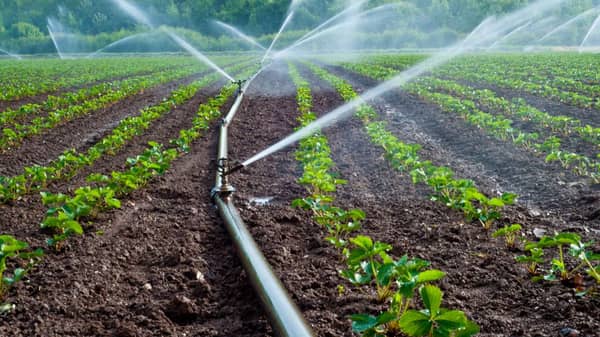
Amid the growing impact of climate change on food security, farmers have called on the Federal Government to subsidise solar-powered irrigation systems to boost agricultural productivity and promote year-round farming.
The appeal followed a research study conducted by a climate change-focused non-governmental organisation, YELF Climate Trust Foundation, among 10,500 smallholder farmers in Kebbi State.
Findings from the study revealed that although 99.51 per cent of respondents are aware of Solar Powered Irrigation Systems (SPIS), fewer than 29.96 per cent currently use the technology.
Speaking on the report made available to The Guardian, the Chief Executive Officer of YELF Climate Trust Foundation, Ethel Okosuns, said the organisation embarked on an in-depth research initiative across the 19 northern states of Nigeria.
He noted that baseline studies are currently ongoing in five states, Bauchi, Kebbi, Niger, Sokoto, and Kano, to build a comprehensive database for five million smallholder farmers in the region.
Okosuns explained that in Kebbi State, the baseline study was conducted in communities within Argungu and Augie Local Government Areas.
According to the findings, 70.24 per cent of SPIS users reported a significant increase in income, largely due to higher crop yields recorded by 74.07 per cent of users and lower operational costs cited by 33.89 per cent.
The study also showed that 76.23 per cent of SPIS users experienced increased savings compared to reliance on other energy sources and irrigation methods. In addition, 57.37 per cent of farmers used their increased income to expand farming activities, while 40.47 per cent invested surplus earnings in their children’s education, indicating potential improvement in school enrolment across the communities.
However, the report identified high upfront costs as the major barrier to SPIS adoption, with 79.57 per cent of respondents citing initial investment costs and 39.29 per cent pointing to limited access to financing options. The foundation said this reinforces existing evidence that smallholder farmers face significant challenges in accessing credit and financial support.
On climate change awareness, the study found that 62.28 per cent of respondents observed rising temperatures, while 50.98 per cent reported increased flooding. About 93.71 per cent believe SPIS supports climate change adaptation by providing a reliable water supply and reducing dependence on rain-fed agriculture.
In contrast, awareness of other climate-smart practices remains low, with only 15.13 per cent aware of adaptation approaches and 14.15 per cent recognising crop rotation as a climate-smart practice.
The report noted that SPIS users recorded a 31.53 per cent higher crop yield compared to non-users, while 16.6 per cent of SPIS users engage in year-round farming, resulting in increased food production, higher income and improved livelihoods.
The study further indicated that farmers surveyed strongly prioritised financial support, with 88.2 per cent expressing interest in government subsidies.
According to the report, with targeted subsidies, improved financing support and deliberate climate-smart agricultural policies, smallholder farmers could significantly boost food production, enhance prosperity, strengthen food security and reduce Nigeria’s dependence on food imports.