 Follow Us on Google News


 Follow Us on Google Discover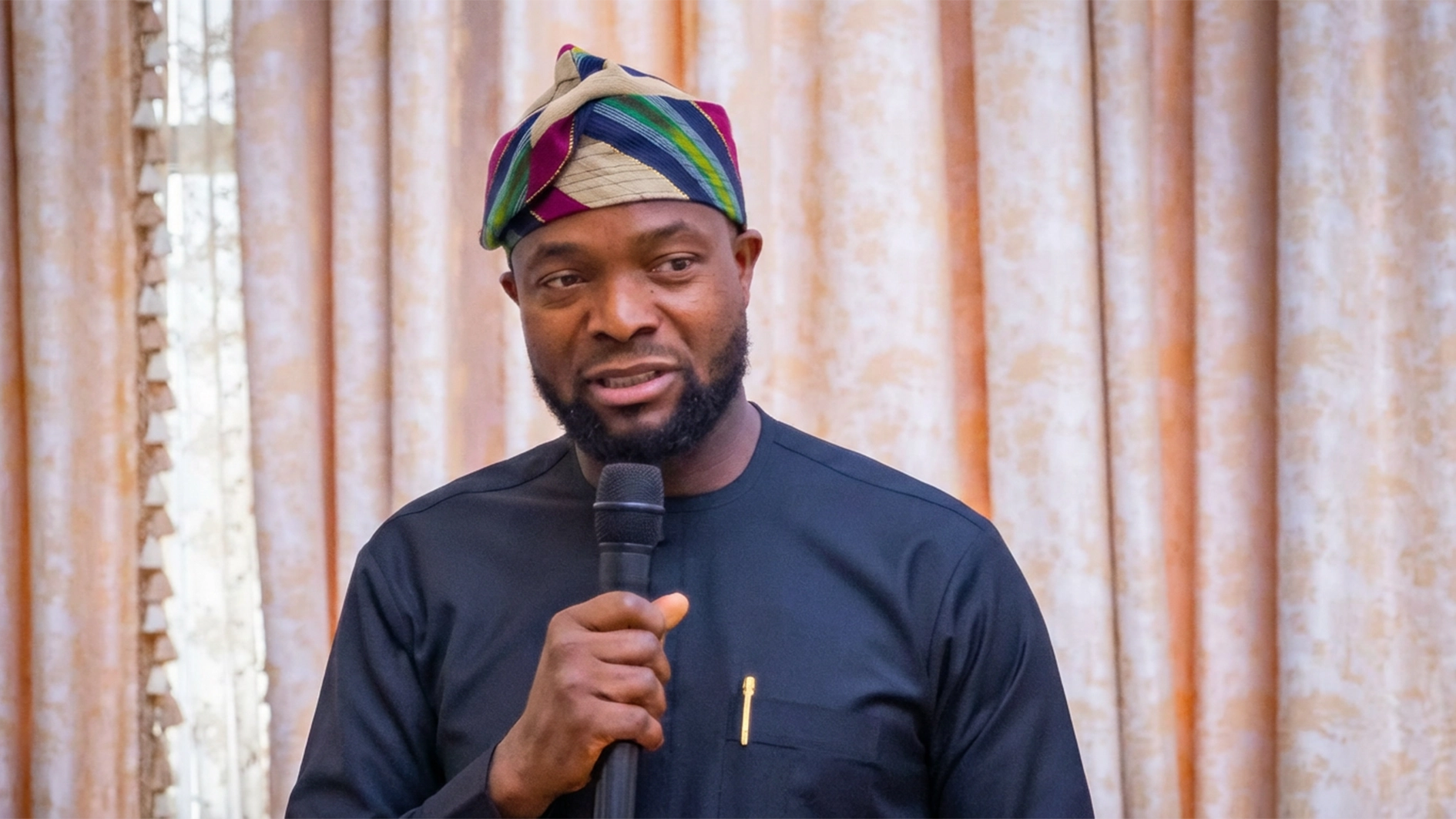
THE Federal Government has adopted a results-driven model for its N12 billion National Digital Economy Research Clusters programme, ensuring that funding and support are tied to measurable outputs, policy relevance, and real-world impact.
Minister of Communications, Innovation and Digital Economy, Dr Bosun Tijani, disclosed this on Tuesday, at a press briefing in Abuja.
The minister’s remarks follow his announcement over the weekend on X, where he invited academic institutions to participate in the research clusters, marking a critical step in Nigeria’s efforts to integrate rigorous, evidence-based research into digital economy policy.
According to him, the three-year initiative will link funding to measurable outcomes and policy relevance, with roughly N1.5 billion allocated to each thematic cluster.
Tijani noted that the clusters are designed to generate practical insights that directly inform policy, while strengthening Nigeria’s research capacity.
“The idea is when we have top Nigerian professors with resources to focus on these critical topics that are important to our economy as a nation, that is going to lead us on the path where we have deep information,” he said.

He explained that each cluster will be supported by three post-doctoral fellows and three PhD students per professor, and will collaborate with foreign researchers to expand capacity and funding.
The clusters will cover connectivity and meaningful use, digital public infrastructure, digital skills and human capital, digital economy and jobs, trust and consumer protection online, and artificial intelligence and emerging technologies.
“It is not going to be enough for you to have published. It will be your publication, how impactful it has been, what the dissemination path is, where it has been used. These things must be thoroughly reviewed,” Tijani said, underlining the government’s emphasis on policy-relevant research.
Highlighting Nigeria’s recent progress in artificial intelligence, the minister said the country’s global ranking had improved dramatically.
“When we came in, one of the most respected rankings for AI readiness in the world ranked Nigeria at 103. But when they took everything we’ve been doing, they did the ranking for last year, and in December it was released, Nigeria is now ranked 72 out of 195 countries,” Tijani stated.
He added that Nigeria ranks 35th globally in policy capacity, which is anchored by the National Strategy, and 49th in development and diffusion, reflecting growing strength in research, talent, and innovation.
Tijani linked the research clusters to Project BRIDGE, a programme that includes 90,000 kilometres of fibre-optic network and 3,700 towers to expand connectivity in rural areas.
“If we have ubiquitous fibre network all across Nigeria, the complaints that you give today on the quality of connectivity will change totally,” he said.
The minister also outlined the governance structure of the clusters, explaining that each will operate under annual targets for publications, workshops, and training.
“There will be a steering committee led by the Ministry of Communications and the Ministry of Education. They’ll be in charge of this,” he said.
Speaking earlier, the Minister of Education, Tunji Alausa, said the clusters would position universities as engines of innovation and talent development.
Alausa highlighted that students will gain skills in software development, cybersecurity, AI, machine learning, and IT automation.
“Our universities must move from just places where theoretical education has been given. They must be where the capacity of millions of youth are built,” he said.
The education minister added that participants would have access to professional certifications from Google, IBM, and Microsoft, adding that the programme will stimulate entrepreneurship and economic growth by linking research to practical solutions.
“It’s not just about the 200 researchers. It’s the cascading effect that will happen afterwards. And the addition. It won’t stop here. It will just continue to grow with what we’re starting today,” he said.

