 Follow Us on Google News
 Follow Us on Google Discover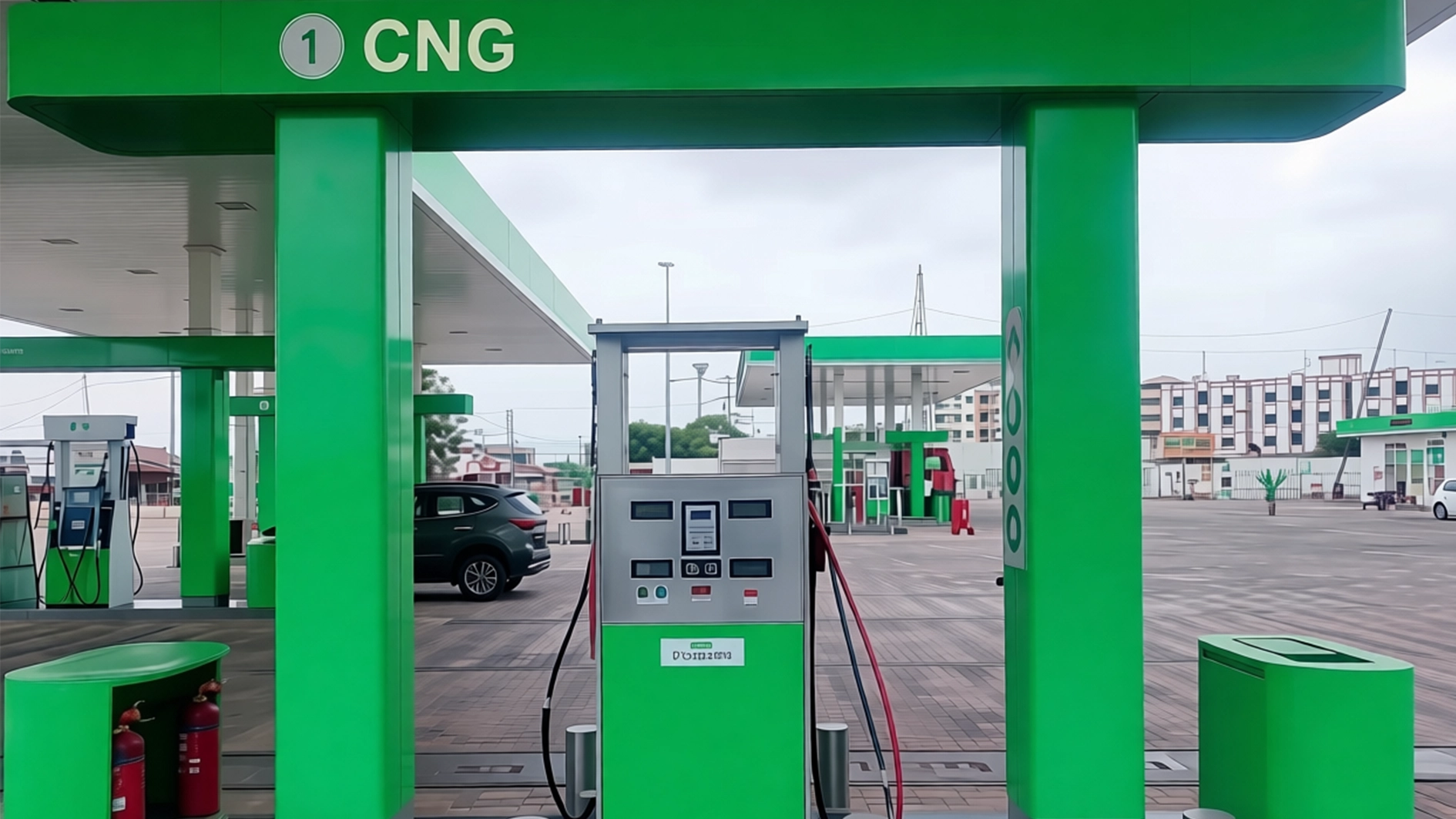
As the Middle East crisis enters its 12th day with the United States threatening the ‘most intense day’ of the war and Iran equally vowing revenge, Nigerians are projected to spend close to N3 trillion on petrol and diesel in March as fuel prices remain elevated despite a sharp 87.9 per cent drop in petrol importation.
Already, the Federal Government yesterday assured it is closely monitoring the conflicts to ensure the economy is not adversely affected.
To this end, the Economic Management Team (EMT), chaired by the Minister of Finance and Coordinating Minister of the Economy, Wale Edun, convened a meeting to assess the impact on the economy in Abuja yesterday.
The team stated that the government remains committed to safeguarding Nigeria’s economic stability. Also, the Minister chaired a Naira-for-Crude policy coordination meeting to review energy market developments and their domestic implications.
The team acknowledged that the situation remains fluid, with global market uncertainty driven by concerns over disruptions to critical energy supply routes, particularly the Strait of Hormuz, already contributing to volatility in crude oil prices and financial markets.
With the fuel price hike, about N2 trillion is expected to be spent on Premium Motor Spirit (PMS) from the consumption of 56.9 million litres of fuel, according to data from the Nigerian Midstream Downstream Petroleum Regulatory Authority (NMDPRA), which translates to N70.8 billion daily or N2.1 trillion for the month.

A development, which shows record consumption cost, as homes and businesses will also spend about N1.1 trillion on consuming 20.3 million litres of diesel at the rate of average price of N1,725 per litre.
Figures released by the NMDPRA indicate that the country consumed about 56.9 million litres of petrol daily in February, while diesel consumption averaged 20.3 million litres per day. At the current average diesel price of around N1,725 per litre, spending on diesel could exceed N1 trillion within the month, pushing combined expenditure on both fuels close to N3 trillion.
The development comes amid a dramatic contraction in petrol imports into the country, as the NMDPRA February factsheet released yesterday showed that PMS importation fell from 24.8 million litres per day in January to about three million litres per day in February, representing an 87.9 per cent reduction.
Industry sources attributed the sharp drop partly to the growing dominance of local supply, particularly from the Dangote Refinery, which has gradually expanded distribution across the domestic market. But the pattern showed that the total volume of fuel in the country fell drastically from 64.9 million litres per day in January to 39.5 million litres per day in February.
Market insiders also noted that import licences were reportedly issued to only a limited number of marketers during the period, including MRS Oil Nigeria Plc, which has a commercial relationship with the Dangote Refinery.
Despite the drop in imports and a slight price adjustment by the refinery, retail prices across several filling stations remained high yesterday. Checks by The Guardian showed petrol selling for about N1,350 per litre at Shafa and Rainoil stations, N1,330 at Rano, and around N1,260 at AP and Sunbeth stations in parts of Lagos.
Diesel prices also remained elevated at about N1,725 per litre, continuing to put pressure on manufacturers, transporters and small businesses that rely heavily on diesel-powered generators.
Yesterday, the Dangote Refinery announced a reduction in its ex-gantry petrol price to N1,075 per litre, representing a N100 cut from the previous price of N1,175 per litre. The reduction marks the first price decrease by the refinery after three successive increases that had pushed petrol prices significantly higher in recent weeks.
However, the modest adjustment has yet to translate into significant relief at the pump for many consumers, as retail prices across several stations remain above N1,250 per litre. Across parts of Lagos, residents and small business operators said the persistent rise in fuel prices has worsened the cost of living, forcing households and enterprises to make difficult spending decisions.
Motorists, traders, students and artisans in communities including Iyana Ipaja, Egbeda, Igando, Ikotun and Ejigbo said transport fares and operational costs have risen sharply since the latest price increases.
A commercial driver at Iyana Ipaja, Sadiq Lawal, said the volatility in petrol prices has made it increasingly difficult for transport operators to remain profitable. “Almost every day, the price changes. Yesterday I bought fuel for over N1,200 per litre. Before I start work in the morning, I must spend close to N25,000 to fill my tank and settle other expenses. Passengers complain when we increase fares, but they don’t know we are also struggling,” he said.
Private vehicle owners also expressed frustration over the rising cost of fuelling their cars.
A civil servant residing in Egbeda, Titilayo Adeyemi, said she has been forced to reduce how often she drives.
Small-scale entrepreneurs said the cost of powering their businesses has become increasingly unsustainable. Chinedu Okafor, who operates a printing and photocopy shop in Ikotun, said poor electricity supply forces him to rely heavily on a petrol generator.
“Without fuel, my business cannot run. I spend close to N20,000 daily to power the generator for a few hours. Customers complain when we increase printing prices, but the cost of running the business has gone up,” he said.
MEANWHILE, the Federal Government has begun reviewing the potential economic implications of rising global energy prices triggered by escalating geopolitical tensions in the Middle East. According to the government, the crisis could affect Nigeria through three major transmission channels: volatility in crude oil and gas prices, shifts in capital flows and financial markets, and disruptions in global logistics and supply chains.
They warned that prolonged instability in the Middle East could raise domestic prices for fuel, diesel, cooking gas and fertiliser, while also increasing inflationary pressures across the economy. The government said it would continue to monitor developments in global oil prices, exchange rate movements, capital flows and fiscal conditions, while reviewing policy options to cushion households and businesses from external shocks.
Despite the emerging risks, authorities maintained that Nigeria’s macroeconomic fundamentals remain relatively resilient, citing real GDP growth of 4.07 per cent in the fourth quarter of 2025, one of the strongest quarterly performances recorded in more than a decade.
ALSO, President Bola Tinubu has ordered the immediate nationwide deployment of about 100,000 Compressed Natural Gas (CNG) conversion kits as part of measures to cushion the impact of rising fuel prices on Nigerian commuters following the escalating conflict in the Middle East. The directive forms part of the Federal Government’s broader strategy to expand alternative energy options and reduce transportation costs amid the surge in global oil prices triggered by the ongoing United States-Israel war with Iran.
Executive Chairman of the Presidential Initiative on Compressed Natural Gas (Pi-CNG), Ismaeel Ahmed, disclosed the President’s directive on Tuesday while briefing journalists at the State House, Abuja, after a meeting with Tinubu. Ahmed said the President has been closely monitoring global developments and their implications for Nigeria’s energy costs, particularly the impact of the Middle East crisis on petrol and diesel prices.
According to him, Tinubu directed the Pi-CNG initiative to accelerate the rollout of CNG infrastructure and alternative mobility solutions nationwide. He revealed that the President has specifically mandated the immediate deployment of about 100,000 CNG conversion kits within the next few weeks.
Ahmed explained that the kits, to be distributed through partnerships with multiple stakeholders, will enable vehicle owners, including commercial transport operators and tricycle riders, to convert their vehicles from petrol to gas.
Ahmed disclosed that about 77 CNG refuelling stations are currently at various stages of development nationwide. He cited Kano as an example where two Liquefied Compressed Natural Gas (LCNG) stations are already operational, while several “daughter stations” are under construction.
According to him, the government is planning a chain of refuelling facilities along major transport corridors stretching from Lokoja through Abuja, Kaduna, Zaria and Kano up to Maiduguri.
From towering cement plants to sprawling telecom networks, vast energy investments and banking, Nigeria’s wealthiest entrepreneurs yesterday continued to carve out influential positions on the global stage.
The 2026 Forbes billionaires ranking showcased four prominent Nigerian business magnates whose fortunes collectively illustrated the breadth of enterprise driving Africa’s largest economy.
Leading the pack is Aliko Dangote, whose estimated net worth of $28.6 billion places him 86th among the world’s richest individuals and firmly at the top of Africa’s wealth ladder. Dangote’s fortune has expanded from $23.9 billion recorded in 2025, reflecting the continued growth of his industrial empire.
As founder and chairman of Dangote Group, the billionaire oversees one of the continent’s largest conglomerates. The group’s flagship business, Dangote Cement, remains Africa’s largest cement manufacturer with a yearly production capacity of 48.6 million metric tonnes.
Operating in over a dozen African countries, the company has played a central role in infrastructure development across the continent. Dangote’s industrial ambitions extend far beyond cement. Besides, his massive Dangote Refinery commenced refining operations in 2024.
The 650,000 barrels per day refinery represents one of the largest industrial projects ever undertaken in Africa and has transformed Nigeria’s petroleum supply chain.
On the list also is Abdul Samad Rabiu, founder of BUA Group, whose wealth has climbed dramatically to $11.1 billion. The jump from $5.1 billion recorded in 2025 represented one of the most significant increases among Nigeria’s billionaire class.
Rabiu now ranks 279th globally and stands as the third-richest individual in Africa. BUA Group has expanded into a diversified industrial conglomerate with operations spanning cement manufacturing, sugar refining and food production.
Rabiu’s control of the group’s flagship companies is overwhelming. He owns roughly 98.2 per cent of BUA Cement and about 95 per cent of BUA Foods. The companies have become major players in Nigeria’s construction and food manufacturing sectors.
Further down the ranking sits Mike Adenuga, whose fortune is estimated at $6.5 billion. The telecom and oil magnate ranks 608th globally and sixth in Africa. Adenuga built his wealth through Globacom, Nigeria’s third-largest telecom operator with millions of subscribers.
The company also constructed the Glo-1 submarine cable linking West Africa to Europe, significantly boosting internet connectivity across the region. His energy interests are anchored by Conoil Producing, which operates several oil blocks in Nigeria’s Niger Delta.
Completing the Nigerian quartet is Femi Otedola, whose net worth stands at $1.3 billion. The energy investor ranks 2,858th globally and 22nd in Africa. Until recently, Otedola chaired Geregu Power, one of Nigeria’s major electricity generation companies, where he owned more than 70 per cent of the shares.
Otedola also maintains investments in Nigeria’s banking sector, especially First Bank, and owns luxury properties across several global cities, including Lagos, Dubai, London and Monaco.
Otedola’s philanthropy is widely regarded as one of the defining aspects of his public reputation. Over the years, the Nigerian billionaire has donated billions of naira to causes spanning education, healthcare, religion, humanitarian relief, and public safety. His giving philosophy centres on using wealth to improve lives and support vulnerable communities.

