 Follow Us on Google News
 Follow Us on Google Discover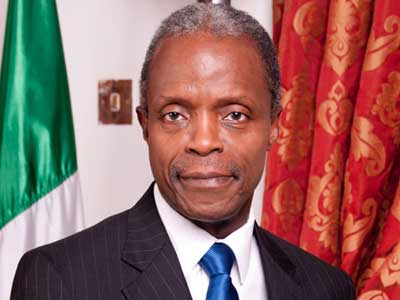

• Osinbajo, Mbeki support Nigeria’s stance on EU’s trade agreement rejection
• ‘How industrialisation, others can check N10tr yearly loss to illicit outflows’
APPEALS by the Manufacturers Association of Nigeria (MAN) and members of the Organised Private Sector (OPS) to the Federal Government on the removal of some classified items from the Central Bank of Nigeria’s (CBN) foreign exchange restriction list may have paid off, following government’s resolve to review the policy measures by the apex bank.
Vice President, Prof. Yemi Osinbajo, while speaking at the yearly general meeting of MAN in Lagos, yesterday, expressed the Federal Government’s resolve to review the policy measures by the apex bank, noting that negotiations are ongoing with the CBN to identify some of the 41 items restricted from the subsidised official forex window that are believed to form part of the raw materials used in local production by manufacturing firms.
Members of the Organised Private Sector (OPS) and the manufacturers had differed with the apex bank on the classification and definition of some of the products restricted from access to forex market, stating that some of them are raw materials used in the course of production in their factories.
The private sector operators had raised the alarm that many companies are on the brink of collapse because of inability to access foreign exchange for raw materials and other critical inputs. They claimed that many small businesses have moved to neighbouring countries to effect transfers to their suppliers abroad, a situation that encourages operation of offshore bank accounts to the detriment of the Nigerian economy.
Indeed, the Chairman of the United Nations High Level Panel on Illicit Financial Flows from Africa, Dr. Thabo Mbeki, has urged Nigeria to perform its obligation of achieving its renaissance by implementing its industrialisation agenda as part of measures to check about $50 billion (N10 trillion) yearly loss by Nigeria and other African nations through illicit fund flows (IFF).
The former South African president urged the Nigerian government to industrialise focusing on manufacturing by adopting sustainable development goals to check growing economic imbalance as well as to check the potent threat of illicit fund flows, arising from trade mispricing, to the survival of the continent.
Similarly, Mbeki and Osinbajo both condemned the signing of the Economic Partnership Agreement (EPA) by some African regions, adding that the EPA will only confine the Nigerian economy to a mere market expansion of the European Union since it cannot operate with Europe on all grounds.
Mbeki, however commended Nigeria for its hard stance on the trade agreement, noting that the country does not need EPA now until it has been adequately industrialised and is able to trade industrial goods competitively.
Osinbajo explained that the CBN’s forex policy remains a short-term measure to address the shortfall in foreign exchange and not a policy framework that would be sustained.
According to him, the forex control is a reaction and not a policy, as measures are underway to negotiate with the CBN on medium and long term measures to assist manufacturers in addressing the challenges limiting their production.
On trade agreements, Osinbajo noted that though there are tendencies for governments to be careless about their provisions, the Buhari-led administration will not accede to agreements that will open fledging industrial firms to risks.
He added that the present administration is reviewing measures to aid the ease of doing business in the country through legislations and implementation of business friendly policies.
On the EPA, Mbeki said: “The Europeans dangle immediate benefits to a country that is, probably, in need. Despondent, the country, short-sightedly, signs the EPA, allowing Europe to achieve its single-minded objective of leaving a weaker, more disadvantaged and more exploited continent in its wake. Something of this sort started at a Berlin Conference in the 19th Century. But today, Brussels must not set Africa back in time.
“The conclusion from all this is very clear. It is that Africa, together with rest of the ACP, has a difficult struggle ahead – the struggle to ensure that the global economy is restructured in a manner which fully recognises and seeks to correct what The Libreville Declaration identified as “inequities of the international economic order and the continued absence of a level playing field.”
MAN President, Dr. Frank Jacobs however urged the Federal Government to address challenges hindering the growth of the productive sector if the real sector’s contribution to the GDP would improve beyond its present level.

