 Follow Us on Google News


 Follow Us on Google Discover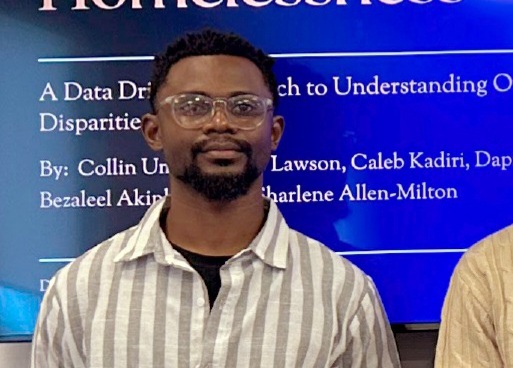
 As the global community continues to grapple with the challenges of malaria, a leading expert in advanced computing, Caleb A. Kadiri, is pioneering innovative solutions to detect the disease more accurately and efficiently. His commitment to improving malaria detection through technology demonstrates the crucial intersection of healthcare and advanced computing.
His recent research topic obtained by our news platform showed how the expert is putting his expertise to good use towards the detection and treatment of malaria.
[ad]
A master’s degree student in Computing science at Morgan State University, Maryland, USA, Caleb is leveraging machine learning techniques to develop a cutting-edge system for malaria detection from microscopic images. His research tackles a critical problem: the need for timely and accurate diagnoses in the fight against malaria, particularly in regions where the disease is endemic.
Caleb’s academic foundation in pharmacy from the University of Lagos, Nigeria, combined with extensive experience as a pharmacist, empowers him with a unique perspective on the health challenges posed by malaria. His proficiency in data analysis and machine learning equips him to confront this complex issue head-on. “Malaria remains a significant public health threat, particularly in sub-Saharan Africa,” Caleb emphasized. “Traditional methods of detection are often time-consuming and require expertise. My research aims to bridge this gap by harnessing the power of machine learning to analyze microscopic images and accurately detect malaria parasites.”
Central to his research is the development of a deep learning-based approach utilizing convolutional neural networks (CNNs) to analyze blood sample images. This innovative method allows for automated detection of malaria parasites and their classification into distinct species, significantly enhancing the speed and accuracy of diagnoses. “Machine learning has the potential to revolutionize malaria detection,” Caleb remarked. “By leveraging large datasets and advanced algorithms, we can create systems that are not only precise but also scalable and accessible.”
In addition to his coursework, Caleb brings a wealth of practical experience to his research. As a teaching assistant at Morgan State University, he has provided analytical support and tutoring, reinforcing student performance in computational science and data analysis. His professional journey includes impactful roles at University Health Services, Kwara State University, Nigeria, and at the National Agency for Food and Drug Administration and Control (NAFDAC) in Lagos, where he played a key role in improving regulatory processes and operational efficiencies.
Caleb’s research achievements have garnered recognition, including being awarded the Institutional Decosta Graduate Scholar for 2022-2024 at Morgan State University, underscoring his commitment and contributions to the field. Additionally, he has conducted research currently under review and published works focused on applying AI and machine learning to various health-related issues, further consolidating his status as a leading expert in healthcare technology.
[ad]
As his research progresses, Caleb’s work promises to transform malaria detection and treatment, particularly in resource-poor settings where access to reliable healthcare may be limited. “Ultimately, my goal is to develop a system that can be deployed in resource-limited environments, thereby improving healthcare outcomes for millions affected by malaria,” Caleb concluded.

Caleb A. Kadiri’s groundbreaking research not only highlights the potential of machine learning and artificial intelligence in healthcare but also signifies a hopeful advancement in the fight against malaria. His dedication to leveraging technology for social good serves as an inspiration to both scholars and practitioners, showcasing how innovation can yield practical solutions to urgent global health challenges.
In a world where malaria continues to pose a serious threat, Caleb’s research shines as a beacon of hope for a future where accurate and efficient detection becomes commonplace. His visionary work has the potential to save countless lives and alleviate the economic burden of malaria on affected communities, emphasizing the transformative power of technology in advancing global health outcomes.
[ad]

