 Follow Us on Google News
 Follow Us on Google Discover
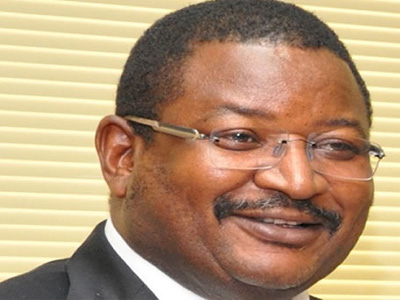 Yakubu unveiled plan last year
THE decision to split the Nigerian National Petroleum Corporation (NNPC) was taken by the management of the corporation under former Group Managing Director, Andrew Yakubu but the plan did not materialise before he was eased out of office last year.
So, the plan to split the corporation unveiled by President Muhammadu Buhari during his state visit to the United States of America is indeed not new.
In June 2014, Yakubu had disclosed that the main thrust of the plan was to unbundle the corporation into profitable business units with value addition through new products’ creation to compete favourably with other National Oil Companies (NOCs) on the one hand and International Oil Companies (IOCs) doing business in the country on the other hand.
Indeed, the appointment of Aisha Mata Abdurahaman as the first female Group Executive Director (GED) of the NNPC’s Business Development Directorate by then Minister of Petroleum Resources, Mrs. Diezani Alison-Madueke was meant to drive the split agenda. The plan by Yakubu to split the NNPC was part of the last administration’s plan to implement part of the Petroleum Industry Bill (PIB)provision that did not require legalese.
But for politics or reelection that took the steam out of the PIB drive, the decision would have been announced. And to demonstrate the NNPC readiness to actualise the new outlook, consultants were contracted to drive the transformation, beginning with the re-orientation of the corporation’s business development directorate to prepare them for the task in line with the new business requirement.
To underline its seriousness over the unbundling, the NNPC organised a retreat with the theme “Value creation, an optimum to business development,” at which Yakubu explained that the plan was aimed at repositioning the corporation to consolidate on gains of the transformation programme in terms of improved processes and business transaction.
He gave reasons why the corporation was embarking on optimisation thus: “Today, the NNPC faces an array of unique challenges as a result of the tremendous change occasioned by the development of shale oil and gas resources in the USA with attendant decline in imports of Nigerian crude.
Within the African continent, we are also witnessing increasing competitive threats, as traditional producers like Angola are ramping up production and new oil producers, namely, Ghana, Ethiopia , Kenya, Uganda, Tanzania and Mozambique have entered the market. Onshore exploration activities are also ongoing in Senegal, Gabon and other African markets.”
Yakubu submitted that for the NNPC to realise its vision of becoming a world-class oil and gas company, in line with its transformation roadmap, which includes the right to play in the global scene, a strong business development capability must be a top and strategic priority.
On her part, Abdruhaman expressed optimism that the NNPC would soon become the envy of other national oil companies at the end of the optimisation and called for the cooperation of other directorates to deliver on the mandate.
Buhari had announced in Washington that his government would break the NNPC into two separate entities- one a regulator and the other for investment.
The President’s words: “I am reforming the oil and gas sector, breaking up the NNPC into two parts – the first will become an independent regulator for the sector, while the second will act as an investment vehicle for the country.” However, the President was silent on the fate of Department for Petroleum Resources (DPR), which at present, regulates the sector.

