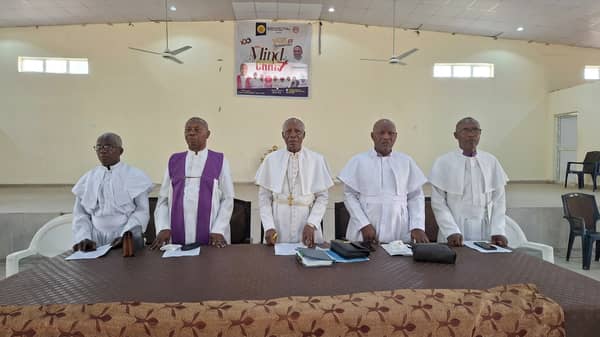
The Emeritus Supreme Head of the Cherubim and Seraphim (C&S) Unification Church Worldwide, Dr Solomon Alao, has outlined far-reaching measures he believes are critical to overcoming Nigeria’s worsening insecurity, warning that the country risks grave consequences if urgent action is not taken.
Speaking at a press conference in Ibadan to herald the 96th Annual General Conference of the church, Alao said the persistence of violent crimes, banditry and communal conflicts across the country reflected deep structural and governance failures that required bold reforms rather than ad hoc responses.
Central to his recommendations, the cleric said, was the establishment of state and local government police forces to complement federal security agencies.
According to him, decentralised policing would help curb the influx of “unknown and undetected elements” into communities and allow for quicker intelligence gathering and response at the grassroots.
He argued that security leadership at the state level should be rooted in local knowledge, insisting that Commissioners of Police and Divisional Police Officers ought to be indigenes of the states and communities they serve. Such officers, he said, would be less likely to compromise the safety of their people and more committed to protecting lives and property.
Dr Alao also called for strict enforcement of existing anti-open grazing laws, particularly in states that have already enacted them. He said the unchecked movement of cattle across farmlands has heightened tensions between farmers and herders, undermined agricultural productivity and threatened national food security.
“Farmers must feel safe to go to their farms,” he said, warning that failure to protect rural communities could worsen hunger and push the country towards famine.
The C&S leader identified political culture and governance as key drivers of instability. He urged Nigeria to “do away with godfatherism”, which he said continues to promote incompetence, corruption and exclusion in leadership selection.
He further advocated a restructuring of the federation to reduce the cost of governance and promote efficiency. In his proposal, the existing six geopolitical zones would be converted into states, while the current 36 states would function as provinces. This, he said, would streamline administration and reduce duplication of roles.
Alao also called for a reduction in the cost of running the National Assembly, suggesting a cut in the number of legislators in both chambers. He argued that representation should be balanced and efficient, regardless of the geographical size of states, while more powers should be devolved to sub-national governments to reduce what he described as “unhealthy competition” for control of the centre.
He warned that Nigeria’s security situation was deteriorating rapidly and that failure to act decisively could trigger far-reaching social and economic consequences.
Turning to the 2027 general elections, the cleric urged Nigerians to be vigilant and discerning in choosing their leaders, cautioning that many politicians were motivated solely by the pursuit of power and wealth.
He also charged Christians to take a more active role in politics, particularly in the coming elections, stressing that civic participation should be guided by prayer and a collective search for leaders with integrity, vision and the fear of God.
According to him, only a combination of moral renewal, structural reforms and responsible leadership can steer Nigeria away from insecurity and set it on the path to lasting peace and development.