 Follow Us on Google News


 Follow Us on Google Discover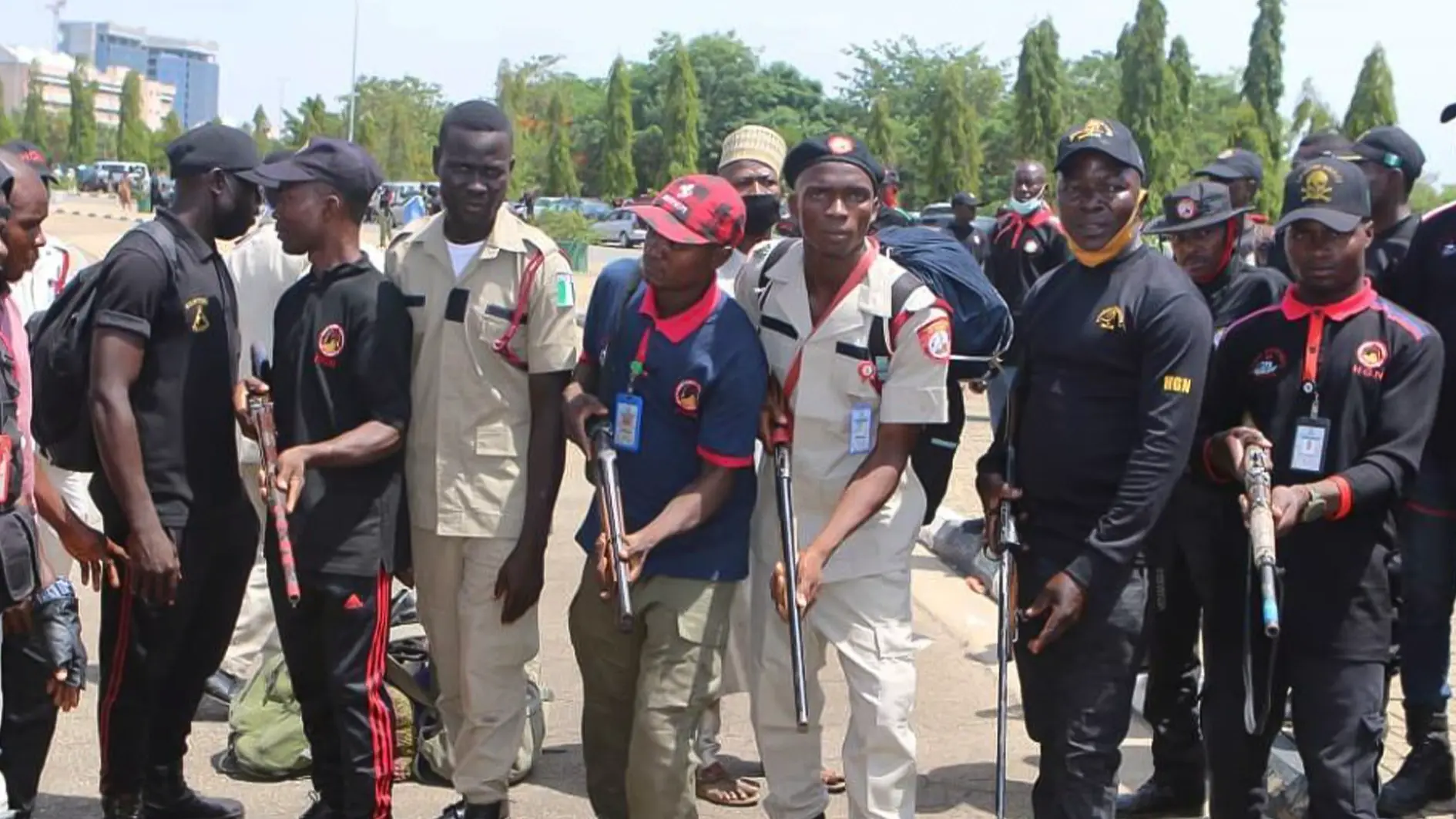
A new policy report has raised fresh concerns over Nigeria’s worsening security crisis, with experts calling for the urgent regulation of vigilante groups as citizens increasingly take on frontline security roles.
The report, “From State Security to Societal Security: Securitisation and the Changing Role of Citizens in Nigeria,” authored by Chibuike Njoku and Ndu Nwokolo of Nextier, highlights a growing shift from a state-driven security architecture to one that depends heavily on civilian participation.
Traditionally, the report noted that the burden of security has rested on institutions such as the Nigerian Armed Forces and the Nigeria Police Force. However, rising threats—including terrorism, banditry, kidnapping, communal clashes, and organised crime—have overwhelmed these agencies.
Drawing from the Nextier Nigeria Violent Conflicts Database, the report disclosed that between January and December 2025, no fewer than 4,654 people were killed and 3,141 abducted in 1,274 incidents across the country, underscoring the limits of a purely militarised response.
The authors observed that Nigeria’s security challenges have expanded beyond conventional threats to include ethnic tensions, religious extremism, and digital misinformation—a process described in security studies as Securitisation.
This evolution has given rise to the “security citizen,” where ordinary Nigerians now serve as informants, vigilantes, and digital monitors.
Groups such as the Civilian Joint Task Force and regional networks like Amotekun have become central to local security operations, often bridging gaps left by overstretched state forces.

While acknowledging their contributions to intelligence gathering and rapid response, the report warned that the increasing reliance on such groups exposes civilians to significant risks, including reprisals, poor training, and potential human rights abuses.
“The rise of citizen participation reflects an adaptive response to insecurity but also signals a profound transformation in state–society relations,” the authors stated.
The report cautioned that the growing trend of securitisation could erode civil liberties, heighten surveillance, and allow governments to label dissenting voices as security threats.
It further identified major governance gaps, particularly the lack of clear legal frameworks and oversight for non-state security actors, which could undermine accountability and public trust.
To address these challenges, the experts called for a coordinated national framework to regulate societal security practices, strengthen institutional oversight, and clearly define citizens’ roles in security operations.
They specifically urged state governments to formalise and regulate vigilante groups to ensure professionalism and accountability, while also calling on civil society organisations and the media to play a more active role in monitoring abuses and countering misinformation without stifling free expression.
The report noted that although Nigeria’s shift toward societal security may be inevitable, it must be carefully managed to strike a balance between effective security responses and the protection of democratic values.
“Nigeria’s security future depends not only on stronger state institutions but also on empowered citizens whose roles must be clearly defined, protected, and democratically governed,” the authors stated.

