 Follow Us on Google News
 Follow Us on Google Discover
 THE year 2015 may have come and gone, but its hangover definitely envelopes the New Year, 2016, in terms of cases that it has naturally inherited. Of paramount attention are those that originated from the Election Petition Tribunals, following the 2015 General Elections and terrorism cases which have become a major feature of the Nigerian Courts in recent years, occasioned by the numerous bombings by the fiery Islamic sect – Boko Haram. Indeed, these cases kept the judiciary busy in 2015 and promise to engage the judiciary much more in 2016.
A need to take more than a cursory look at a few of the cases, which 2015 have bequeathed to 2016, may suffice. In 2015, the Election Petitions Tribunals dealt with petitions challenging the outcome of governorship, National Assembly and State Houses of Assembly polls.
At the tribunal, most petitions, which challenged the outcome of governorship elections were unsuccessful and even when the petitioners approached the Court of Appeal to upturn the tribunals’ decision, they again failed. However, there were a few of those governorship petitions, which resulted in some gubernatorial elections being nullified by the tribunals and the appellate court affirming those decisions. The decisions of the Governorship Election Tribunals of Rivers, Akwa Ibom and Taraba readily come to mind
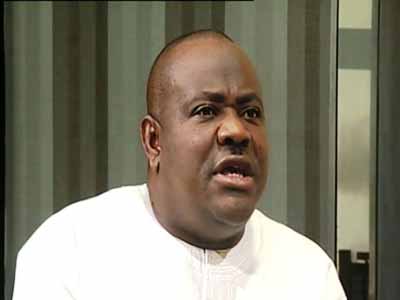
Specifically, on October 24, 2015, the Rivers State Governorship Election Petition Tribunal nullified the April 11 governorship election that brought Governor Nyesom Wike to power.
The three-man panel tribunal headed by Justice Suleiman Ambrosa upheld the petition that was lodged against Wike’s victory by the All Progressives Congress (APC) and its gubernatorial candidate in the state, Dr. Dakuku Peterside.
The tribunal maintained that the petitioners successfully proved that the governorship poll was characterised by violence, over-voting and did not comply substantially with the Electoral Act. Dissatisfied, Wike approached the Appeal Court to upturn the decision of the tribunal, but the five-man panel of the appellate Court presided over by Justice M.B Dongban-Mensen dismissed his appeal for lacking in merit.
Earlier, on October 24, 2015, the Akwa Ibom Governorship Election Petition Tribunal nullified elections in 18 out of the 31 local councils of the state. But upon appeal by the standard bearer of the All Progressives Congress (APC), Umana Okon Umana, the Appeal Court panel presided over by Justice Oludotun-Okojie held that the evidence from all parties showed that there was no collation during the said election and as such, election cannot be said to have been conducted under that circumstances.
It held that the Election Tribunal erred when after establishing that the irregularities in the election were wide spread, failed to cancel same and order the conduct of a fresh election in the entire state.
Accordingly, the Court of Appeal, Abuja Division nullified the victory of the candidate of the Peoples Democratic Party (PDP), Governor Udom Emmanuel and ordered the Independent National Electoral Commission (INEC) to conduct a fresh election within 90 days.
Similarly, on November 7, last year, the Taraba State Governorship Election Petition Tribunal voided all votes cast in favour of Darius Ishaku of PDP at the April 11 and April 25, polls on the ground that the party did not conduct primaries to nominate Ishaku in gross breach of the mandatory Provision of the Electoral Act. Consequently, the tribunal declared Senator Aisha Jummai Alhassan of the All Progressives Congress (APC) as the rightful winner of the said gubernatorial poll.
Ishaku’s bid to nullify the tribunal’s verdict succeeded, as the Court of Appeal sitting in Abuja nullified the tribunal’s verdict. The case is now set for the Supreme Court.
Suffice to say that many close watchers, observers and even some members of PDP raised concerns about the plethora of verdicts that seemed to swing in favour of the ruling party – APC.
Many alleged that the APC was using the judiciary to torpedo PDP in places they won, warning that the ruling party was trying to turn Nigeria into a – one party state by judicial manipulation of electoral outcomes. While such allegations had no shred of evidence, it may not be wished away even though the victory of the Peoples Democratic Party (PDP) and its candidate, Governor Ifeanyi Okowa, at the Delta State Governorship Election Petition Tribunal and the Court of Appeal did a bit to douse the concerns raised by observers as to where the judicial pendulum swung.
Curiously, and perhaps, in a comical response to these, some members of the ruling party accused PDP of bribing the Delta State Governorship Election Tribunal with N3b to procure judgment in its favour. There is no gain saying such allegations, except substantiated should not even come from an opposition party, not to talk more of the ruling APC, which has a duty to help restore confidence in the judiciary, else aggrieved persons result to self-help and jungle justice.
Indeed, the above scenario, demonstrates that the judiciary has its work on electoral disputes, in the New Year, well cut out as Governors: Wike (Rivers), Emmanuel (Akwa Ibom) and Okezie Ikpeazu (Abia), all of the PDP, have opted to exhaust their legal remedies at the Supreme Court, which is the final court for governorship disputes. Whereas, it is the mantra of the Supreme Court that ‘the apex court is not final, because it is infallible, it is infallible, because it is final’, the court clearly knows that what is expected of it is not just to do justice, but also to ensure that justice is seen to have been done.
Arguably, reposing confidence in the eminent jurists of the apex court that they will do substantial justice in 2016 to all gubernatorial elections petitions appeals before them may not be misplaced.
While the electoral cases of governors defined as suis generis have moved up to the apex court, the Federal High Court, especially, the Abuja Division, definitely has so much to chew in terms of corruption and terrorism cases to handle in 2016.
It was evidently overwhelmed by a flurry of these cases in 2015 that other civil and low profile criminal matters suffered unprecedented adjournments owing to them. In 2015, the Economic and Financial Crimes Commission (EFCC) filed a – 22 count charge against a former Minister of State for Finance, Bashir Yuguda; former Governor of Sokoto State, Attahiru Bafarawa; his son Sagir Attahiru, and their firm Dalhatu Investment, over their alleged complicity in misappropriation of about N13b, which was originally earmarked for purchase of arms by the Office of the National Security Adviser.
The immediate past NSA, Sambo Dasuki and a former Director of Finance and Administration in the Office of the NSA, Shuaibu Salisu, are also in court. The accused were said to have misappropriated the money between August 2013 and May 7, 2015. Upon their arraignment, the accuse persons, appearing before Justice Peter Affen, pleaded not guilty to each of the 22 counts bordering on conspiracy, dishonest receipt of stolen property in breach of sections 97 and 317 of the Penal Code Act as well as receipt of proceeds of criminal conducts in breach of section 17(b) of the EFCC Act. Dasuki was also arraigned at the Abuja High Court alongside a former Director of the Nigeria National Petroleum Corporation, Aminu Baba – Kusa and Director of Finance and Administration in the Office of the NSA, Salisu Shuaibu for alleged criminal breach of trust and unlawful diversion of N32 Billion.
In a19 count charge preferred against the trio, Dasuki, Kusa and Shuaibu 1st – 3rd accused persons), the Economic and Financial Commission (EFCC) accused them of offences of money laundering and criminal breach of trust. The charge sheet named Acacia Holdings and Referral Hospital as 4th and 5th defendants, who were also represented by the 2nd accused (Baba – Kusa).
Specifically, they were accused of misappropriating about N32b between January 13, 2013, and April 17, 2015 in violation of section 315 of the Nigerian Penal Code Act, and section 17 (b) of the EFCC Act, 2004. Appearing before the trial Judge, Justice Husseini Baba-Yusuf, they pleaded not guilty to each and all of the – 22 counts charge.
Also, former Chairman of DAAR Communications, Chief Raymond Dokpesi was arraigned on a six counts charge bordering on money laundering and breach of Public Procurement Act, to which he has since pleaded not guilty to the six counts.

Many observers are keen to see how these cases pan out, with that of Dokpesi being of particular interest, as some persons have wondered how the media mogul and stalwart of PDP would have known that the money he was paid for media campaigns for PDP was part of the money earmarked for arms deal. Interestingly, some have likened the Dokpesi situation to that of President Muhammadu Buhari, who also benefitted from the same arms deal money by his own admission. The President said he got two SUVs from the office of NSA, but put up a lame effort to justify it, as being his lawful entitlement being a former Head of State.
It definitely will make good reading what the considered decision of the trial Judge, Justice Gabriel Kolawole would be.
Another set of cases, which occupied the court was the case of Politically Exposed Persons as on July 8, 2015, EFCC, arraigned former governors of Adamawa and Imo states, Admiral Murtala Nyako (rtd) along with his son, Abdulaziz and Ikedi Ohakim at the Federal High Court over alleged money laundering, abuse of office and misappropriation of public funds.
While Nyako allegedly diverting about N40b from the coffers of Adamawa State between January 2011 and December 2014, Ohakim was accused of syphoning $2m from the state to acquire a state- of –the- art mansion in the opulent Asokoro District in Abuja. Similarly, on July 13, last year, EFCC arraigned the former Head of Service of the Federation, Mr. Stephen Oronsaye and his alleged cohort —Mr. Osarenkhoe Afe — at the Federal High Court, Abuja Division on a 24-count charge of criminal conspiracy and diversion of N1.9b from the nation’s coffers.
Former Governor of Jigawa State, Sule Lamido and his two sons, Aminu and Mustapha, were also arraigned. The Code of Conduct Tribunal, CCT, Abuja Division, on September 18, ordered the arrest of the Senate President, Dr. Bukola Saraki following his refusal to appear in court to face a 13-count criminal charge that was preferred against him by the Federal Government.
The tribunal, which was headed by Justice Danladi Umar, directed the Inspector General of Police, IGP, Mr. Solomon Arase and other relevant security agencies in the country to arrest the Senate President and produce him in court for trial. Saraki was eventually arraigned before the CCT on September 22, though vide an appeal by him to the apex court, his trial has been put on hold.
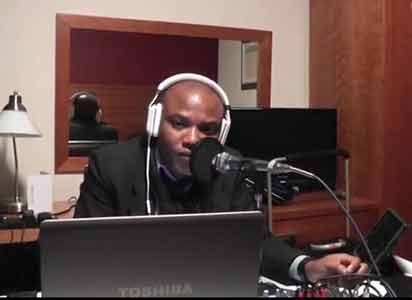
Another case of grave significance is that of Director of Radio Biafra, Mr. Nnamdi Kanu, who was charged before the Federal High Court, Abuja Division this month, but refused to enter a plea on a – six count charge of terrorism on the ground that he will not be given a fair trial. Kanu was brought before Justice Ahmed Mohammed on charges of treason, importation of illegal goods and possession of firearms preferred against him by the Department of State Security (DSS).
Kanu, docked alongside Benjamin Madubugwu and David Nwawuisi, expressed his lack of confidence in the court, owing to lack of information available to him. His words: “I will not sacrifice the due process of the law founded in the principles of natural justice upon the altar of speedy release from detention. In other words I will rather remain in detention than subjecting myself to a trial that I know amounts to perversion of justice. Previous court judgments and rulings have been delivered by competent court of laws in Nigeria in my favour, which the department of the State Security Service failed to obey or implement. On that premise, I am not ready to stand before this court for trial because I am convinced that the outcome will go the way of the previous ones, therefore I have chosen to remain in custody until justice prevails in my matter in the interest of justice.”
In his reaction, Counsel for the Federal Government, Mr. Mohammed Diri, prayed Justice Mohammed to reject the claim of the Biafra Leader on the ground that he cannot dictate to the court.
He said that the accused, if he has any objection to his trial, could only come by way of application stating his grievances with exhibits in clear terms, special circumstances on why he should not be tried by a particular court.
Diri, who is the Director, Public Prosecution of the Federation, sited section 396 (2) of the administration of criminal justice act 2015, adding that under the act, an objection to trial can only be raised by the accused when the plea has been taken and not before as been done by the accused person. He therefore prayed the court to compel the accused that was already in the dock to take his plea. But counsel to Kanu, Mr. Vincent Egechukwu Obetta informed the court that the accused has the fundamental right to object to his trial by the Judge and pleaded with the court to grant him his request.

In his ruling, Justice Mohammed agreed that the accused person has the right to object to his trial before his court on the ground that justice is rooted on confidence and rejected the submission of government’s counsel.
The judge, therefore, ordered the case file returned to the Chief Judge of the Federal High Court, so that it can be re-assigned to another judge and for further action. Kanu had earlier been granted unconditional release by Justice Adeniyi Ademola of the Federal high Court, Abuja Division, from the custody of the DSS but the order was not obeyed and instead the government brought a fresh charge against him.
The court and its Chief Judge would definitely be under scrutiny as they navigate their way through this case because the objection of Kanu are so well stated.
By and large, 2016 will saddle the Nigerian Judiciary with more challenging times as these cases are of grave significance, not just to the country, but the world at large. The Nigerian Judges more than ever before need to be fearless and impartial and dispensing justice to all manner of men, political parties and every other person, mindless of whose ox is gored.
More than ever before, public confidence in the judiciary depends ever more on how they handle these cases and more.

