 Follow Us on Google News


 Follow Us on Google Discover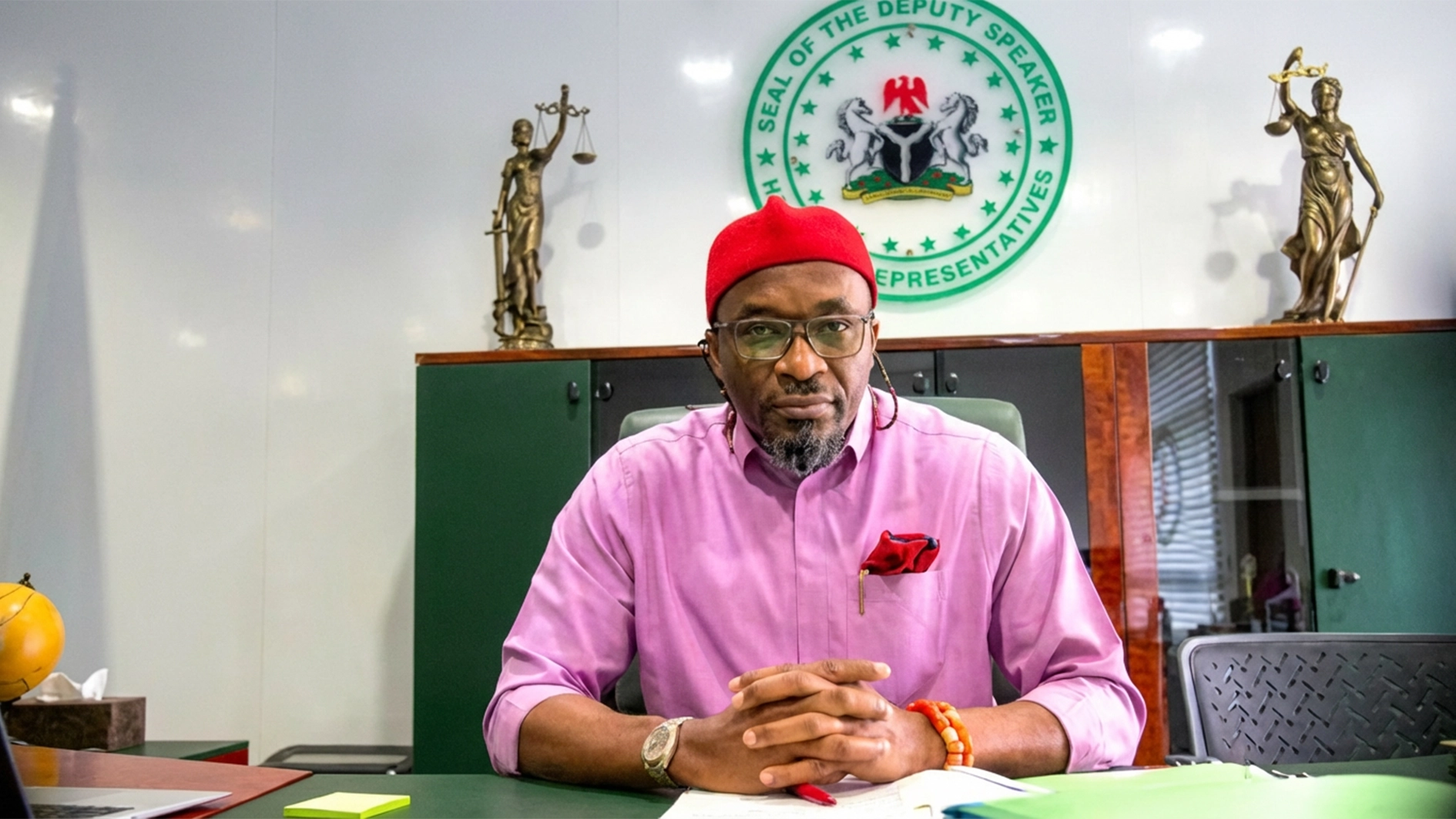
The Deputy Speaker of the House of Representatives, Benjamin Kalu, has expressed concern over the stagnation of intra-ECOWAS trade, describing it as a missed opportunity in a sub-region with an estimated $3.4 trillion market potential.
Kalu called for an urgent transition from what he termed “paper integration” to “functional integration” in implementing the African Continental Free Trade Area within the Economic Community of West African States (ECOWAS) sub-region.
He made the call on Monday in Abuja during a Parliamentary Seminar titled “Deepening Regional Integration Through the AfCFTA: Opportunities and Challenges for Expanding Intra-Community Trade Within ECOWAS.”
Addressing lawmakers, Kalu noted that while intra-African trade rose to $220.3 billion (16 per cent) in 2025, intra-ECOWAS trade remains stuck at 11.5 per cent.
“In today’s geopolitical climate, AfCFTA is no longer just a trade agreement; it has become the strategic engine that must power Africa’s industrial resilience and survival,” he said.
“In a world of fragmenting global supply chains, Africa must trade with itself to thrive. Yet, despite a $3.4 trillion market potential, we still struggle to move a truck from Lagos to Abidjan.”

Describing the Abidjan–Lagos corridor as the backbone of the regional economy, the Deputy Speaker said it remains “an unfinished promise,” stressing that administrative inefficiencies now pose even greater challenges than poor road infrastructure.
“We can build a six-lane highway, but if a truck spends 14 hours at a border due to red tape, that highway is just an expensive parking lot,” he stated.
Kalu argued that beyond reporting Non-Tariff Barriers (NTBs), ECOWAS needs a regional enforcement body with the power to penalise bureaucratic delays that disrupt supply chains.
“To bridge the gap between our high-level aspirations and our regional reality, we must transition from the diplomacy of ‘Paper Integration’ to the tangible impact of ‘Functional Integration,'” he said.
On monetary integration, Kalu urged leaders to adopt a pragmatic approach.
While acknowledging decades of discussions around a single regional currency, the Eco, he described full macroeconomic convergence as unrealistic under present conditions.
Instead, he advocated prioritising the Pan-African Payment and Settlement System (PAPSS), which he described as an immediate and functional solution to regional trade payment bottlenecks.
“For decades, we have chased the dream of a single currency (the Eco). It is time for a reality check,” he said. “PAPSS provides some of the key benefits of a single currency, including instant settlement in local currencies, without the loss of national sovereignty.”
According to him, the system would also eliminate Africa’s dollar dependency, which costs the continent an estimated $5 billion annually in transaction fees.
“Why wait in perpetuity for a shared banknote when we can solve the payment problem today with a digital switch?” he asked.
Kalu further urged member states to prioritise the AfCFTA Guided Trade Initiative (GTI), saying it would make the trade pact practical for manufacturers in Aba, agro-processors in Côte d’Ivoire, and small-scale traders in The Gambia.
He maintained that the time had come for ECOWAS leaders to move beyond declarations and begin enforcing measurable reforms that would unlock the region’s vast economic potential.

