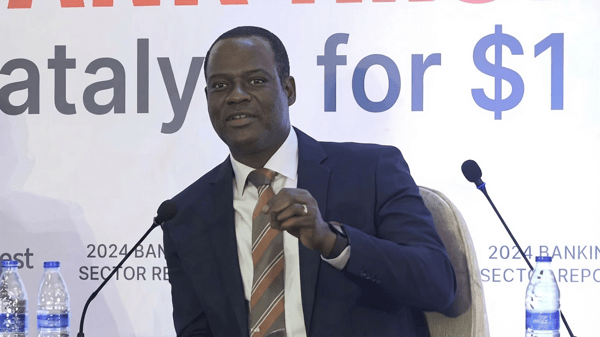
Chairman of the Presidential Fiscal Policy and Tax Reforms Committee, Taiwo Oyedele, has said Lagos State’s ability to raise up to N1tn annually from property tax will depend less on tax rates and more on the quality of data, legal harmonisation and administrative coordination across government.
Oyedele spoke on Tuesday at the Tax Reform Summit 2026 in Lagos, where discussions focused on how states can translate national tax reforms into practical revenue outcomes.
His remarks placed Lagos at the centre of the debate on subnational implementation, especially as federal reforms increasingly shift responsibility to states and local governments.
According to him, property tax remains largely untapped in most states despite its stability and resistance to evasion when properly administered. He said Lagos had a clear opportunity to change that narrative if it prioritised accurate property records and transparent systems.
“Part of what you want me to speak to is also on property as a sustainable revenue anchor.
Property taxation is one of the most underutilised yet stable revenue sources available to states and local governments,” Oyedele said.
He explained that the tax works best when linked to visible public services and supported by credible data. “When done properly, property tax is difficult to evade. It grows with urban development, so it’s funding itself and aligns payment with visible public services. Every naira we collect, we invest back into the community,” he said.
Oyedele outlined a simple scenario to illustrate the scale of the opportunity. “If just two million properties are taxable in Lagos State for property tax purposes, and they are worth an average of N100m, and you tax at just 0.5 per cent of the valuation. That’s N1tn every year invested back into the community. It can only grow,” he said.
However, he stressed that such outcomes are impossible without reliable data. “Data is critical, a credible database of taxpayers, and not just taxpayers. The value of property is part of your tax base. How many people are employed and earning income is part of the size of your tax base, including a reliable valuation for those properties,” he said.
He added that Lagos should aim to dramatically expand its taxpayer register, noting that “in Nigeria today, the number of active individual taxpayers is under 10 million for the whole country. I think that’s the number we should have for Lagos State”.
Beyond data, Oyedele challenged the state to lead on legal and institutional reforms, including tax harmonisation. He disclosed that a model tax harmonisation law had already been drafted by the Presidential Fiscal Policy and Tax Reform Committee in collaboration with the Joint Revenue Board.
“So, what’s my call to action? I encourage us to focus on how best to make collaborative implementation work, not whether we want to collaborate. That question is not available anymore,” he said, noting that Ekiti, Zamfara, Anambra and Kano states had already enacted the law.
He also criticised fragmented revenue collection, arguing that efficiency suffers when multiple agencies collect taxes outside the state revenue service.
“Revenue collection across agencies within the state also needs to be harmonised into the Lagos State Internal Revenue Service. There is a reason why the revenue agency knows how to collect taxes,” he said.
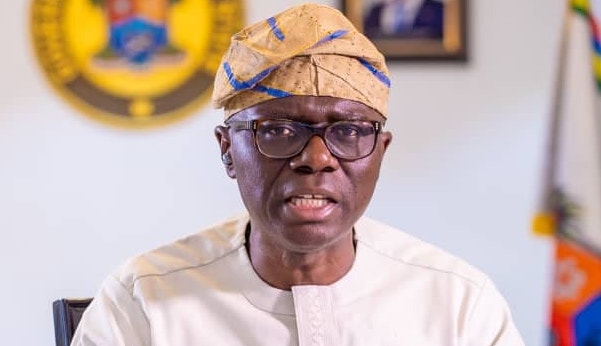
In his remarks, Lagos State Governor, Babajide Sanwo-Olu, acknowledged that the success of national tax reforms would ultimately be tested at the state level. He said Lagos was positioning itself to move from policy discussions to execution.
“As the Federal Government advances reforms to harmonise tax laws, strengthen VAT administration, improve coordination across tiers of government, and separate tax policy from administration, Lagos State is positioning itself as a leading sub-national in the implementation of these reforms,” Sanwo-Olu said.
He described taxation as a social contract, adding that compliance depends on trust.
“People comply willingly when they trust that the government is responsible, accountable, and responsive,” he said, noting that tax revenues in Lagos were being reinvested in transport, healthcare, education, security and social protection.
The Special Adviser to the Governor on Taxation and Revenue, Abdul-Kabir Ogungbo, said the summit was aimed at resolving structural weaknesses in revenue administration, particularly at the local government level.
“A critical outcome we therefore seek is the establishment of a standardised revenue portal across all Local Governments/LCDAs, seamlessly interfacing with state revenue systems and fully aligned with the national Tax Identification Number framework,” he said.
Ogungbo argued that improved data integration would support not only revenue collection but also governance, including the distribution of social support. He added that Lagos’ budget size remained misaligned with its responsibilities.
“When we place the Lagos State budget projection side by side with the Federal Government budget, this reality underscores the urgent need to intensify collective efforts towards achieving a sustainable revenue target for Lagos State in the range of N10tn to N15tn annually,” he said.
As debates at the summit showed, Lagos’ capacity to unlock large-scale property tax revenue may serve as a test case for how effectively Nigerian states can turn tax reform into measurable fiscal outcomes.