 Follow Us on Google News
 Follow Us on Google Discover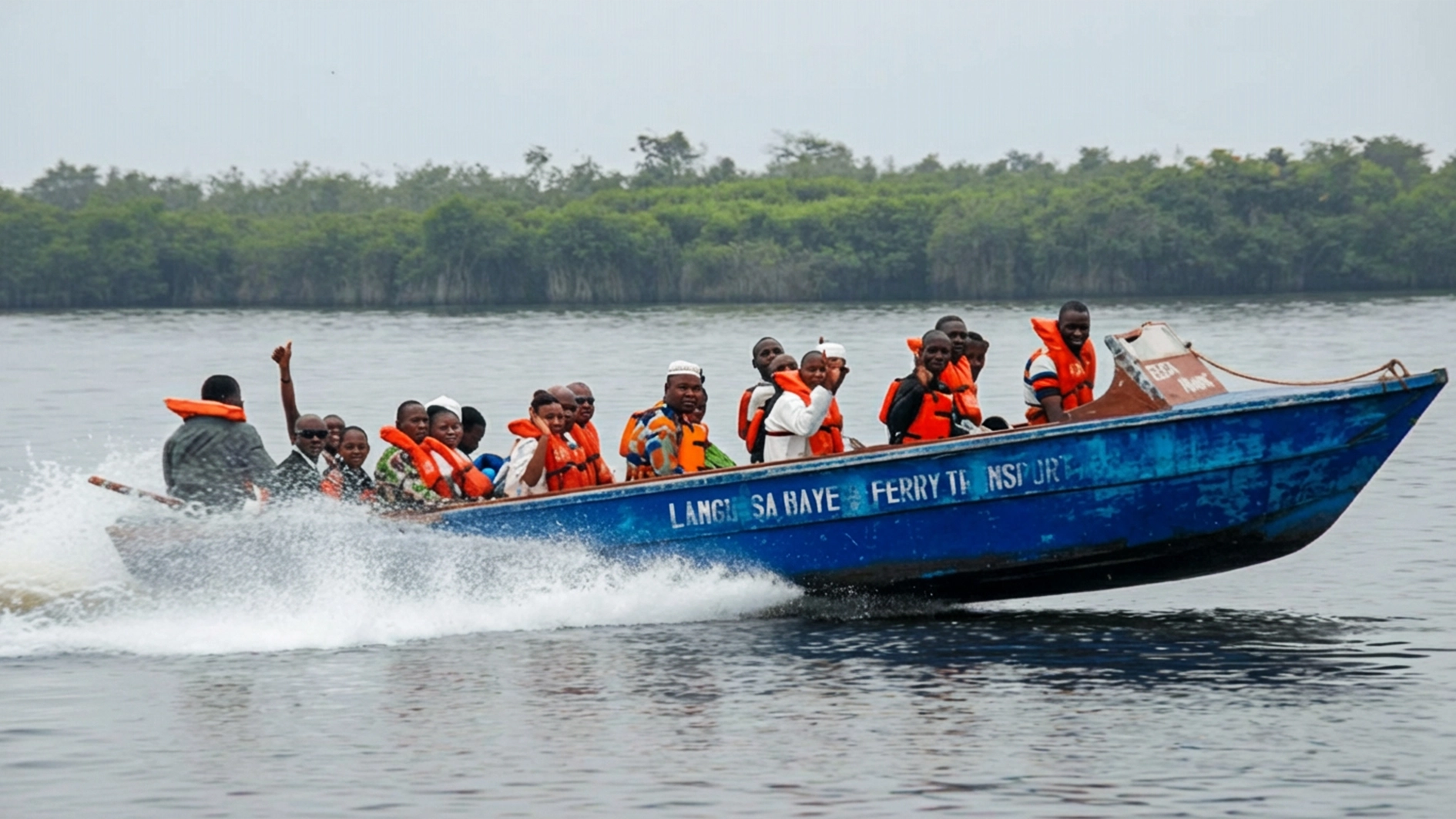
On the busy Lagos waterways, where boats shuttle thousands of commuters between jetties each day, the hum of engines and the chatter of passengers mask a risk that is often underestimated. For Ganiyu Shekoni Balogun, the Managing Director of Tarzan Jetties and President of the Association of Tourist Boat Operators and Water Transporters of Nigeria (ATBOWATON), that risk is very real, and preventable.
Known simply as Tarzan among colleagues and commuters alike, Balogun has spent decades navigating both the tides of Lagos Lagoon and the complexities of water transport management. His message is simple but firm – life jackets are not optional, and every passenger must wear one to ensure their survival should the unexpected occur.
“Water transport is no different from road or air travel in terms of risk,” he says, standing at the jetty as passengers gather to board their morning trips. “Yet, every day, we face passengers who refuse to wear life jackets. They think a short crossing is safe, or that nothing will happen to them – but history shows otherwise.”
Tarzan’s concern is not abstract.
Across Nigeria’s waterways, tragic accidents have claimed hundreds of lives, and investigations consistently point to a single factor – passengers without life jackets. “Many fatalities could have been avoided,” he says.
“When a passenger wears a life jacket, his/her chance of survival increases dramatically. It’s that simple.”

Despite the risks, enforcing safety measures has never been easy. Boat operators often face verbal abuse or resistance when insisting on life jackets. Some commuters view the rules as inconvenient or unnecessary, especially on familiar routes. Balogun, however, remains unwavering. For him, safety is a shared responsibility between operators and passengers – a non-negotiable principle that cannot be compromised for convenience or speed.
The company has invested heavily to ensure passengers’ protection. Standard, certified life jackets are provided at no additional cost, a significant expense that Tarzan says reflects the value of human life above profit.
“We spend a lot to make sure these life jackets are available and in good condition,” he explains. “It is not just an item; it is a safeguard. We ask only for cooperation in return.”
At the jetties, this cooperation has tangible effects. Passengers who follow instructions board more confidently, boat crews operate efficiently, and journeys that could otherwise be tense or chaotic become orderly and predictable.
Balogun, an engineer, stresses that every operator, whether part of ATBOWATON or otherwise, must adopt the same discipline. “Enforcement is not negotiable,” he says. “Safety cannot be optional. Every operator has a duty to protect lives on board, no matter what passengers think or say.”
But the conversation goes beyond compliance. For Balogun, insisting on life jackets is also about cultivating a culture of accountability on Nigeria’s waterways. He sees each successful crossing where every passenger wears a life jacket as a small but meaningful step towards professionalising water transport.
“Passengers must understand that safety is a collective responsibility. Operators cannot ensure it alone. Cooperation is key,” he notes.

