
As Nigeria strives to expand its mining sector to drive economic growth and diversification, incessant mining collapse incidents tend to expose deficiencies and weaknesses in safety regulations’ enforcement and infrastructural oversight. Without urgent reforms, experts fear that the sector risks further tragedies, ERNEST NZOR reports.
Last year, Nigeria’s mining sector suffered a series of devastating mine collapses, which resulted in multiple fatalities and injuries. These recurring tragedies, which culminated in a deadly explosion last month, have reignited concerns about mining safety, the proliferation of illegal operations, and the Federal Government’s ability to regulate the industry effectively.
The second half of 2024 witnessed three major mining disasters across Niger, Adamawa, and Plateau States, underscoring a pattern of unsafe practices and poor regulatory oversight.
For instance, a mine collapse in Galkogo, Shiroro, Niger State, trapped 30 miners, with several sustaining injuries. Heavy rainfall was blamed for weakening the soil and consequently leading to the disaster.
In November of the same 2024, over 30 miners were buried in another collapse around the Gashaka-Gumti National Park, Adamawa/Taraba States. The incident resulted in at least 22 fatalities. The disaster sparked a national outrage, which raised the alarm about unauthorised mining in protected areas.
Still in November 2024, Bassa, Plateau State, witnessed a pit collapse, which claimed 13 lives. Officials pointed to unregulated artisanal mining as the primary cause, a development that further emphasised the dangers of informal mining practices in the country.
These incidents not only led to tragic loss of lives, but also exposed deep-rooted vulnerabilities in Nigeria’s mining sector, caused by poor safety standards, a lack of proper oversight, and an alarming increase in illegal mining activities.
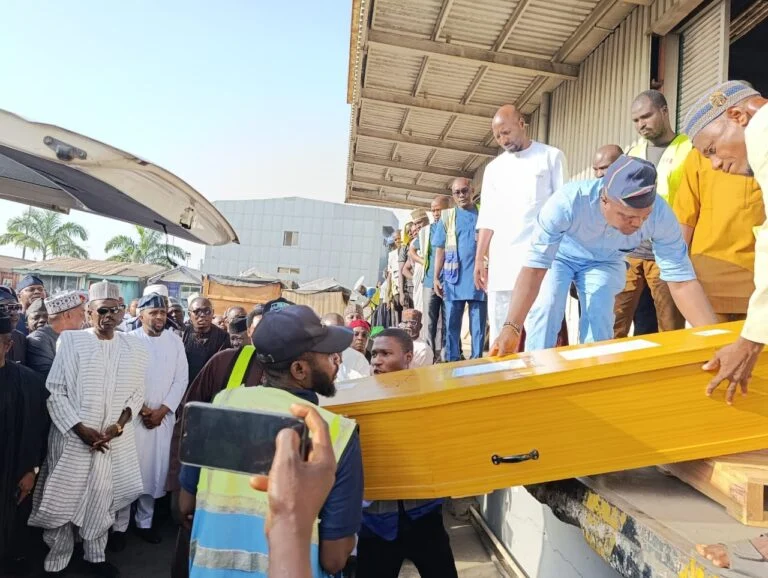
Just weeks into the New Year, another catastrophe struck the sector. On January 26, a powerful explosion at a mining site in Sabon Pegi, Mashegu Local Government Area of Niger State, killed four miners instantly. Although the figures were not made public, the death toll continued to rise as more bodies were recovered from the site.
The explosion, which shook neighboring communities, initially sparked fears of a terrorist attack. However, local sources attributed it to improper handling of explosives used in mining operations, stressing that the explosion was so loud it shook the entire village.
“People were afraid to approach the site for fear of more blasts,” the source revealed. Mining experts and government officials have pointed to several factors as being responsible for recurring tragedies, one of which is the proliferation of illegal and artisanal mining activities.
It was further disclosed that a significant portion of mining activities in the country are carried out by artisanal and small-scale miners, who operate without proper licenses, or strict adherence to safety procedures. This group of miners lacks the technical expertise required for such a vocation, thereby, making them more vulnerable to pit collapses and hazardous working conditions.
Reacting to the 2024 mining disasters, the Minister of Solid Minerals Development, Dele Alake, revealed that field inspections confirmed a lack of professional expertise among artisanal miners.
Similarly, the National President of the Miners Association of Nigeria (MAN), Mr Dele Ayanleke, described illegal mining as a major threat to the industry, even in developed nations.
According to him, many mining operations in the country rely on outdated equipment and lack modern safety practices. Inadequate mine support structures and improper use of explosives, such as the January blast in Niger State, have contributed to preventable disasters.
Despite existing mining regulations, enforcement has remained weak due to the inability of regulatory bodies to effectively monitor mining sites and activities due to poor funding and shortage of manpower.
Ayanleke emphasised that federal mine officers lack adequate personnel and logistics to enforce safety standards. Stakeholders have maintained that without urgent reforms, the country’s mining sector will remain a dangerous and unstable industry.
“However, with proper regulation, investment in safety, and enforcement of mining laws, the sector has the potential to become a major driver of economic growth while protecting the lives of those who depend on it,” Ayanleke said.
Nigeria’s high poverty rate is believed to have driven many individuals, especially in rural communities into dangerous mining jobs as a means of survival. Indeed, reports indicate that mining communities are witnessing a rise in out-of-school children, who engage in mineral exploration for quick financial gains.
Recognising the urgent need for reform, the government, through the Ministry of Solid Minerals Development, has introduced several policies aimed at improving safety and environmental management within the sector.
One such policy mandates that mining license applicants must include remedial measures for mining pits, a step towards reducing pit collapses and enforcing environmental safety standards.
Ayanleke urged the government to increase manpower within regulatory agencies to ensure better oversight and prevent future disasters. He also canvassed increased funding to allow for enhanced site inspections as well as prevent future disasters. “We need more funding for inspections. Without proper monitoring, we will keep seeing these tragic accidents.”
Speaking further on the issue of collapses, he said: “When mining collapses occur, not all affected sites belong to our members. Additionally, the workers impacted by such incidents often belong to their union- the Nigerian Union of Mine Workers. Our association primarily represents companies, corporate bodies, and entities with mining titles.
“Our key role is to provide education and enlightenment programmes to our members, not to all miners or license holders. Membership is voluntary, and only those who subscribe to our association benefit from these programmes, which focus on best practices and regulatory compliance. However, our reach remains limited compared to the broader mining industry.
“We conduct chapter meetings to encourage adherence to proper procedures, but mining remains a high-risk industry. Even in advanced mining sectors, collapses occur due to various factors, some of which cannot be entirely prevented despite strict compliance. Importantly, our association does not provide insurance coverage for individuals or companies. Insurance responsibility lies with each mining operator. For instance, the site of a recent collapse belongs to a specific company, which is solely responsible for its insurance arrangements.”
He added: “No mining company is unaware of our association’s existence. However, since membership is voluntary, we cannot compel anyone to join. We continue to advocate for better policies by engaging with the government, the ministry, regulators and other key stakeholders, to foster a more structured and secure mining sector.”
To curb illegal mining, authorities have encouraged miners to form cooperatives and obtain legal mining permits. Minister Alake emphasised that formalising mining operations would enhance safety and reduce environmental hazards.
But despite the government’s efforts, industry leaders said that a lot more needs to be done to ensure sustainability and safety in the sector. Speaking on the sideline of 2024 Nigeria Mining Weekend, the Finance and Administration Manager, of Sevilla Resources, James Olubanwo, stressed the importance of strict compliance with mining guidelines.
He urged miners to prioritise safety over short-term profits, warning that neglecting safety standards could lead to further disasters. He said: “If you follow the required procedures and obtain necessary approvals, mining becomes significantly safer. In our environment, we approach mining with careful planning. We don’t rush into it; we first map out the area.
“We determine the exact locations for operations and follow strict guidelines to ensure compliance. That is the reason we have never experienced issues like this in our own land. This is not simply a case of negligence by the federal government. As the first indigenous structured mining company in Nigeria, we take pride in adhering to proper procedures.
“Many other mining companies, without discrediting anyone, are not properly structured and often fail to follow regulations. My advice is simple; people should learn to do things the right way. If you plan to carry out blasting, an essential part of mining, there are control measures that must be followed.
“When these guidelines are strictly observed, incidents can be avoided. My advice once again is for all involved to obtain the necessary approvals; follow the required procedures, and adhere to best practices. Doing so will not only enhance safety but also ensure that operations remain cost-effective.”
Upon assuming office in 2023, President Bola Ahmed Tinubu, pledged to revamp Nigeria’s mining sector, setting an ambitious target of increasing its contribution to 50 per cent of the country’s Gross Domestic Product (GDP).
However, the former MinDiver Project Coordinator, Linus Adie, highlighted that poor technology and informal mining practices remain major obstacles to such goals.
He said: “Mine collapses are often linked to poor technology, particularly in Nigeria, where mining is dominated by informal, unregulated miners, commonly referred to as illegal miners. These individuals typically have no formal education or training in mining.
In the field, the situation is even worse. One common mining method, known as Loto mining, involves digging a circular hole and descending into it. If miners are fortunate enough to strike a mineral-rich vein, they follow it, continuing their excavation without considering the structural risks. This approach disregards fundamental safety measures, making collapses inevitable.
“In contrast, professional mining operations prioritise safety from the outset. As excavation progresses, securing a strong roof is essential to prevent cave-ins, although mine collapses are not unique to Nigeria; they occur in other countries as well.
“To address this, the federal government has to implement regulations aimed at organising informal miners into structured cooperatives. Even during British colonial rule, technical assistance programs existed to improve mining safety. By forming cooperatives, miners can receive proper training on essential safety protocols, especially in regions like Niger State, where lose ground conditions pose additional risks.
“During the rainy season, loose soil can easily shift, leading to landslides that bury miners alive. Ensuring mine safety requires not only education but also strict regulations on explosives. Unfortunately, recent incidents have seen explosives being sold indiscriminately, leading to reckless use.
“To improve mining practices, I introduced extension officers, a concept that has been highly effective in agriculture. In some South American countries, extension officers have also been successfully deployed in artisanal mining. These government-appointed experts visit mining sites to educate miners on safe excavation techniques, mineral identification, processing, and sales. By providing guidance throughout the entire mineral value chain, extension officers play a crucial role in promoting safer, more efficient mining operations.”
Dr Johnson Kayode Ayeni, of the Earth Sciences Department, Anchor University, Lagos State, emphasised the crucial role of mining regulatory agencies in ensuring safe and environmentally responsible mining operations.
Ayeni outlined steps regulatory agencies must take to improve safety to include, “regular training for inspectors on new technologies, mining methods and environmental regulation.” He held that specialised experts such as geologists, mining engineers and environmental scientists must be hired to support inspection and monitoring efforts.
Other measures include leveraging technology, which entails using drones equipped with cameras and sensors to monitor mining sites rather than physical inspections; using AI tools to analyse inspection data, identify trends, predict potential, and foster collaboration and information-sharing. He also suggested collaboration with government agencies, including environmental and health departments to share information, and knowledge and coordinate efforts to stay up-to-date on best practices.
However, stakeholders held that achieving major feat in the industry requires addressing the sector’s critical challenges, including support for small-scale miners and implementation of modern mining technologies.
With Nigeria positioning to be a key player in the global energy transition, its rich deposits of critical minerals must be managed responsibly. If properly reformed, the mining sector can drive sustainable economic development while ensuring the safety and well-being of mining communities. The recent series of mine collapses and explosions therefore serves as a wake-up call, especially against weak regulatory enforcement and illegal mining activities.