 Follow Us on Google News


 Follow Us on Google Discover
What was initially seen as a bold political strategy ahead of the 2027 general elections has now turned into a cautionary tale for some former members of President Bola Tinubu’s cabinet.
In line with a directive requiring political appointees seeking elective positions to resign from office, several ministers stepped down from the Federal Executive Council, confident that leaving the cabinet would strengthen their chances of securing tickets under the All Progressives Congress (APC).
But as the primaries unfolded across different states, the reality proved far less favourable. Instead of political elevation, many of these former ministers found themselves grappling with unexpected defeats, internal party resistance, and in some cases, total political sidelining.
Out of five prominent ministers who left their posts to contest, only a minority managed to secure APC tickets, while others suffered bruising losses that have left their political futures uncertain.
The affected figures include former Minister of Power, Adebayo Adelabu; former Minister of Transportation, Saidu Alkali; former Minister of Foreign Affairs, Yusuf Tuggar; former Minister of State for Labour and Employment, Nkeiruka Onyejeocha; and former Minister of State for Humanitarian Affairs, Yusuf Sununu.
While Onyejeocha and Sununu eventually emerged victorious in their respective states of Abia and Kebbi, the remaining trio faced disappointing outcomes that reshaped their political trajectories.

Adelabu’s Gamble in Oyo Ends in Crushing Defeat
 Minister of Power, Adebayo Adelabu.
Perhaps the most dramatic fall came in Oyo State, where former Minister of Power, Adebayo Adelabu, resigned from the cabinet to pursue the APC governorship ticket with high expectations.
Confident and widely speculated to have strong backing within national power circles, Adelabu entered the race as one of the front-runners. However, the primaries delivered a shocking outcome.
Senator Sarafadeen Alli emerged as the overwhelming winner, reportedly securing a commanding lead while Adelabu trailed far behind with a distant vote count.
The scale of the defeat stunned political observers and triggered immediate pushback from Adelabu’s camp. He rejected the results outright, alleging widespread irregularities, intimidation of delegates, and manipulation of the process.
Before the primary, Adelabu had publicly dismissed rumours of presidential backing for his opponent, insisting instead that he enjoyed support from President Tinubu himself.
He even described his resignation as a direct encouragement from the President, claiming he had been told to pursue his long-standing ambition without hesitation. However, the outcome of the primaries appeared to tell a different political story.
Alkali’s Third-Place Finish and Gombe Power Struggle

In Gombe State, former Minister of Transportation, Saidu Ahmed Alkali, also left his ministerial position to contest for the APC governorship ticket.
What was expected to be a competitive race quickly turned into a crowded internal battle, influenced heavily by existing state power structures.
Alkali ultimately lost the ticket to Jamilu Gwamna, who reportedly enjoyed strong backing from Governor Inuwa Yahaya, a decisive factor in the outcome.
The contest also featured former Minister of Communications and Digital Economy, Isa Ali Pantami, who finished ahead of Alkali in the race.
When the final results were announced, Pantami secured 12,120 votes, while Alkali followed closely with 11,612 votes, placing him third in the primary.
Though both candidates initially expressed reservations about the process, including concerns about fairness and timing, the results were upheld after the electoral committee confirmed that withdrawal letters submitted by some contestants came too late to remove their names from the ballot.
Tuggar’s Exit and Defeat in Bauchi
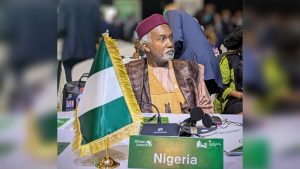
Former Minister of Foreign Affairs, Yusuf Maitama Tuggar, took a more formal and timely approach to his resignation, stepping down on March 30 just ahead of the presidential deadline.
In his resignation letter, Tuggar described his exit as a necessary step in compliance with President Tinubu’s directive and the provisions of the Electoral Act. He expressed gratitude for the opportunity to serve under the “Renewed Hope Agenda” and referenced his contributions to Nigeria’s foreign policy direction.
With his diplomatic background and prior political experience as a former federal lawmaker and ambassador to Germany, Tuggar’s entry into the governorship race in Bauchi State was seen as strategic.
However, the APC primary in the state proved decisive, as former Governor Mohammed Abubakar emerged victorious with a commanding 57,517 votes.
Tuggar trailed significantly with 26,001 votes, marking a clear defeat despite his national profile and ministerial experience.
A Political Strategy That Backfired
Across the board, the outcomes of these primaries have sparked conversations within political circles about timing, loyalty, and the risks of abandoning an appointed office for elective ambition.
While stepping down was framed as adherence to party discipline and constitutional expectations, the gamble has not paid off equally for all.
For some, resignation from cabinet positions meant surrendering political influence without securing the party backing needed to advance.
For others who succeeded, it remains a rare political win in a highly competitive internal party environment.
As the dust settles, the experience of these former ministers stands as a stark reminder: in Nigerian politics, leaving office is easy but winning what comes next is anything but guaranteed.

