 Follow Us on Google News


 Follow Us on Google Discover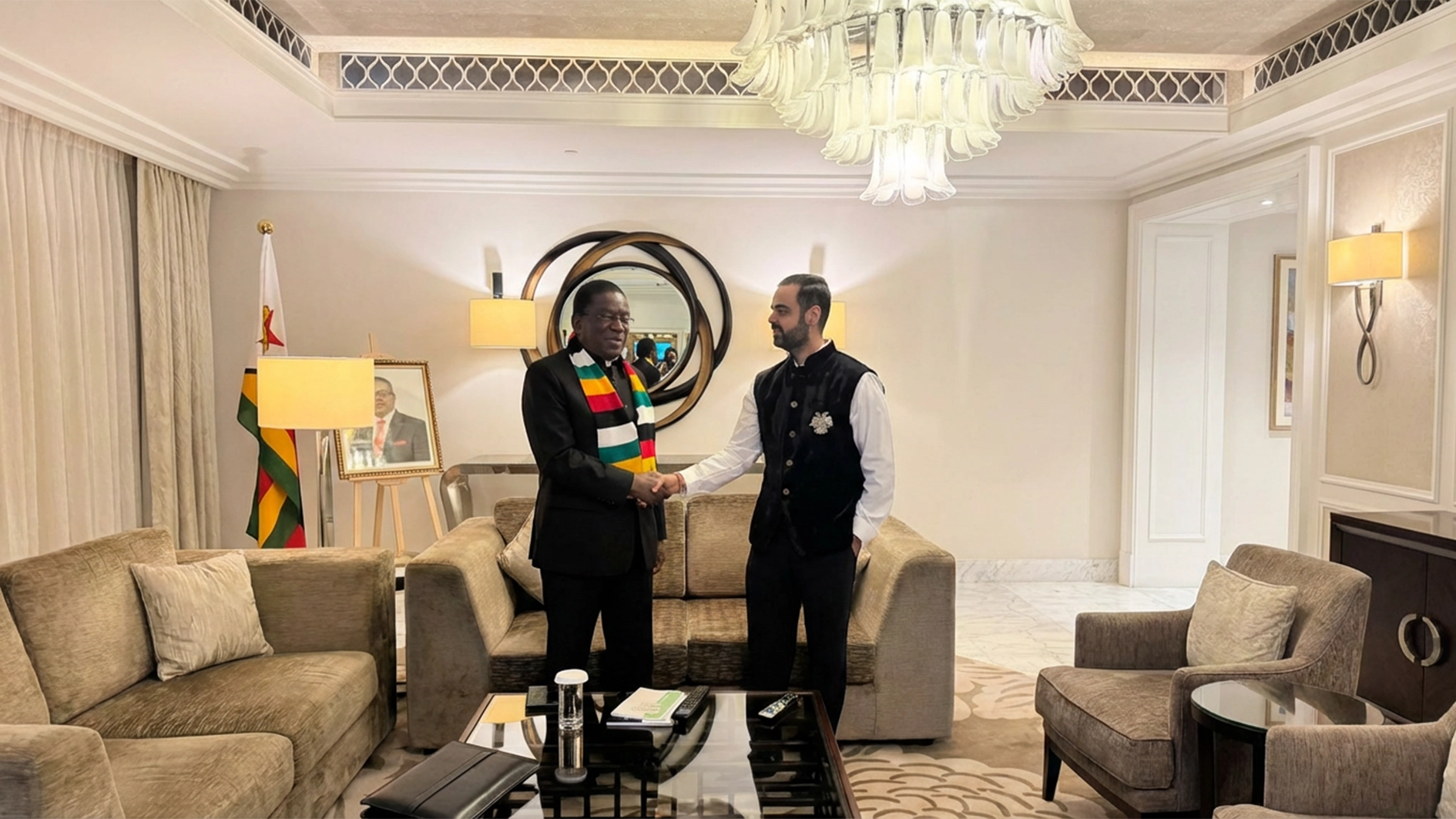
Zimbabwean President Emmerson Mnangagwa has held a closed-door meeting with global investor Prateek Suri on the margins of the World Government Summit in Dubai, in talks officials say centred on technology, infrastructure and long-term economic reform.
Sources familiar with the engagement said the meeting took place at a private residence and involved a limited delegation, including Zimbabwe’s minister responsible for information and communication technology, a signal, analysts suggest, of the strategic weight placed on digital infrastructure and innovation in the discussions.
The World Government Summit, themed Shaping Future Governments, has drawn dozens of heads of state and senior officials to Dubai, positioning the city as a focal point for policy dialogue and investment outreach.
According to sources, who spoke to the AFP, the discussions explored potential investments across several sectors, including digital infrastructure, mining, logistics and the possible creation of a government-backed startup innovation hub in Zimbabwe. The proposed platform would aim to support early-stage companies through grants and equity financing, aligning public policy objectives with private capital.
A regional policy analyst described the meeting as substantive rather than ceremonial, noting that the participation of sector ministers suggested a focus on execution and implementation rather than general assurances.
Suri, who leads Maser Group and MDR Investments, has business interests across infrastructure, mining, logistics and digital services in several emerging markets. Public profiles often describe him as one of the youngest high-net-worth investors operating across Africa, though analysts caution that such labels should be treated as illustrative rather than definitive.

The engagement coincided with Suri’s participation at a logistics roundtable held during the summit, where discussions focused on trade corridors, smart infrastructure and digital logistics as tools for building resilient economies.
Economists say the meeting fits into a broader pattern of renewed outreach by Zimbabwe’s government, which has in recent years sought to engage investors perceived as willing to commit capital to long-term projects rather than short-term financial exposure.
While no formal agreements were announced, analysts say the dialogue reflects an effort by Harare to reposition itself as open to technology-driven investment, particularly in areas that could improve productivity, connectivity and private-sector participation.
For Zimbabwe, the challenge will lie less in attracting interest and more in translating high-level engagements into bankable projects backed by regulatory clarity and consistent policy execution.

