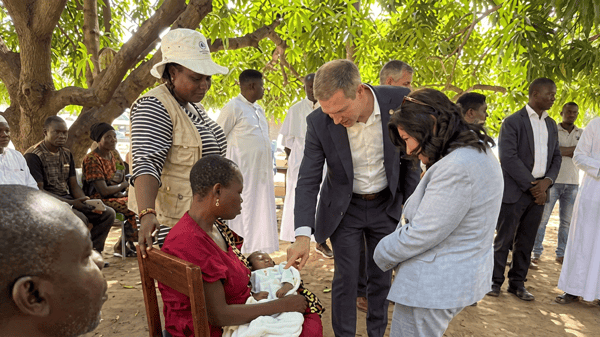
Two Islamic organisations, The Muslim Congress (TMC) and the Ulamah Wing of the Conference of Islamic Organisations (CIO), on Friday, criticised the recent visit of a United States congressional fact-finding delegation to Nigeria, describing the mission as selective, unbalanced and damaging to interfaith harmony.
In separate statements, the groups said the delegation sent to probe alleged killings of Christians held high-profile meetings with only Christian leaders and a Benue traditional ruler, while excluding the Nigerian Muslim community and victims of violence from Muslim-majority areas.
Amir of TMC, Alhaji AbdulWasi’i Taiwo Bangbala, said international engagement on Nigeria’s security challenges is welcome, but must be rooted in fairness, and a full appreciation of the country’s religious and social diversity.
He said it was troubling that the team failed to meet the Nigerian Supreme Council for Islamic Affairs (NSCIA) or any major Muslim institutions.
TMC said the omission amounted to a serious lapse in diplomatic protocol that undermined the credibility of the mission, risking reinforcing divisive narratives in a country already battling fragile communal relations.
In its own reaction, the Ulamah Wing of the CIO, led by Sheikh Abdur Rahman Ahmad and Luqman Balogun, described the delegation’s consultations as highly regrettable, insisting that Nigeria’s complex security challenges cannot be understood through a singular religious frame.
The CIO said excluding Muslim leaders and communities from violence-ridden zones deprived the delegation of critical perspectives that cut across religious divides, especially as many Muslims have also suffered killings, abductions and displacement by armed groups.
“Limiting consultations to only one side risks validating simplified, preexisting narratives,” the organisation said, warning that such an approach could mislead international audiences and aggravate local tensions.
The body argued that Nigeria’s crises are driven by overlapping factors, land disputes, banditry, criminality and weak governance, often wrongly interpreted abroad as purely religious persecution.
According to the CIO, the failure to hear Muslim testimonies amounted to “a missed opportunity for peace,” noting that balanced engagement is essential for any credible fact-finding exercise.
The group called for an immediate re-engagement process that is inclusive and broad-based, ensuring Islamic scholars, community leaders and affected Muslim populations are given equal space to present their accounts.
Only through a representative dialogue, the CIO stressed, can the US arrive at an accurate and actionable understanding of Nigeria’s conflict dynamics.