 Follow Us on Google News


 Follow Us on Google Discover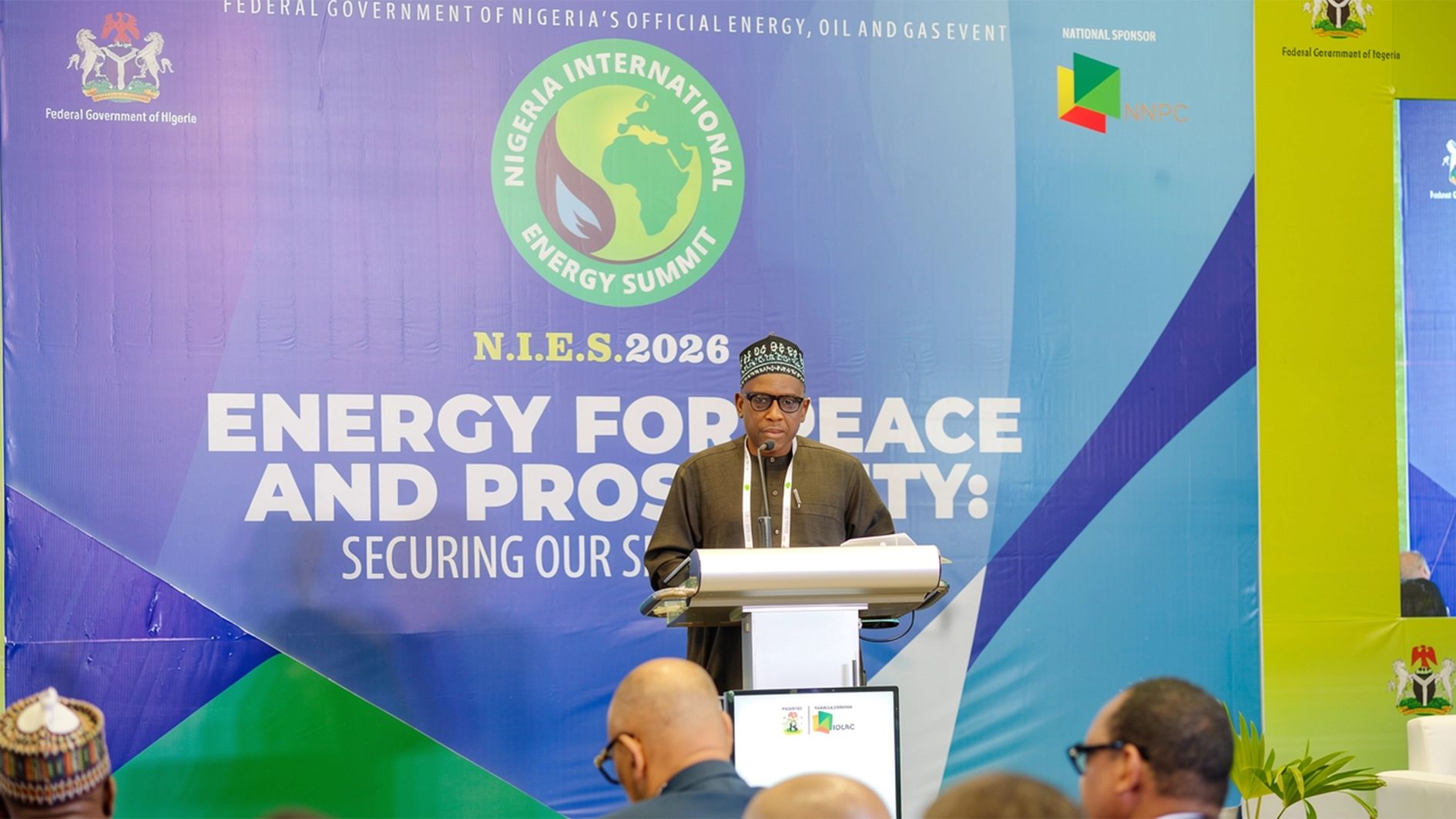
The Executive Secretary, Nigeria Content Monitoring and Development Board (NCDMB), Engr. Felix Ogbe, has called for Africa to move from consuming innovation to creating innovation.
In his keynote address at the official opening of the 2026 Nigeria International Energy Summit (NIES) at the Internal Conference Center in Abuja, with the theme “Local Content Beyond Compliance: Building African Industrial Powerhouses”, Ogbe, represented by Dr. Abdulmalik Halilu, Board’s Director, Corporate Services, said the NIES gathering has continued to shape the future of Africa’s energy narrative.
To understand what “beyond compliance” truly means, he posited that Africa must reflect on the three pillars that determine the continent’s industrial destiny: Competence, Capacity Utilisation and Collaboration.
Ogbe informed the participants that NCDMB has carried out a detailed revision of its guidelines to reduce contracting timelines, mitigate the transferability of the Nigerian Content Equipment Certificate (NCEC), remove non-value-adding intermediaries, and achieve maximum in-country value retention.
He said, “For Africa to become an industrial powerhouse, we must collectively embrace talent development, process excellence, research and development, modern manufacturing capabilities, and cross-border trade in goods and services.
“Competence gives investors confidence, and capacity gives investors certainty. Our aspiration is to evolve from “local participation” to local mastery, where African companies lead EPC projects, fabricate complex components, and export specialised services.

“On regional collaboration, Nigeria was actively involved in the design and endorsement of the Brazzaville Accord on a single pan-African local content template.”
He added that local content beyond compliance is not just an energy agenda; it is a development and sovereignty agenda for African prosperity.
In his address, the Minister of State for Petroleum Resources (Oil), Sen. Heineken Lokpobiri, called for practical, collaborative approaches to strengthen local content implementation in Nigeria’s oil and gas industry.
The minister emphasised that local content remains central to Nigeria’s energy growth and Africa’s broader economic development.
Lokpobiri said that challenges surrounding the implementation of the Local Content Act were among the first issues he confronted upon assuming office.
According to him, while the Nigerian Oil and Gas Industry Content Development (NOGICD) Act was enacted in 2010 to build indigenous capacity, its misapplication over the years has contributed to high project costs and limited capacity growth among local companies.
Lokpobiri explained that Nigeria’s oil and gas projects often cost more than similar projects executed abroad, a situation he described as unacceptable.
He, however, said the Federal Government, under the leadership of President Bola Tinubu, had begun addressing the issue through Executive Orders and stricter adherence to the true spirit of the Local Content Act.
“Nigeria is big enough for both EPC companies and indigenous companies to coexist. Complex offshore projects still require EPC expertise, while collaboration can help reduce costs and improve competitiveness.
“We have to find a solution, and the solution we found was to engage with the EPC companies and get our project costs globally competitive, together with our indigenous strong companies to cooperate. The field is big enough for both Nigerian companies and EPC companies to operate in a globally competitive industry.
“We want to have a situation where we promoted medium men and even grow the capacity of Nigerian companies. In the same vein, support Nigerian companies that invested on long term for sustainable growth.
“I want to believe that we should be able to find the best way to handle this issue of local content so that Nigerian companies can truly be supported to grow the way we expect them to grow.
“As part of the strategy in the local content, in the NOGID Act, we have a provision to support the local content with finance, and some of the companies have actually benefited from this finance. But what I discovered when I came was that most of these companies didn’t have any capacity. What they did was to use the money to finance their lifestyles.
“And the reason why the minister is the chairman of the governing council is that we will bring real strategic leadership to the applications of that platform, but the good news is that with President Bola Tinubu’s leadership, all these are no more.
“Our objective in relation to local content is to see how we can bring everybody together, both the local companies and EPC, for everybody to play side by side so that at the end of the day, there will be value retention in the country and a requisite capacity that will be built over time. The funding available under the Act will also be accessible to companies that truly want to build strong companies capable of rendering services not just in Nigeria but across the entire African continent.
“But for us to get to that level, we need human capacity development, and that is why the training that is expected to be done by NCDMB is important. Also, PTDF has moved from awarding scholarships to training a manpower that is needed locally to manage our oil and gas industry.”
He appealed to participants to propose practical ways to address these challenges, noting that there is no competition between international and local companies, as everyone has a role to play.
Also speaking, the Minister for State, Petroleum Resources, Ekperikpe Ekpo, said that gas represents the most immediate, scalable and inclusive pathway to economic diversification, industrial growth and shared prosperity in Africa, particularly for Nigeria.
However, Ekpo said unlocking this potential requires more than abundant reserves, infrastructural development, or policy declaration; it requires a deliberate and strategic shift in how we conceive, design, and implement local content across the gas value chain.
While appreciating the unwavering support of President Bola Tinubu, whose commitment to economic reform, energy security, and industrialisation continues to shape the direction of the Nigerian gas-led development agenda, he commended the organisers for placing local content in the gas industry at the heart of conversations about Africa’s industrial future.
He said, “Historically, Local Content implementation has improved largely through compliance, meeting prescribed thresholds for contract, labour and ownership. While this has increased participation, it has not facilitated global competitiveness, indigenous gas companies, or advanced technological capability for deep, sustainable value retention within our economy.”
“This session rightly challenges us to move beyond compliance towards performance-driven local content; that is, local content that deliberately builds industrial strength and local competitiveness.”

