 Follow Us on Google News


 Follow Us on Google Discover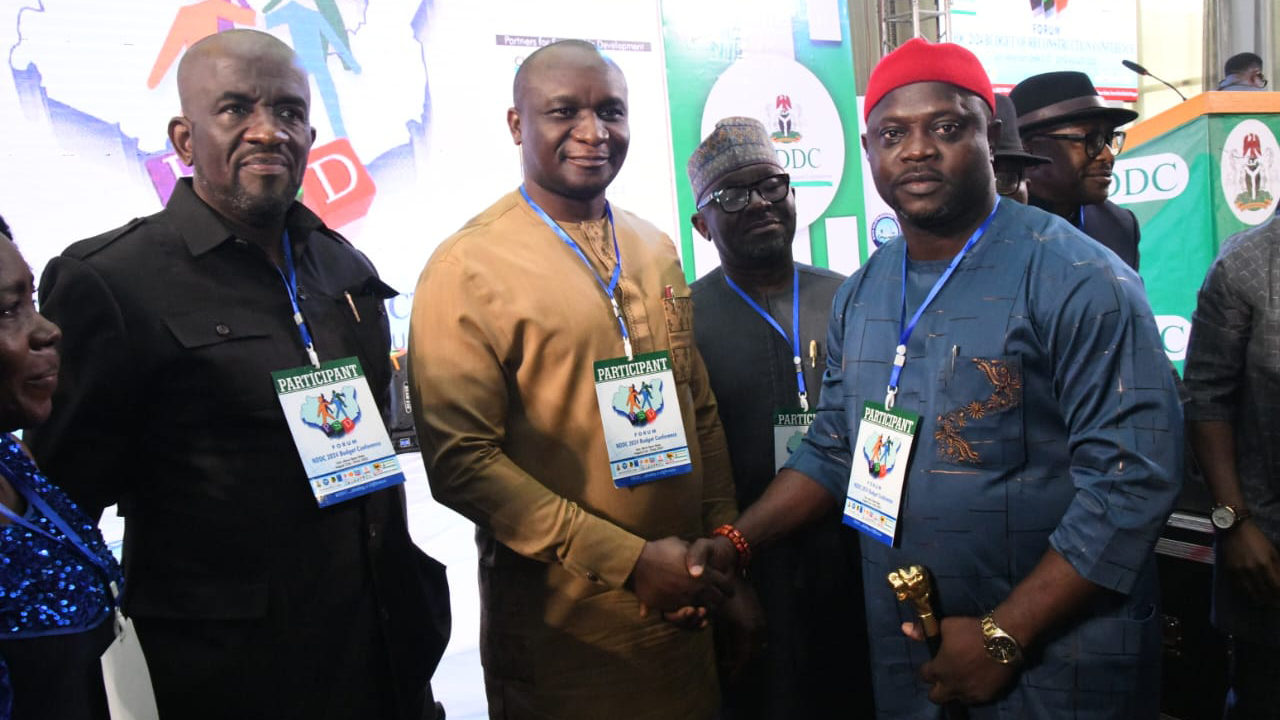

Inspired by the desire to entrench collaboration, cooperation, partnership and synergy with key stakeholders in the Niger Delta for the development of the region, the Niger Delta Development Commission (NDDC) recently convoked a two-day Partners for Sustainable Development (PSD) Budget Conference on the proposed 2024 budget of the commission christened “Budget of Reconstruction.”
[ad]
The conference had representatives from the nine oil producing states, international oil and gas companies, the Ministry of Niger Delta Affairs, traditional rulers in the oil mineral producing communities, Civil Society Organisations (CSOs) and youth groups.
Participants at the conference underscored its strategic importance in the budgetary process, explaining that it helps to eliminate duplications and institutional suspicions in the development process, reduce the incidence of working at cross purposes as well as reduce wastage of scarce resources allocated for regional development initiatives.
In his welcome address, the Managing Director/Chief Executive Officer (CEO) of the NDDC, Dr. Samuel Ogbuku, noted that the forum was borne out of the resolve of the current management team to operate an all-inclusive administration without boundaries between the commission, states and other stakeholders in the region.
He emphasised the need for partnerships towards rapid sustainable development of the region, highlighting recent partnership engagements on project development with the Rivers State government, the Nigeria LNG and Chevron.
In his papers titled, ‘Making Partnership Work’ and ‘Building Partnership for Regional Development’, Ogbuku explained that the Partners for Sustainable Development Forum (PSDF) initiative stands as a testament to collective collaboration and coordination and uniting a diverse spectrum of stakeholders within the Niger Delta region with a view to addressing pivotal issues such as environmental degradation, social exclusion and governance gaps.
Ogbuku, who said the forum has embarked on a journey that is guided by the four thematic areas, propelled forward under the vigilant guidance of its dedicated steering committee, stressed that the overarching objective remains steadfast nurturing of a future of peace, security and sustainable development in the Niger Delta region.
[ad]
He said the conference would help to revive the platform of the Partners for Sustainable Development (PSD) forum, which was created as part of the regional Master Plan implementation guideline to bring all service providers and project implementers to the same table to fashion a common pathway, based on a shared vision, for the development of the Niger Delta region.

He also noted that the meeting affords the stakeholders the opportunity to pool resources together, initiate projects and programmes within the obligatory goal of building a better region and empowering the people, adding that the conference would help to galvanise energies for a common purpose.
Ogbuku stated that at the end of the conference, stakeholders would be in a better position to achieve the different aspects and levels of their collective mandate to facilitate the sustainable development of the Niger Delta into a region of shared aspirations and dreams.
He stressed that the commission has continued to erect a veritable platform upon which partnership must thrive, adding that it has been promoting the Public Private Partnership (PPP) model to provide an alternative source for key development projects and programmes.
He noted that the initiative aligns with the NDDC mandate, as well as the Sustainable Development Goals 17, which focuses on partnerships, disclosing that the commission had hosted two NDDC-PPP Summits and engaged with potential foreign partners in Houston, United States, as a strategic stakeholder initiative to launch the NDDC-PPP model.
This model, he explained, was designed to communicate a new phase for the commission that would create a gateway of opportunities for foreign and local investors, captains of industry and multilateral agencies to build a new Niger Delta that is indeed socially stable, economically prosperous, ecologically regenerative and politically peaceful. He, however, revealed that inadequate funding ranks very high among the numerous challenges encountered by the commission.
Ogbuku said the commission was taking definite steps towards following due process in all its operations, disclosing that it has embraced transparency in ways that build confidence among its partners and stakeholders. He stressed that the commission has become mindful in the allocation of funds to projects and programmes and has also blocked all areas of waste.
In his keynote address, the Permanent Secretary, Ministry of Niger Delta Affairs, Dr. Shaibu Belgore, who was represented by the Director, Planning, Research and Statistics of the Ministry, said the stakeholders’ forum was focused on a common quest for the development of the Niger Delta region and the country at large.
According to him, the conference presented a veritable atmosphere towards achieving effective budgeting system for the NDDC in line with the ‘Renewed Hope’ agenda of the President Bola Ahmed Tinubu administration. Belgore stated that NDDC budgets over the years had been faced with challenges, which included belated submission, delayed approvals, among others, which resulted in low/poor implementation.
[ad]
He posited that the way forward was to embrace robust and innovative pathways anchored on transparency and stakeholder participation towards right-budgeting, thus maximising the available resources to address the most critical needs of the people.
He encouraged the commission to continue to evolve and adopt a budgetary process that is in tandem with the stipulated provisions of the relevant Establishment Act while commending the current management for organising the budget forum.
The Executive Director, Finance and Administration (EDFA) at the NDDC, Major. General Charles Airhiavbere (rtd.), in his remarks, emphasised that the 2024 Budget of the commission was geared towards stakeholders’ participation and restructuring of the commission’s entire budgeting process to achieve realistic and implementable budget, as well as the strategic goals and objectives through the instrumentality of Public Private Partnerships (PPP).
At the end of the Syndicate Session, which was divided into nine groups on the basis of the Mandate States of the region with stakeholders from each state participating, the participants resolved that the commission should operate a lean budget that would allow it to commence and complete projects within a certain and realistic budget cycle. They also resolved that less of new projects should be captured in the 2025 budget to ensure the quick completion of all ongoing projects under the 2024 budget.
The participants also called for the convocation of a town hall meeting of all ethnic nationalities in the region prior to the budget session to ensure that the budget receives direct inputs from the people.
A communique issued by the stakeholders at the end of the conference read in part: “The commission should operate a lean budget that will allow and enable her to commence and complete projects within a certain and realistic budget cycle. The budget of the commission should spread to cover the several ethnic nationalities and communities in the region.
“For the 2025 budget, less of new projects should be captured in order to ensure the quick completion of all ongoing projects under the 2024 budget.
“The timeline for payment of contractors should not exceed 45 days, allowing for 15 days buffer after which penalties will accrue for non-payment of contractors.
[ad]
“A town hall meeting and engagement of the several ethnic nationalities of the region be convoked prior to budget sessions. This is to ensure that the budget receives inputs from the people directly. Completed projects should be removed from the budget to allow for more new projects to be introduced into the budget.
“To ensure equity amongst all the LGAs regarding the 2024 budget, the commission should identify deserving ongoing projects with significant completion status and where the funds committed to such projects are insufficient, funds may be drawn from the legacy debt to augment.”
The stakeholders also called for provision for flood control measures in the 2024 budget of the commission due to flood predictions and expected impact on the region, as well as provision of Internally Displaced Persons (IDP) camps in the local councils in the region for flood impact reduction.
They also stressed the need for the commission to strike a balance between meeting political demands and serving the people of the region by executing people centric projects.
The participants also unanimously agreed that the PSD forum should be held quarterly to cover the various stages of fiscal policies of budgeting, implementation, monitoring and evaluation.
Goodwill messages were received from the traditional rulers in the region, the representative of international oil and gas companies and the representative of the Akwa Ibom State, who all pledged their support and commitment to partnering with the NDDC towards sustainable development of the region.
[ad]

