 Follow Us on Google News
 Follow Us on Google Discover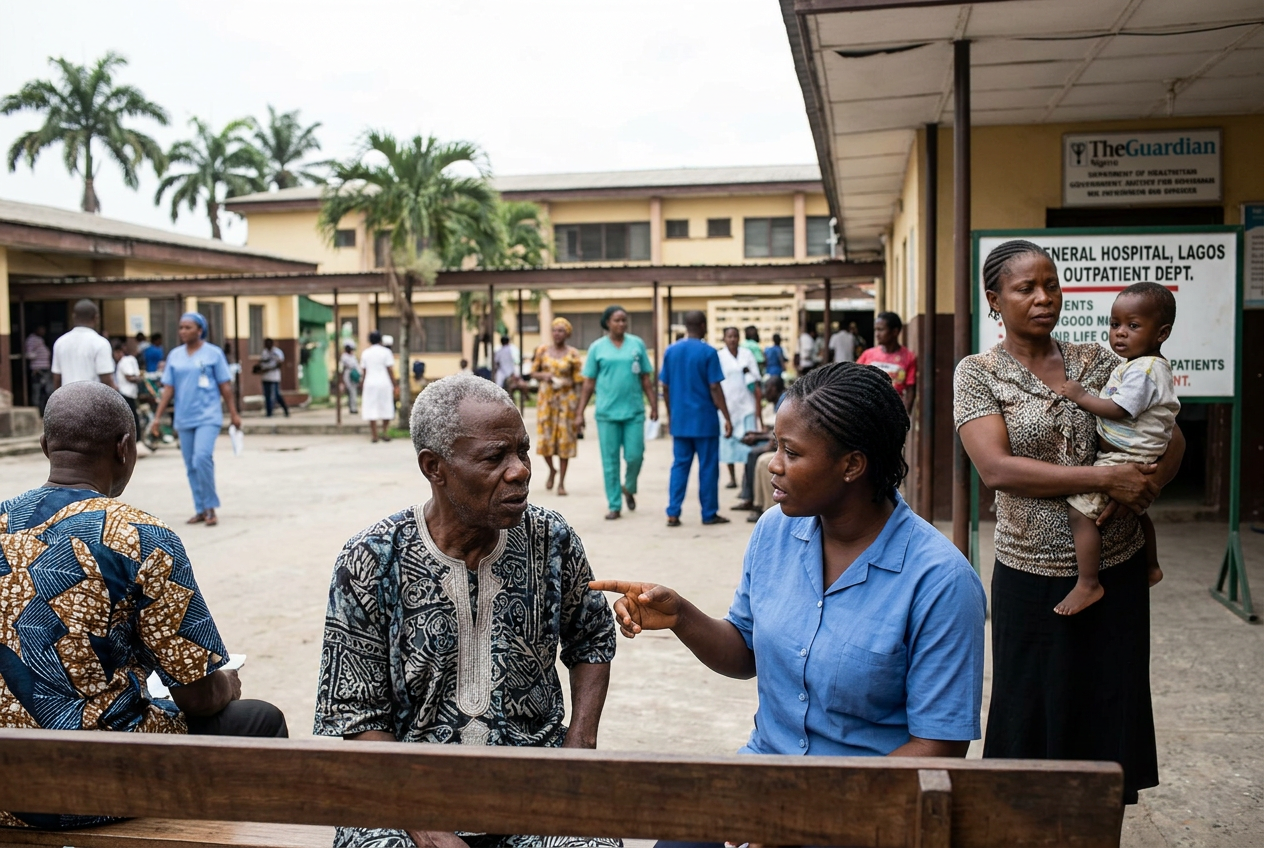
Hello, and thank you for making time for this one. If you have ever sat in a crowded outpatient hall at six in the morning with a feverish child on your lap, you probably already suspect the answer to the question this article sets out to settle: what is the leading cause of death in Nigeria? The short answer is malaria, a parasitic infection carried by female Anopheles mosquitoes, although the fuller picture is messier, more regional and frankly more interesting than that single word suggests.
This piece is the conclusion of months of research into Nigerian mortality data and years spent writing about health, demographics and everyday life for readers across the federation. I have read the survey reports, the ministry action plans and the global estimates, and I have also spent a lot of time simply asking people what they saw happen in their own families. The two sources do not always agree, and where they diverge is often the most revealing part.
So let us walk through it properly.
What Are the Top Three Main Causes of Death in Nigeria?
Here is the first complication, and it matters enormously. Nigeria has no complete death registration system. When a person dies in Ogbomoso or Damaturu, there is usually no doctor filling in a cause on a certificate that flows into a national database. The World Health Organisation says as much openly in its country notes: registration data for Nigeria is unusable for this purpose, so every figure you will read below is a modelled estimate built from household surveys, verbal autopsy studies and mathematical reconstruction.
That is not a reason to ignore the numbers. It is a reason to treat them as a shape rather than a photograph.
With that caveat firmly in place, the three conditions that consistently top the estimates are malaria, newborn and neonatal disorders, and lower respiratory infections, with diarrhoeal disease pressing hard on their heels. Depending on which modelling year you use, malaria and neonatal disorders trade places at the top, each accounting for somewhere between twelve and fourteen per cent of all deaths in the country.

Rather like two runners who keep swapping the lead lap by lap, the ranking shifts with the methodology rather than with reality on the ground.
What almost never changes is the character of the list. These are not diseases of old age or affluence. They are infections and birth complications that kill overwhelmingly in the first five years of life, and almost all of them have a cheap, well-tested prevention or treatment that simply does not reach far enough.
I find that detail genuinely difficult to sit with. We are not describing a medical mystery. We are describing a distribution problem.
The Federal Ministry of Health and Social Welfare has been blunt about the scale in its five-year plan for keeping young children alive, which puts annual under-five deaths at roughly 850,000 and describes Nigeria as the single largest contributor to the global under-five death toll. One in nine Nigerian children does not reach a fifth birthday.
Read that sentence again slowly. One in nine.
Is Malaria the Number One Killer in Nigeria?
By almost any measure that matters to a Nigerian family, yes.
The 2025 World Malaria Report, which covers the 2024 calendar year, put global malaria deaths at around 610,000 and attributed a little over thirty per cent of them to Nigeria alone. No other country comes close. Nigeria also accounted for roughly a quarter of all malaria cases on the planet, and about 97 per cent of the population lives in areas where transmission occurs, which is to say almost everybody, almost everywhere, almost all the time.
That works out at something in the region of 180,000 malaria deaths a year, or about five hundred people every single day.
The Guardian has tracked this closely. One report last year noted that the disease claims nine Nigerian lives every hour, a figure that sounds almost theatrical until you divide the annual estimate and find that it holds up. Another report documented more than 24 million recorded cases in just the first nine months of a single year, which gives some sense of how routine the illness has become.
Routine is precisely the problem. When something is that ordinary, it stops feeling dangerous.
I have lost count of the number of times I have heard a relative say, with a shrug, that it is “just malaria.” That shrug is doing an enormous amount of damage, because severe malaria in a small child can move from fever to convulsions in under twenty-four hours. The window is short, and the shrug eats the window.
There is a second problem that gets far less attention: overdiagnosis. Because fever is so often assumed to be malaria, other lethal conditions get treated as malaria and lost. Pneumonia, meningitis, sepsis and typhoid all present with fever, and all of them kill faster when the first three days are spent on the wrong medicine. Testing before treating is not bureaucratic fussiness. It is the difference between a treated child and a missed diagnosis.
Nigeria’s Mortality Indicators at a Glance
| Indicator | Latest national figure | Reference period | What it means in practice |
|---|---|---|---|
| Share of global malaria deaths | About 30 per cent | 2024 | Highest of any country in the world |
| Population living at risk of malaria | About 97 per cent | 2024 | Transmission is effectively nationwide |
| Estimated malaria deaths per year | Roughly 180,000 | 2024 | Around 500 deaths every day |
| Under-five deaths per year | About 850,000 | 2025 plan estimate | One in nine children dies before age five |
| Under-five mortality rate | 110 per 1,000 live births | NDHS 2023 to 2024 | SDG target for 2030 is 25 per 1,000 |
| Neonatal mortality rate | 41 per 1,000 live births | NDHS 2023 to 2024 | Barely moved in two decades |
| Maternal mortality ratio | About 993 per 100,000 live births | 2023 estimate | Among the highest recorded anywhere |
| Life expectancy at birth | About 54.5 years | 2023 to 2025 estimates | Roughly 19 years below the global average |
| Total deaths recorded per day | Roughly 7,600 | 2026 projection | Against about 21,000 births per day |
| Full course of ACT, private pharmacy | ₦4,800 to ₦5,200 | April 2026 | Up from around ₦1,500 twelve months earlier |
The table tells a fairly brutal story when you read it as a single unit rather than line by line. The deaths are concentrated in the very young, the tools to prevent them are well known and inexpensive by international standards, and the out-of-pocket cost of those tools has been climbing faster than household incomes.
What Is the Leading Cause of Death in Nigeria, Really?
Now to answer the question head on.
The leading cause of death in Nigeria is malaria, which accounts for roughly twelve to thirteen per cent of all deaths nationally and kills an estimated 180,000 Nigerians each year, the overwhelming majority of them children under five. It is closely rivalled by neonatal disorders, a grouping that covers birth asphyxia, prematurity, low birth weight and newborn sepsis, and which in some modelling years edges ahead of malaria. Beneath those two sit a cluster of conditions that share the same underlying drivers of poverty, weak primary care and poor water and sanitation. The full leading group, in rough order, looks like this:
- Malaria
- Neonatal disorders, including sepsis, birth asphyxia and prematurity
- Lower respiratory infections, principally childhood pneumonia
- Diarrhoeal disease
- HIV and AIDS
- Ischaemic heart disease
- Stroke
- Tuberculosis
- Congenital birth defects
- Meningitis
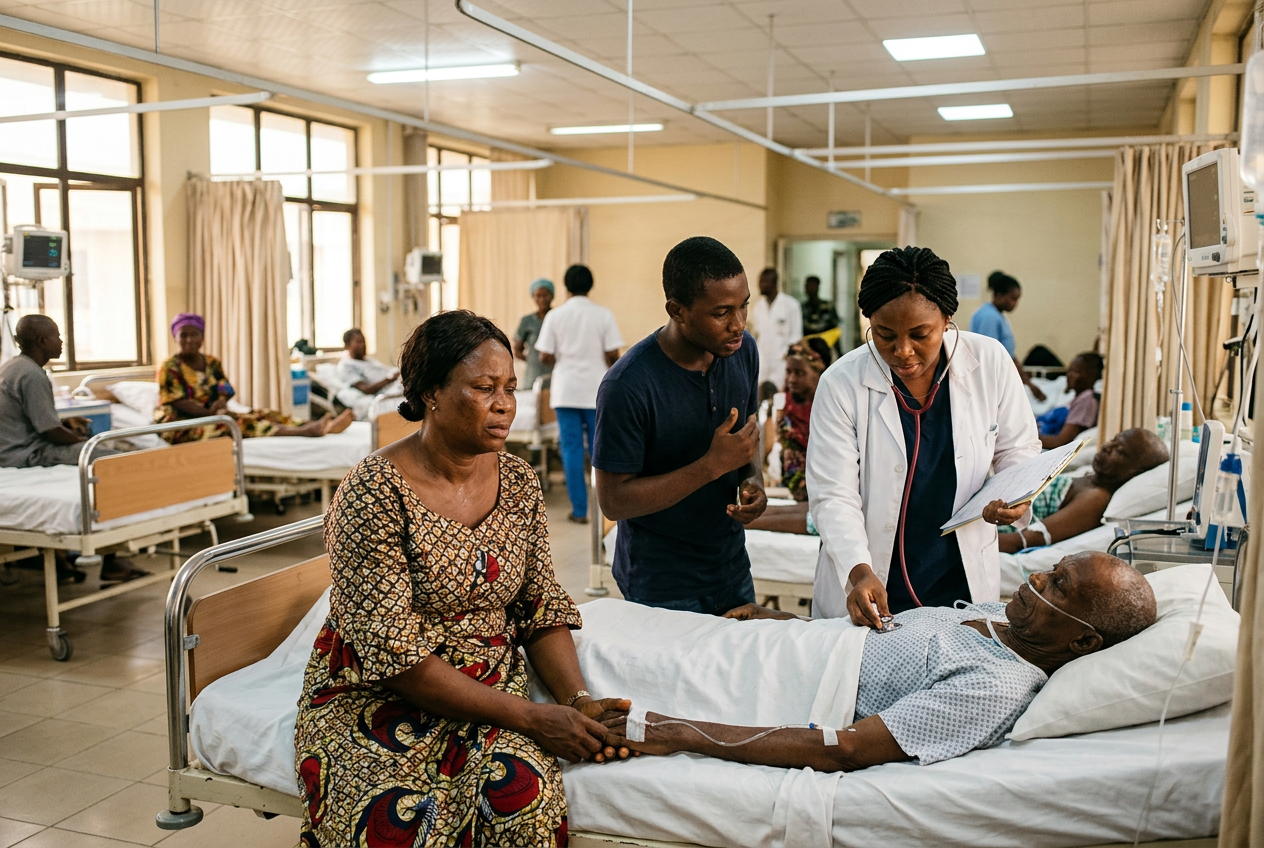
Malnutrition sits underneath almost all of these rather than beside them. It rarely appears as the recorded cause, yet the WHO estimates it contributes to about 45 per cent of under-five deaths by leaving small bodies without the reserves to survive an otherwise survivable infection. That makes hunger, in effect, Nigeria’s most powerful invisible killer.
Non-communicable diseases are also rising steadily as the population ages and urbanises, and hypertension in particular is far more common than most Nigerians realise. Stroke and heart disease will almost certainly climb this list over the next two decades. For now, though, the infectious and newborn causes still dominate.
Why Does Nigeria Have the Worst Life Expectancy Figures?
Life expectancy at birth in Nigeria sits at roughly 54 to 55 years, against a global average approaching 74. A United Nations ranking last year placed the country at the very bottom of a list of 25 nations with the shortest lifespans, just below Chad.
This is where a lot of readers get the wrong idea, so let me be precise about it.
Life expectancy at birth is not the age at which Nigerians typically die. It is an average across everybody, and averages are extremely sensitive to deaths at the very start of life. When a country loses 850,000 children before their fifth birthday every year, each of those deaths subtracts around fifty or sixty years from the national average. A Nigerian who survives to twenty has a far longer road ahead than the headline number implies.
So the low figure is not really a statement about how long Nigerian adults live. It is a statement about how many Nigerian babies do not.
That reframing matters, because it points policy in a completely different direction. Extending life expectancy in Nigeria is not primarily about cardiology units and cancer screening, valuable as those are. It is about skilled birth attendance, insecticide-treated nets, vaccines, clean water and antibiotics reaching the first thousand days of life.
The regional spread makes the point even more sharply. National figures average out an enormous internal gap. The North West records an under-five mortality rate of around 140 per 1,000 live births, while the South West records about 42. Jigawa sits near 161. Kwara sits near 14. Those are not variations within one health system; they are effectively different countries sharing a flag.
Insecurity compounds it. In the North East, displacement and conflict have hollowed out primary health centres in exactly the places where mortality is highest, and health workers are understandably reluctant to accept postings there. Skilled birth attendance runs at about 88 per cent in the South East and about 26 per cent in the North West. That single gap explains a startling share of the national picture.
How Many Deaths Per Day Does Nigeria Record?
Taking the United Nations population projections for 2026, Nigeria records roughly 7,600 deaths a day across all causes, against roughly 21,000 births. Over a year that comes to something close to 2.8 million deaths.
Broken down, a rough daily picture looks like this. Around 2,300 of those daily deaths are children under five. Around 500 are attributable to malaria. Around 200 are women dying from causes related to pregnancy and childbirth, which works out at roughly one Nigerian woman every seven minutes.
Because births so heavily outnumber deaths, the population keeps growing at about 2.5 per cent a year, which is why the absolute number of deaths can rise even while the death rate falls. Nigeria’s crude death rate has actually been improving steadily for decades, from over 26 per 1,000 in 1960 to under 11 per 1,000 today. Progress is real. It is simply being outrun by demography.
That tension sits at the heart of every health planning document I read while researching this article, and it is why the national malaria elimination programme’s stated goal of bringing malaria mortality below fifty deaths per 1,000 live births has proved so stubborn to reach. You are not standing still while you run; the finish line keeps moving away from you.
Outbreak-driven deaths sit on top of all this and vary wildly year to year. Lassa fever, diphtheria, cholera, meningitis and mpox all produced significant clusters in recent seasons, and the national public health institute charged with outbreak surveillance publishes weekly epidemiological reports that are, in my view, one of the most underused public documents in the country. Anyone writing seriously about Nigerian health should have them bookmarked.
Reducing Nigeria’s Leading Causes of Death: Steps That Actually Work
Enough grim arithmetic. What can a household genuinely do?
Quite a lot, as it turns out, and most of it is unglamorous. Here is the sequence I would give any Nigerian family setting up a home with young children in it.
- Hang a net properly, not decoratively. A long-lasting insecticide-treated net needs to be tucked fully under the mattress on all sides, with no gap at the foot. Nets are typically sized around 180cm by 190cm for a double bed and 100cm by 190cm for a single; buy for the bed you actually have rather than the bed you plan to buy. Anopheles mosquitoes bite mainly between dusk and dawn, so the net only has to work while people sleep, and it only works if it is closed.
- Screen the openings and cut the breeding sites. Fit fine mesh screens, around sixteen to eighteen strands per inch, to windows and vents, and check them for tears twice a year. Then walk the compound after rain and empty anything holding standing water: tyres, buckets, blocked gutters, discarded sachets, the saucers under potted plants. Mosquitoes breed in a bottle cap of water, and clearing a compound cuts local biting pressure noticeably within a fortnight.
- Test before you treat. Insist on a rapid diagnostic test or a blood film before anyone in the household takes an antimalarial. Government-supplied test kits are meant to be free at primary health centres, and a negative result is genuinely useful information because it sends you looking for the real cause.
- Complete the full course. A full artemisinin-based combination therapy course runs three days, and stopping on day two because the fever broke is one of the most reliable ways to breed resistant parasites. Finish it even when the patient feels well.
- Keep oral rehydration salts and zinc in the house. One ORS sachet dissolved in exactly one litre of clean water, given in small frequent sips, prevents the great majority of diarrhoea deaths in small children. Zinc alongside it, usually 20mg daily for ten to fourteen days for children over six months, shortens the episode and reduces the chance of a repeat. Confirm dosing with a health worker, particularly for infants.
- Do not skip routine immunisation. Pneumococcal, rotavirus, measles and pentavalent vaccines target four of the biggest killers on the list above. Nigeria’s zero-dose figure, the share of children receiving none of the basic vaccines, still sits above thirty per cent, and that is a decision made household by household.
- Book antenatal care early and deliver with a skilled attendant. The first antenatal visit should happen in the first trimester, with at least eight contacts across the pregnancy under current guidance. Skilled attendance at delivery is the single largest lever available for both newborn and maternal survival.
- Treat fever in a child under five as urgent. If a small child has fever plus fast breathing, chest indrawing, convulsions, refusal to feed or unusual drowsiness, go immediately rather than waiting until morning. Severe malaria and severe pneumonia both punish delay far more harshly than they punish an unnecessary trip.
A word on cost, because it has changed sharply and pretending otherwise would be dishonest. A full ACT course in a private pharmacy in Abuja, Lagos or Kano ran between ₦4,800 and ₦5,200 in April 2026, roughly triple the ₦1,500 of a year earlier, with pharmaceutical inflation running above forty per cent year on year. An artemether injection can now cost around ₦7,000. For a household on a modest income with three or four malaria episodes a year, that is a genuinely destabilising expense, and it explains why so many families revert to herbal remedies or half-courses.
Which is exactly why the free public-sector supply chain matters more than any private-market solution. If your local primary health centre has nets, tests and ACTs, use them, and say something loudly if it does not.
On the domestic setup side, a few small choices help more than people expect. Sleeping arrangements that put children under nets first, rather than last, matter because children are the ones dying. Keeping bedrooms on the side of the house away from stagnant drainage helps. So does resisting the very common habit of storing water in wide open containers, which is convenient, cheap and an excellent mosquito nursery all at once; a lidded container costs a few hundred naira and solves it.
Final Thoughts on the Leading Cause of Death in Nigeria
If you take one thing away, let it be this: the leading cause of death in Nigeria is not a mystery, it is not new, and it is not medically difficult to prevent. Malaria kills roughly 180,000 Nigerians a year, mostly children, and the interventions that stop it have been sitting in WHO guidance for decades. The same is true of the newborn deaths, the pneumonia deaths and the diarrhoea deaths sitting just behind it.
The gap is not knowledge. It is delivery, financing and the ordinary daily friction of getting a net, a test, a vaccine or a midwife to the right person at the right moment.
There is also real reason for cautious optimism. Under-five mortality has fallen from 201 per 1,000 live births in 2003 to 110 in the most recent national survey, a forty-five per cent reduction in two decades. Tens of millions of nets have been distributed. Seasonal chemoprevention now reaches millions of Nigerian children every year. The trajectory is right, even if the pace is not.
So do the small things. Hang the net properly tonight. Buy the ORS sachets before you need them. Take the child with the fever today rather than tomorrow morning. Push your local government to keep the primary health centre stocked. None of it feels heroic, and all of it is exactly what moves the number.
Nigeria is not losing this fight. It is winning it far too slowly, and that is a problem with a solution.
Related Articles
If the subject of mortality in Nigeria interests you beyond the statistics, you may find it worth reading my earlier piece on how Nigerian communities mourn, bury and remember their dead, which looks at the rituals and obligations that surround a death across different regions and faiths. For the other end of the same story, I also examined the customs, naming ceremonies and family expectations that greet a new arrival, which sits closely alongside everything discussed here about newborn survival.
Key Takeaways
- Malaria is the single leading cause of death in Nigeria, responsible for roughly 180,000 deaths a year and about thirty per cent of all malaria deaths worldwide, with neonatal disorders a very close second.
- Nigeria’s low life expectancy of around 54.5 years is driven overwhelmingly by deaths before age five rather than by short adult lifespans, and the internal gap between the North West and South West is enormous.
- Nets, testing before treating, completing ACT courses, ORS with zinc, routine immunisation and skilled birth attendance are the six interventions with the largest proven effect, and all are available through the public system.
Frequently Asked Questions About the Leading Cause of Death in Nigeria
What is the leading cause of death in Nigeria?
Malaria is the leading cause of death in Nigeria, accounting for roughly twelve to thirteen per cent of all deaths and around 180,000 lives a year. Neonatal disorders follow extremely closely and overtake malaria in some modelling years.
What are the top 3 main causes of death in Nigeria?
The top three are malaria, neonatal disorders such as sepsis and birth asphyxia, and lower respiratory infections, principally childhood pneumonia. Diarrhoeal disease sits immediately behind them and is sometimes ranked third depending on the estimate used.
What is the number one killer in Nigeria?
Malaria is the number one killer by most measures, with Nigeria accounting for about thirty per cent of all malaria deaths recorded globally in 2024. No other country carries a comparable share of the world’s malaria burden.
Why does Nigeria have the worst life expectancy?
Life expectancy at birth sits at roughly 54.5 years mainly because so many Nigerians die in early childhood, which pulls the average down sharply. Weak primary care, low skilled birth attendance, insecurity in the north and high maternal mortality all compound the effect.
How many deaths per day are there in Nigeria?
Nigeria records roughly 7,600 deaths a day across all causes, against around 21,000 births in the same period. Approximately 2,300 of those daily deaths are children under five years old.
How many children under five die in Nigeria each year?
The Federal Ministry of Health estimates around 850,000 under-five deaths annually, the highest absolute number of any country. That means roughly one in every nine Nigerian children does not reach a fifth birthday.
Is malaria still dangerous if it is treated early?
Malaria treated promptly with a full artemisinin-based combination therapy course is highly survivable, even in small children. The danger comes from delay, incomplete courses and the assumption that every fever is malaria, which lets other lethal illnesses go untreated.
Which part of Nigeria records the highest death rates?
The North West records the highest under-five mortality at around 140 deaths per 1,000 live births, compared with about 42 in the South West. Jigawa State records the highest rate nationally and Kwara the lowest.
How much does malaria treatment cost in Nigeria now?
A full ACT course in a private pharmacy cost between ₦4,800 and ₦5,200 in April 2026, roughly triple the price twelve months earlier. Rapid diagnostic kits supplied through government primary health centres are intended to be free at the point of use.
Are non-communicable diseases rising in Nigeria?
Yes, ischaemic heart disease, stroke, diabetes and cancers are all climbing as the population ages and urbanises, and hypertension is markedly underdiagnosed. They already appear in the national top ten and will almost certainly rise further over the coming decades.
How many women die from pregnancy-related causes in Nigeria?
Nigeria records an estimated 75,000 maternal deaths a year, with a maternal mortality ratio of roughly 993 per 100,000 live births. That works out at about one Nigerian woman dying every seven minutes from causes related to pregnancy or childbirth.
Can Nigeria realistically reduce its leading cause of death?
Yes, and it already has been, with under-five mortality falling from 201 to 110 per 1,000 live births between 2003 and the most recent national survey. The tools are proven and inexpensive, so the constraint is financing, supply chains and consistent delivery rather than medical knowledge.

