 Follow Us on Google News
 Follow Us on Google Discover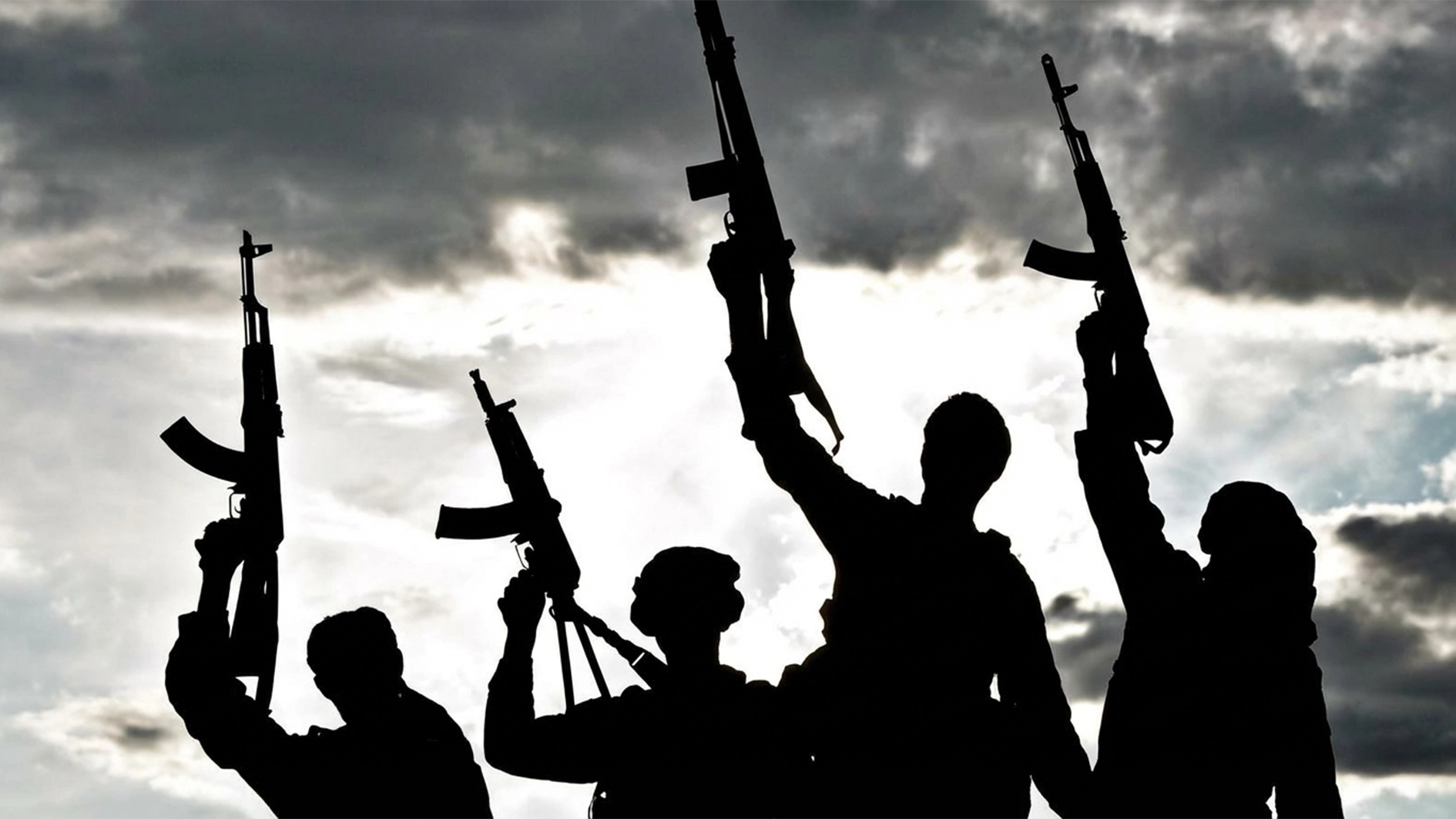
Abduct over 300 residents
A yet-to-be-identified terrorist group has claimed responsibility for the deadly attack on Ngoshe, a community in Gwoza Local Government Area, where scores of soldiers and civilians were reportedly killed and more than 300 residents abducted on Wednesday night.
The assailants reportedly stormed the community, set a military base ablaze, fired indiscriminately and burned homes and shops during the coordinated assault.
In a video obtained on Friday morning, the group—comprising five armed men—claimed they had taken control of the community and vowed to celebrate the upcoming Eid-el-Fitr in the town’s central mosque.
Speaking in Hausa on behalf of the group, one of the men declared that the attackers had “conquered” the community and intended to incorporate it into their territory.
“In the name of Allah, the Most Merciful, we thank God Almighty for granting us success in our mission in Ngoshe. Today we are inside the central mosque in Ngoshe,” he said in the video.

“People here said we could not conquer Ngoshe, but with the help of God we have taken over the town. By the grace of God, we will remain here, make it part of our province and observe the Eid-el-Fitr prayers here after Ramadan.”
The spokesman further claimed that several residents were abducted during the attack and would be held as captives.
He also alleged that men and women were killed during the assault.
The group additionally threatened to extend its attacks to Maiduguri and Abuja.
Videos released by the attackers allegedly show scenes of brutal violence, including the killing of civilians.
Meanwhile, survivors who fled the community said they escaped with nothing and are now scattered across neighbouring communities in the area.
Eyewitnesses said the attack lasted several hours before the air component of Operation Hadin Kai mobilised and forced the attackers to retreat into the surrounding forests.
The incident has heightened fears among residents in the region, many of whom continue to grapple with persistent insurgent attacks in parts of northeastern Nigeria.

