 Follow Us on Google News
 Follow Us on Google Discover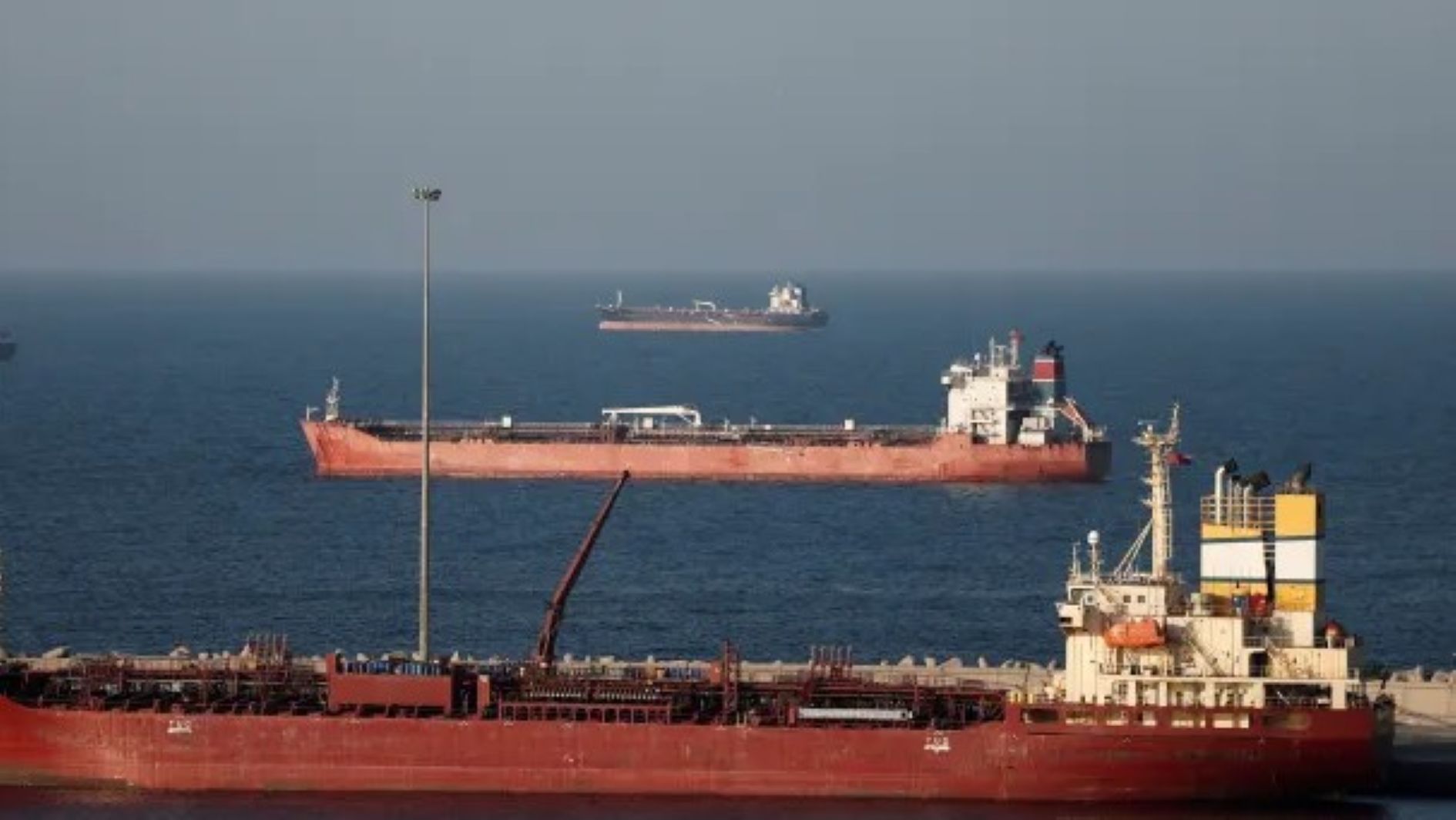
Iran’s push to formalise the tolling of vessels transiting the Strait of Hormuz alongside what appears like a positive feedback loop from countries with significant control over other strategic choke points has exposed the fragility of Nigeria’s price stability while threatening to tip the economy into another round of cost-of-living crisis.
The country at the heart of the Middle East tension, last week, formed the Iranian navy-managed Persian Gulf Strait Authority (PGSA) to regulate vessel traffic and collect tolls and duties in the troubled Strait of Hormuz.
The formulisation, it is feared, could trigger chain reactions from other countries with special natural assets. This could lead to a toll spree that could further encumber global trade and disrupt supply chains vital for access to essentials such as pharmaceuticals, fuels, foods and inputs.
The mere contemplation of toll imposition, trade experts have noted, may push up prices of basic items in the coming months, especially with limited options for imports.
Globally, there are concerns that tolling strategic trade routes could worsen the fuel hike effect, disrupt the supply chain, slow economic growth and increase the general price level, leaving importing countries like Nigeria worse off.
Indonesian officials, in an intention that has been reversed, also contemplated the idea of charging transit fees on vessels passing the Strait of Malacca as part of the chain of responses to what has now been termed the Hormuz contagion.

Trade economists have warned that the mere idea of a toll could significantly increase inflation expectations and trigger fresh panic.
Already, crude prices have rallied by about 50 per cent since February 28, when the United States and Israel first pulled the trigger of war, leaving Nigeria with ripple effects. Petroleum products, for instance, have gone up by close to 100 per cent, while transportation costs have also soared.
From food to other consumables, prices have increased by 10 per cent to as much as 100 per cent, reversing the modest gain recorded in the anti-inflation battle in the past few years.
Officially, inflation data have shown a moderate but significant pricing distortion. The March headline inflation edged up by 15.38 per cent, from 15.06 per cent in February. But the month-on-month data, which shows the intensity of inflation, painted a more dreadful picture, rising to 4.18 per cent, the steepest in recent times.
Nigeria, which relies on imports for much of its pharmaceuticals, food, textiles and intermediate goods as well as machinery, brings in over 90 per cent of the goods via sea. Tolls, experts have said, would increase both the cost of freight and insurance premiums – costs that will feed directly into prices of the items.
Since March, Iran has blocked traffic in the Strait of Hormuz and set up a tollbooth system for vessels to pay fees for “safe passage/reconstruction.”
A Lloyd’s List report in March stated that countries were paying as much as $2 million for each ship to pass through the Strait safely as ships were navigating around Iran’s Larak Island.
Other straits that may consider following Iran’s move are the Malacca Strait, one of the busiest chokepoints globally, with about 102,500 vessels transiting in 2025, which controls 30 per cent of global trade and 60 per cent of oil trade uses the strait. Key cargo that passes through the strait includes oil, containers, cars and dry bulk.
There are also the Bab-el-Mandeb Strait, with about 10 to 12 per cent of seaborne trade passing through it and key cargo including oil, LNG, grain and manufactured goods and the Taiwan Strait, controlling 21 per cent of global maritime trade, with key cargo such as electronics, semiconductors and containers.
Suez Canal, on its part, controls about 12 to 15 per cent of global trade and seven to 10 per cent of seaborne oil and key cargo such as containers, oil, LNG and consumer goods. Panama Canal (controlling about five per cent of global maritime trade with key cargo including LNG, LPG, containers and U.S.-Asia trade.
Turkish Straits and Strait of Istanbul pass cargo such as grain, oil and general cargo, while the Strait of Gibraltar controls key cargo including general cargo, energy, and containers. Others include the Singapore Strait, the Strait of Dover and the Bering Strait.
Experts warned that any threat to “free transit passage” could alter global shipping, increasing costs, disrupting supply chains and introducing new geopolitical risks into maritime trade.
Most shipping lines, such as MSC, Maersk and CMA CGM, are avoiding the Strait of Hormuz, rerouting through other transit points.
The longer voyage has led to higher bunker fuel, freight rates, shipping costs, landing costs, insurance premiums, as well as high import costs, thereby threatening global trade.
A new era of Strait tolls would strike at the foundation of an already fragile economy still grappling with elevated inflation and eroding purchasing power, experts said of Nigeria.
Already, Nigeria-bound cargo from Asia is being rerouted through Cape or transshipped in Jebel Ali/Tanger Med. Also, wheat, rice, fertiliser, and edible oil come in through Europe/Asia via the Suez or Cape route, with experts predicting higher food import costs as tension escalates.
Stakeholders noted that consumer goods such as shipment of electronics, machinery and auto parts could see landed cost rise by over three per cent.
Director of International Trade at the Maritime Researchers and Authors Association of Nigeria (MARASSON), Sunday Ademuyiwa, warned that the next global trade war would not be fought with tariffs but toll booths at sea.
“Imagine Tehran announces a ‘transit security fee’ of $500,000 per oil tanker and $50,000 per cargo ship. No missile, but just an invoice. Framed as a sovereign right, it dares the world to call it an act of war,” he stated.
He warned that if emerging plans to impose tolls on key global shipping routes take hold, Nigeria could be heading into a new wave of import-driven inflation.
“For months, attention has focused on the possibility of closure. But the real danger is monetisation. If tolling is introduced and accepted in Hormuz, it sets a precedent where geography becomes a billable service,” he said.
He said, despite being Africa’s largest oil producer, Nigeria remains heavily dependent on imports, with an estimated 90 per cent of its industrial inputs sourced from abroad.
According to him, most of these goods transit through critical maritime corridors, including the Strait of Malacca, Suez Canal, Bab el-Mandeb and the Bosporus Strait.
Ademuyiwa warned that if toll regimes are implemented across these chokepoints, the cost implications for Nigeria would be severe, estimating that a single 40-foot container shipped from Shanghai to Apapa could attract as much as $1,000 in additional “strait fees” before clearing customs.
He noted that such added costs would cascade through Nigeria’s already fragile supply chain, worsening inflation and increasing the cost of living, adding that the country, which is already grappling with currency volatility and rising import bills, could face further economic instability if proactive measures are not taken.
Ademuyiwa stressed that beyond cost, the risk of supply disruption is equally significant, noting that Strait crises create instant scarcity as panic buying will cost more than warehousing.
Experts warned that while strategic chokepoints like the Strait of Hormuz alone handle 34 per cent of global seaborne oil exports, any disruption or tolling across these routes directly impacts global prices, energy flows and food supply chains.
Head of Research at Sea Empowerment and Research Centre (SEREC), Dr Eugene Nweke, said developing economies, including Nigeria, now account for 54 per cent of global maritime freight, up from 38 per cent in 2000.
He said Nigeria handled 1.46 million TEUs in port throughput in 2024, emphasising the heavy reliance on imports for fuel and industrial inputs.
Nweke said Nigeria’s economy is increasingly exposed to a convergence of global maritime risks that could trigger inflation, supply shortages and fiscal strain, highlighting how rising freight costs, chokepoint vulnerabilities and weakening global trade growth are combining to heighten the country’s economic fragility.
According to him, global shipping distances have risen significantly, driving up freight costs and, by extension, Nigeria’s import bill.
“With over 80 per cent of global goods transported by sea, Nigeria has limited alternatives. This makes the country highly susceptible to maritime disruptions and cost escalations,” Nweke said.
To address the immediate risks, Nweke advocated the establishment of a Presidential Maritime and Trade Risk Monitoring Task Force with a 30-day actionable mandate.
He also called for targeted subsidies or buffers for essential imports such as food and fuel to cushion the impact of rising global costs.
Nweke proposed expanding strategic reserves for fuel and food, and strengthening indigenous shipping capacity to improve Nigeria’s resilience.
He further emphasised the need for structural transformation, including achieving domestic refining sufficiency, developing an integrated rail-to-port logistics network and leveraging the African Continental Free Trade Area (AfCFTA) to boost regional trade resilience.
He urged the Federal Government to urgently approve the creation of a Presidential Task Force on Maritime, Trade and Economic Resilience, stressing that decisive leadership and policy discipline are critical to preventing economic pressures from escalating into a broader crisis.
Chief Executive Officer of the Centre for the Promotion of Private Enterprise (CPPE), Dr Muda Yusuf, warned that any escalation in shipping costs arising from tolls or restrictions around major maritime corridors would have far-reaching consequences for Nigeria’s economy, industries and consumers.
According to him, the immediate effect would be a rise in trade costs, especially for import-dependent countries already grappling with inflation and currency pressures.
“It’s going to make the cost of trade more expensive. Trade costs will be much higher, which means that the cost of imports into the country will be higher. This will affect production, because a lot of our production inputs are imported,” he said.
He said Nigeria’s vulnerability to external trade shocks is structural, adding that, unlike countries with deep domestic manufacturing capacity, Nigeria depends heavily on imports across virtually every critical sector from pharmaceuticals and machinery to consumer electronics and foodstuffs.
He said any sustained increase in shipping costs does not merely affect importers but creates a ripple effect through the entire supply chain, landing hardest on consumers at the bottom of the economic pyramid.
Yusuf drew a direct line from rising maritime costs to what he described as “imported inflation” — a phenomenon where price increases originate not from domestic monetary conditions but from external cost pressures.
“We are talking about inflation. At the end of the day, the impact will be on the ordinary people, the end users of these products. The inflationary situation may be worse than what we already have, because you are going to have something like imported inflation or cost-push inflation,” he warned.
Nigeria’s inflation rate has remained persistently high in recent years, squeezing household incomes and pushing millions further into poverty. The prospect of an additional inflationary wave driven by shipping cost escalation is, for many economists, a nightmare scenario.
Beyond the household economy, the CPPE boss warned that the crisis could undermine Nigeria’s productive sector. For manufacturers and businesses that rely on imported inputs, higher freight costs compress profit margins, reduce output, and in severe cases trigger layoffs.
“It will affect the citizens, it will affect industries, it will affect productivity, because costs will go up, profit margin will reduce, and inflation will rise. So, everything negative is going to arise from the fact that shipping costs or supply chain challenges have escalated,” he said.
Speaking on the implications for medicine supply chain, former secretary of the Lagos State Association of Community Pharmacists of Nigeria (ACPN) and Managing Director of Engraced Pharmacy, Jonah Okotie, said Nigeria is heavily reliant on imported pharmaceuticals and has limited local manufacturing capacity.
He warned that imposing tolls on ships would inevitably spike global freight costs, noting that any sustained increase in shipping costs or delays in maritime routes could exacerbate existing healthcare challenges and limit access to essential medicines, with the burden ultimately transferred to consumers.
Okotie, however, noted that the ripple effects go beyond pricing, warning that rising operational costs could force smaller players, particularly in the pharmaceutical import sector, out of the market.
“It is not that simple. With increased costs, some players will drop out. Unfortunately, some of these are medicine importers. It will gradually become a ‘big boys’ affair dominated by players in oil and gas, technology and commodities, sectors with faster returns and fewer regulatory constraints,” he explained.
Okotie stressed that the pharmaceutical sector’s heavy regulation, coupled with strict storage requirements and product shelf-life limitations, makes it less attractive to large-scale investors under worsening economic conditions.
Raising concerns over national preparedness, Okotie questioned Nigeria’s response strategy to potential disruptions in medicine supply chains stemming from geopolitical tensions.
“When Iran began threatening a blockade, the immediate question was: what is our answer to the likely scarcity of medicines? We are still waiting for answers,” he said.
He called for the establishment of a Presidential Committee to proactively address vulnerabilities in the pharmaceutical sector, urging the government to adopt a long-term strategy rather than reactive measures.
However, global maritime law, such as the United Nations Convention on the Law of the Sea (UNCLOS) Article 38, gives ships the right of “transit passage” through key international chokepoints like the Strait of Hormuz.
Under Article 26(1), no charge may be levied upon foreign ships by reason only of their passage through the territorial sea by coastal states, as monetising passage through a shared international waterway is widely illegal.
Secretary-General of the International Maritime Organisation (IMO), Arsenio Dominguez, has also condemned the introduction of tolls on the straits, noting that countries do not have the right to impose tolls or charges on these straits, as it is against international law.

