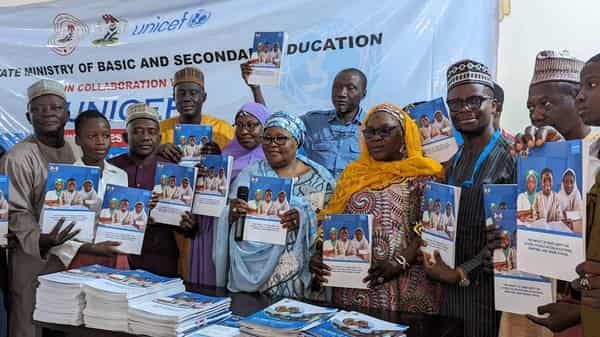
Niger State government says plans have been concluded for the upgrade of security infrastructure in public schools in the local councils affected by insecurity in the state.
The Commissioner for Basic and Secondary Education, Dr. Hadiza Asabe Mohammed, who disclosed this in Minna, applauded UNICEF and other partners for their technical inputs and unwavering support.
Dr Asabe further revealed that necessary plans have also been finalised to overcome the barriers to learning caused by insecurity.
Speaking during her welcome address at the dissemination meeting of the report on “The Impact of Insecurity on Access to Education in Niger State”, held at Haske Luxury Hotel in Minna, she said that out of the schools shut down due to insecurity, 29 have been reopened and 20 renovated due to damage across the state.
While decrying the detrimental impact of insecurity on the state’s education system, she stressed that plans are also underway to establish early warning systems in public schools around vulnerable areas.
She said, “The state government has decided to relocate many of the affected schools in high-risk areas to safer areas.
“As a government, we will ensure we tackle the root causes of insecurity through social welfare programs for conflict-affected households.
“Plans are underway to upgrade security infrastructure in schools and to establish early warning systems in vulnerable areas.”
Earlier, the Chief of Education at UNICEF Nigeria, Vanessa Lee, who was represented by Education Specialist Mr. Believe Eke, highlighted the importance of addressing the impact of insecurity on education in Niger State.
In her message, she emphasised that the study presented aimed to provide evidence-based insights for effective decision-making and policy development, ensuring quality education for children in conflict-affected areas.
In both their responses, the Education Secretary of Shiroro LGA, Usaini Baba and that of Rafi LGA, Ahmed Madaki, explained that presently, insecurity has been brought partially under control compared to what was obtained three years ago in their LGAs.
Madaki said at the peak of the banditry attacks in Rafi LGA, a total of 34 schools were shut down, while 24 have been reopened, and others have been relocated to a safer environment.
Highlights of the meeting were the unveiling of various reports and recommendations.