 Follow Us on Google News


 Follow Us on Google Discover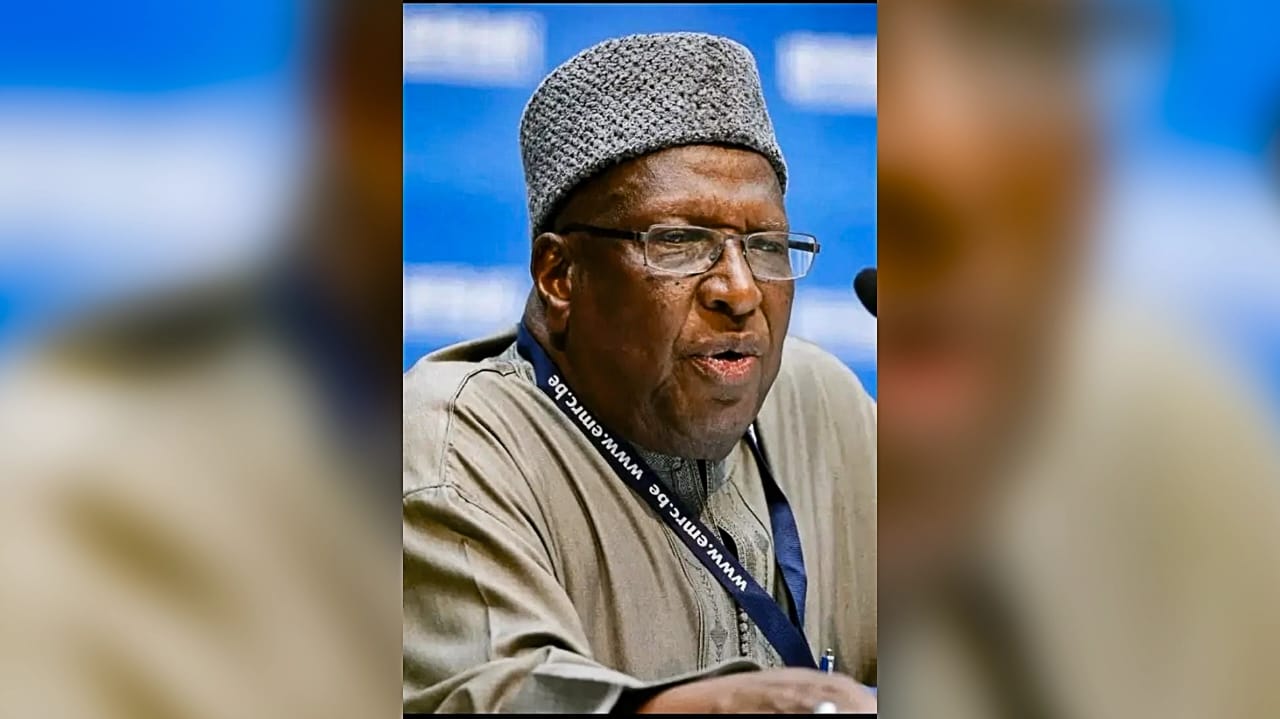
Bamanga Muhammad Tukur‘s life and times defined the complex mix of business success and political activism. Before his demise on Saturday in Abuja at the age of 90, three days shy of his 91st birthday, he was easily recognized as the businessman and administrator, who helped reshape Nigeria’s maritime infrastructure and later became an advocate for private sector-led industrialisation in Africa.
But, the former governor of Gongola State, which comprised the present-day Adamawa and Taraba States, to translate his success in business into the reformation of the murky waters of Nigeria’s politics was cut short by conspiracies and betrayals leading to his premature exit as the national chairman of the then ruling Peoples Democratic Party (PDP).
Watchers of Nigeria’s party politics contend that but for PDP’s decision to frustrate Tukur out of the chairmanship position, the party would not have lost the 2015 presidential election, even as they maintain that the resignation from office paved the way for the hawks and internal moles with the party to betray the ruling party.
Tukur’s travails as chairman of PDP were instigated by the politics of his home state, Adamawa, where the presidential aspiration of former Vice President Atiku Abubakar and the political interest of Governor Murtala Nyako, combined to turn the heat on his continued stay in office, particularly in the lead up to the 2015 common election.
The wrangling over the composition of the PDP National Working Committee (NWC), which culminated in the stout challenge against Tukur’s chairmanship by seven state governors led by Atiku, convinced President Goodluck Jonathan to endorse the call for his exit without knowing that he (Jonathan) was the target of the conspiracy.
Apart from Chibuike Rotimi Amaechi of Rivers State, the rest six governors of Adamawa, Jigawa, Kano, Kwara, Niger and Sokoto, were from the northern region and opposed to Jonathan’s search for a second term mandate.

Yet, even when Tukur left and Adamu Mu’azu succeeded him, five out of the seven insurgent governors ended up in the All Progressives Congress (APC) after a failed attempt to found a new PDP (nPDP).
As an ethically-minded businessman, Tukur’s insistence that party politics must be done according to the rule law met with the stiff resistance of the impunity and corrupt tendencies of the wheeling dealing politicians.
The former chairman’s woes in PDP were compounded by the perceived naivety of the party’s leader, Jonathan, who was preoccupied by his second term ambition to see the dangerous hurdles laid on his path by the affront on the NWC.
It is regretful that politics which abridged Tukur’s business success did not allow him to carry through his vision as the President of African Business Round table (ABR).
In a hail of tributes Tukur was credited with helping rescue Nigeria’s ports from severe congestion in the 1970s. Vice President Kashim Shettima said the intervention “created the gateway that still powers our trade today.”
While mourning his decease, a former business mogul and PDP ally, Senator Orji Uzor Kalu described the late Tukur as an accomplished businessman, seasoned public administrator and elder statesman whose contributions to Nigeria’s economic, political and maritime development would be remembered for generations.The former Abia State governor acknowledged “Tukur’s remarkable career in public service,” particularly his leadership of the Nigerian Ports Authority (NPA), his tenure as Governor of the old Gongola State and his service as Minister of Industries.
He also highlighted Tukur’s contributions to the growth of African enterprise and economic cooperation through his leadership of the African Business Roundtable and the NEPAD Business Group.
“The deceased,” Kalu noted, “belonged to a generation of Nigerian leaders who devoted significant parts of their lives to public service, institution building and the economic development of the country.
“The passing of Dr Bamanga Tukur is a great loss to Nigeria and the African business community. He was a distinguished elder statesman, accomplished businessman and seasoned administrator who served our country in various capacities with commitment and dedication.
“His contributions to the development of Nigeria’s maritime sector and his efforts towards promoting African businesses, investment and economic cooperation across the continent remain important aspects of his enduring legacy.”
Tukur’s most significant economic legacy came before his political career. In 1975, he was appointed General Manager of the Nigerian Ports Authority (NPA) at a time of severe congestion at the country’s ports.
A federal cement-importation programme launched towards the end of the Yakubu Gowon administration had overwhelmed the ports, leaving ships waiting offshore for months in what became known as the “cement armada.”
Tukur, then in his late thirties, led the NPA’s efforts to decongest the ports. During his tenure, which lasted until 1982, the Tin Can Island Port Complex was developed, while Apapa, Warri, Calabar, Sapele and Onne ports were expanded and modernised. The projects increased cargo-handling capacity and helped reduce the costs and delays associated with moving goods through the country’s ports.
His work in the maritime sector later earned him the position of the first African Vice President of the International Association of Ports and Harbours (IAPH) and Honorary Life President of the West and Central Africa Ports Management Association.
Tukur left the NPA in 1982 to establish BHI Holdings, also known as the Daddo Group of Companies, with declared interests in manufacturing, agriculture, logistics and trading.
He returned to government more than a decade later as Minister of Industries under General Sani Abacha, serving on the Federal Executive Council from 1993 to 1995 at a time where Nigeria’s industrial policy focused on continuing market-oriented reforms, promoting non-oil exports, and relaxing foreign investment rules under the shadow of the then military rule and the legacy of the Structural Adjustment Programme (SAP). However, no specific industrial policy or reform has been publicly documented as originating from his tenure.
Tukur’s clearest articulation of his economic philosophy came later, as an elder industrialist rather than an officeholder.
In a 2011 interview with Daily Trust, he argued that Nigeria’s decades-long struggle with industrialisation was less about a shortage of ideas than failures of implementation, discipline and sequencing.
He criticised governments for attempting to tackle too many problems at once rather than addressing them in phases, citing the seven-point agenda of the Umaru Yar’Adua and Goodluck Jonathan administrations as an example of a government that “bit more than it could chew.”
He linked the decline of manufacturing clusters, including Kano’s Sharada industrial estate, to unreliable power supply, arguing that rising production costs eventually push up prices, weaken demand and force factories to shut down.
The former governor also argued for consistency in industrial policy, warning against import bans on products such as wheat and generators before domestic capacity was available to replace them.
As a member of the Presidential Advisory Council under Jonathan, he said he advocated reducing the cost of governance to free resources for infrastructure. He also warned that Nigeria could not continue borrowing to finance consumption without increasing production.
Beyond Nigeria, Tukur spent nearly two decades as Executive President of the Africa Business Roundtable. From 2002, he also served as Chairman of the New Partnership for Africa’s Development (NEPAD) Business Group, where he advocated stronger continental transport links to support trade and economic integration.
He pushed for rail and road networks linking African economies, drawing comparisons with North America’s integrated rail system. At the United Nations World Summit in 2005 and the Economic and Social Council’s high-level segment in 2006, he argued that political stability and secure property rights were more important to attracting private investment than reliance on aid.

