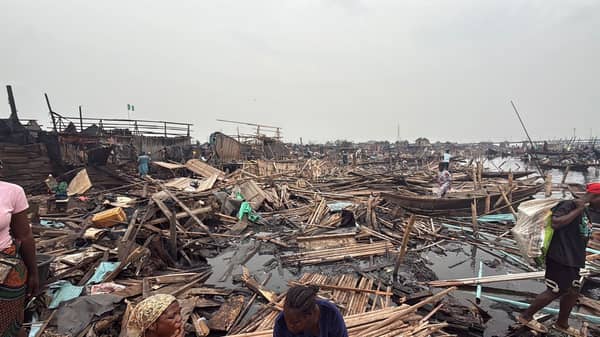
Amphibious excavators escorted by armed policemen have roared through Makoko, Africa’s largest and most legendary floating slum in recent days, crushing hundreds of wooden shacks built on stilts above the lagoon in the heart of Lagos.
The operation is the latest of a campaign to remove what authorities in Nigeria’s commercial capital describe as illegal structures and, critics say, reclaim waterfront land for real-estate development.
Three people, two of them babies, have died from effects of teargas fired by police since the clearances began two days before Christmas, three rights groups said.
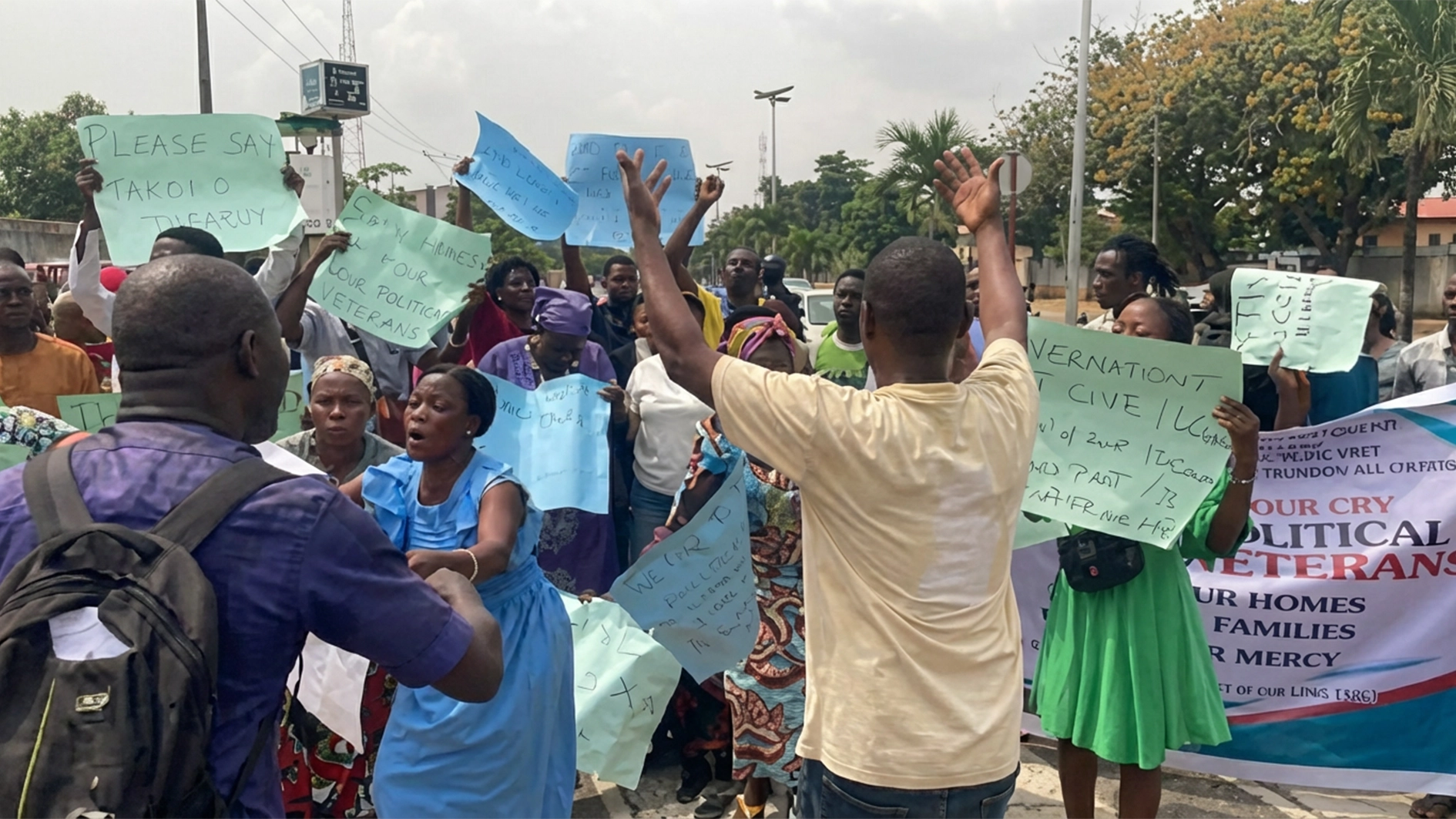
Residents say the demolitions, which an NGO says has displaced over 30,000 people, were done without warning, a claim the Lagos state government disputes.
“They treated us like we are less than animals,” Alex Wusa, a 25-year-old teacher, told AFP aboard an old canoe sailing through Makoko’s waterways.
“My house has been demolished. My shop has been demolished. Even the school where I teach has been demolished.”
With no official data available, Makoko’s population is hard to estimate, with figures ranging from 80,000 inhabitants, according to NGO JEI, to over 300,000, according to local chiefs.
Its homes on stilts above Lagos’s polluted lagoon are a striking symbol of Nigeria’s urban poverty and resilience — and a frequent arena in the mega-city’s never-ending land disputes, which almost always end with those with money displacing those without.
Authorities often attempt to hem in or demolish slums rather than extend electricity, paved roads or schools to them.
‘Suffering is too much’
Largely lacking basic services such as power, water and schools, Makoko is a sprawling home to low-income earners, many reliant on fishing and informal trade, and has existed for over 100 years.
The community — which has long caught the eye of writers, travellers and NGOs but is seen as an eyesore by the government — faced similar demolitions in 2005 and 2012. In the latter instance, a community leader died when a government demolition team destroyed hundreds of houses.
When AFP visited recently, many families, including children and pets, had slept rough aboard canoes. Heavy rainfall the night before soaked most of their makeshift shelters.
“This suffering is too much,” said Iyabo Olaleye, a fishmonger who lost two houses. “The rain drenched my children, and I have nowhere to go.”
Government defends demolitions
Lagos state officials say the demolition was necessary for safety and urban renewal reasons.
All structures built within 100 metres of transmission lines that cut over the lagoon were marked for removal.
Head of Lagos’s urban renewal office Gbolahan Oki did not respond to AFP requests for comment but told journalists in December that residents had been warned.
In March, “we gave them a minimum of about 14 days, with a lot of pleading that they would definitely move away from the high tension” lines, Oki said. Instead, he said, “they are increasing.”
But a coalition of five NGOs said the government demolished homes beyond the 100-metre target.
With dredging machines sand filling and reclaiming land nearby, the NGOs blasted “continued collusion of the government with an oligarchy of powerful land-owning families and corrupt private developers”.
High-end projects, of which Lagos has many given Nigeria’s oil wealth, have often found room in the cramped city of over 20 million by reclaiming shoreline.
Weeks before the Makoko demolition, bulldozers levelled dozens of houses in the Oworonshoki neighbourhood on the opposite side of the lagoon.
Officials said many buildings lacked proper planning approvals and posed environmental risks.
Residents disputed the claims and accused authorities of land grabbing for private developments.
“When they demolish, will they build for the use of those who occupied those properties?” asked Moses Ogunleye, a fellow at the Nigerian Institute of Town Planners.
High rents even for shanties
Lagos faces one of the most severe housing shortages in Africa and homelessness is rife in Nigeria’s largest city by population but smallest by landmass — set to become the world’s largest metropolis by 2100.
Experts say Lagos’s housing situation is paradoxical.
As informal settlements are cleared to build new communities, thousands of homes in affluent neighbourhoods remain empty due to soaring rents.
About half of the state’s population lives in slums, said University of Lagos professor Timothy Nubi.
Even in shanties and makeshift homes, residents pay huge rents.
When people pay the equivalent of $126 annually “for a space under the bridge, you know there is a problem”, Nubi said.
“It becomes more alarming when you still see thousands of houses vacant.”
Nubi proposes “gentrification” that upgrades slums like Makoko without displacing residents.