 Follow Us on Google News


 Follow Us on Google Discover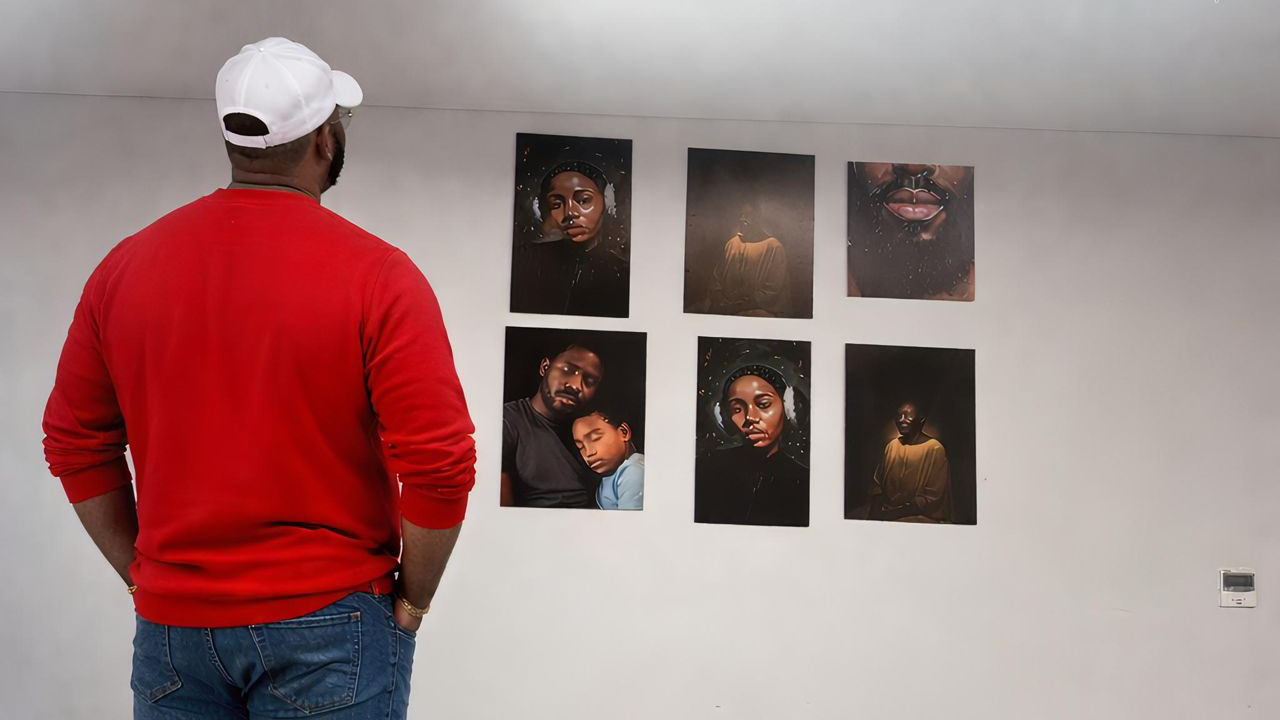
Where Light Learns Our Faces, the just-concluded exhibition by acclaimed visual artist Mavic Chijioke Okeugo, marked a resonant moment at The African Centre, drawing an engaged audience into an intimate meditation on presence, memory, and the politics of seeing.
Presented through a series of meticulously composed photographic portraits, the exhibition explored how light becomes a language one that learns, listens, and ultimately remembers the faces before it. Okeugo’s work refuses spectacle in favour of stillness, allowing each subject to emerge with dignity and emotional gravity. Faces are rendered not as surfaces, but as lived landscapes shaped by tenderness, fatigue, resilience and love.
Across the exhibition, visitors encountered a carefully sequenced body of work that moved between closeness and restraint: a father and child held in a moment of quiet protection; solitary figures suspended in soft darkness; cropped details that elevate gesture, skin, and breath into sites of meaning. The lighting deliberate and restrained served not merely as illumination, but as a collaborator, revealing what is often overlooked while preserving the interiority of each subject.
Speaking through the work, Okeugo invites viewers to slow down and reconsider how Black bodies are encountered, framed, and remembered. Where Light Learns Our Faces positions portraiture as an ethical act one that requires patience, consent, and care. The exhibition challenges the viewer to meet each image without assumption, to look long enough for recognition to become relationship.
The Private View on Sunday afternoon brought together artists, curators, collectors, and members of the public in a shared space of reflection and dialogue. Conversations unfolded organically in front of the works, underscoring the exhibition’s success not only as a visual experience, but as a communal one.
With this exhibition, Mavic Chijioke Okeugo continues to establish a powerful photographic voice one grounded in emotional truth, technical precision, and a deep commitment to humane representation. Where Light Learns Our Faces stands as a compelling testament to the capacity of portraiture to hold memory, honour presence, and insist on seeing and being seen fully.


