 Follow Us on Google News


 Follow Us on Google Discover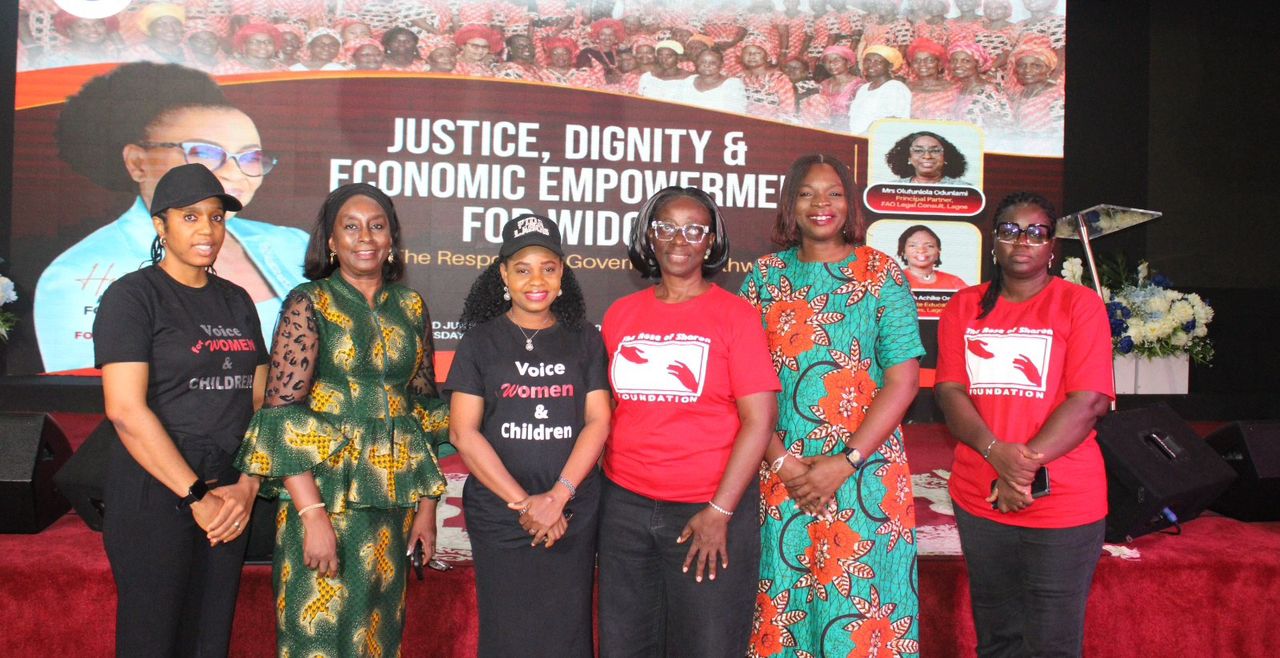
Stakeholders have called for the adoption of a national widow protection policy to bridge the gap between existing laws and their implementation, stating that many widows, particularly in rural communities, remain vulnerable to abuse and discriminatory customary practices.
The call was made during the commemoration of International Widows Day 2026, with the theme, “Justice, Dignity and Economic Empowerment for Widows: The Responsive Governance Pathway,” organised by Rose of Sharon Foundation (ROSF).
Principal Partner at FAO Legal Consult, Lagos, Mrs. Olufunmilola Odunlami, said that though several legal frameworks exist to protect women, weak enforcement, poor awareness, and the absence of a coordinated policy have limited their impact.
She urged traditional rulers, community leaders and influential persons in villages to champion advocacy against harmful widowhood practices, noting that many rural residents are unaware of the laws protecting widows’ rights. According to her, a dedicated national policy would strengthen enforcement, improve access to justice, establish accountability mechanisms and provide designated offices where widows can report abuses and seek redress.
She insisted that widows should be recognised as rights holders entitled to dignity, property, livelihood, justice and equal participation in decision-making processes affecting them, while also advocating affordable legal services, stronger legal aid institutions, widow protection units within government agencies and improved enforcement of court judgments involving widows.
Managing Director of FreeState Educational Services, Lagos, Mrs. Elizabeth Achike Osegbue urged the government to prioritise the economic empowerment of widows through education, skills acquisition, grants and access to microfinance.

Osegbue said widows could be trained in agribusiness, technology, healthcare and vocational trades to improve their livelihoods and attain financial independence.
She stressed the need for government-backed mentorship, networking opportunities, legal aid and asset protection schemes, noting that empowered widows could own businesses, land and other assets.
Osegbue also called for national policies and accessible local programmes to support widows, arguing that leaders have a moral responsibility to protect vulnerable groups and promote social justice.
The Country Manager of the Foundation, Dr. Ndudi Bowie also called for a dedicated law to protect widows in Nigeria, stating that existing government interventions are insufficient to address the widespread abuse and discrimination they face.
Bowie urged governments, civil society organisations and citizens to intensify efforts to safeguard widows’ rights and dignity.
“We are asking for a dedicated policy, a specific law towards widows’ protection in Nigeria. The government is doing its bit, but that bit is not enough. Widows are human beings, and the way we fight for women’s rights is the same way we should fight for widows’ rights,” she said.
Bowie decried harmful traditional practices, including property seizure, forced eviction, child separation and housing discrimination against widows, stressing that justice should not depend on financial support alone.
She noted that International Widows’ Day, observed yearly, provides an opportunity to draw global attention to the unique challenges faced by widows and advocate stronger laws, policies and empowerment initiatives.
The Coordinator of the Foundation, Oloruntosin Taiwo also called for a dedicated legal framework to protect widows’ rights, lamenting that the existing policies have failed to address the discrimination and hardship many face.
Taiwo said the yearly event raises awareness of widows’ challenges, including property grabbing, social exclusion, stigma and denial of access to housing and other opportunities.
She noted that the foundation has continued to engage policymakers at the local, state and federal levels, urging them to enact and implement specific laws that safeguard widows’ rights while periodically reviewing existing policies to ensure they remain effective.
A widow, Mrs Ijeoma Nwaogwu called for greater economic and social inclusion for widows, lamenting that many face discrimination after losing their spouses.
She said widows bear the full burden of providing for their families, including paying school fees, rent and other household expenses without adequate support.
According to her, widows are often treated as outcasts and unfairly excluded from opportunities, including employment.
“My husband died does not mean that I am dead. I am alive. What married women can do, widows can also do, and even better,” she said, urging society to end stigma and recognise widows’ contributions.

