 Follow Us on Google News


 Follow Us on Google Discover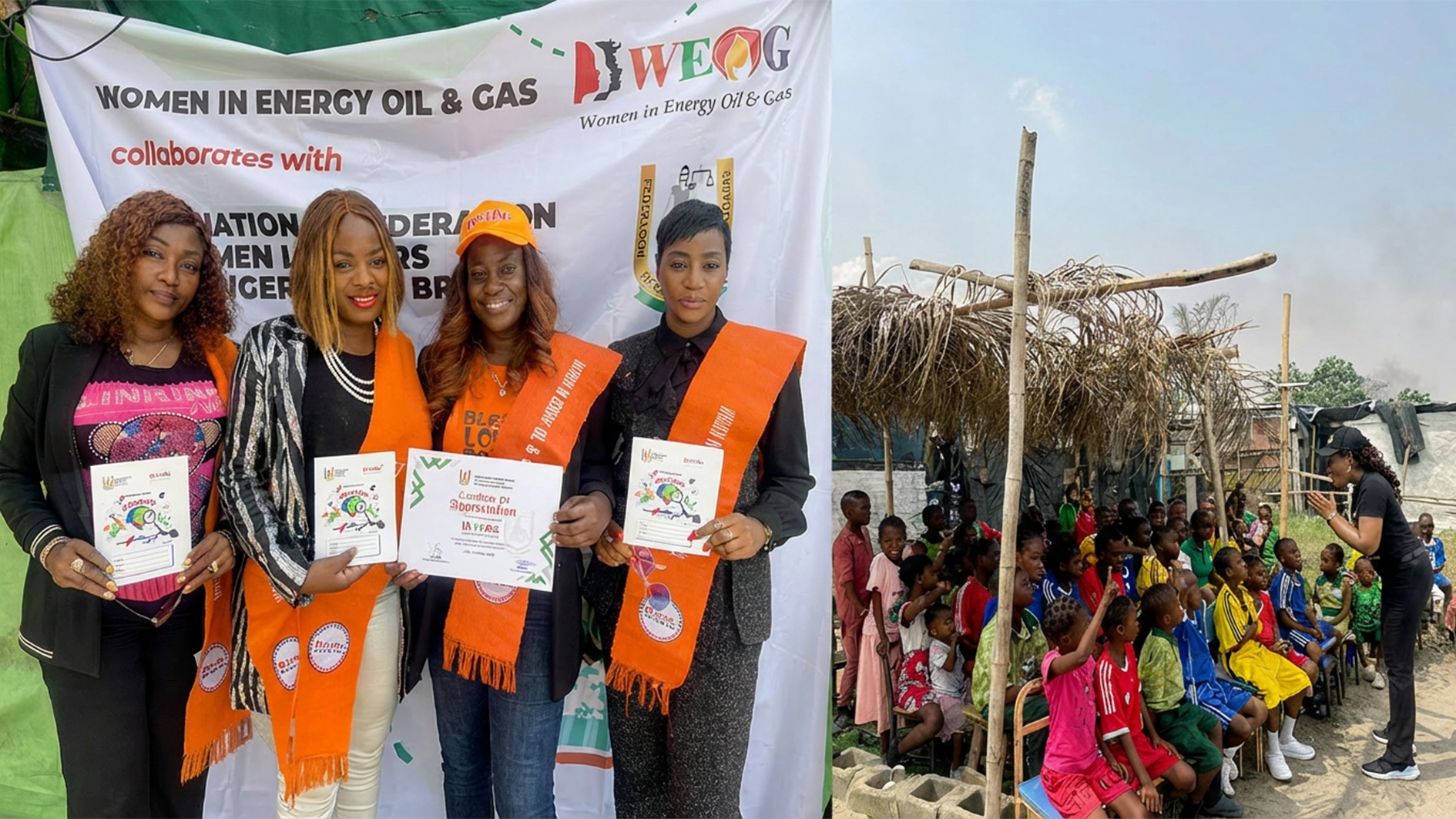
Women in Energy, Oil and Gas (WEOG), in collaboration with the International Federation of Women Lawyers (FIDA), has donated books and other educational materials to children at an Internally Displaced Persons (IDP) learning centre in Lagos.
The donation took place at St Stephen and Benita Tutorials, located along the Lekki–Epe Expressway, as part of activities marking the International Day of Education.
According to the organisers, the initiative was designed to draw attention to persistent gaps in access to education in Nigeria, particularly among displaced and vulnerable children.
They noted that many children living in IDP communities continue to face barriers to basic education due to displacement, poverty and limited learning resources. The groups emphasised that supporting education remains critical to empowering young people and ensuring inclusive and sustainable development.
Chapter Chairperson, International Forum for WEOG Lagos, Dr Lucy Okeke, said education remains a core component of the Sustainable Development Goals, yet many children in IDP camps continue to be left behind.
She noted that, as women working in the energy, oil and gas sector, members of WEOG are committed to addressing energy poverty and its wider social consequences, including poor access to education.

“Our oil and gas resources, which are Nigeria’s major source of revenue, have not translated into economic gains for many citizens. As a result, many women, girls and children are denied basic education,” she lamented.
Okeke emphasised that giving back to society should not be limited to commemorative days but should be a continuous commitment. She also called on government at all levels to intensify collaboration with the private sector and civil society to ensure that children in IDP camps are not forgotten.
She urged the Ministry of Education and other relevant agencies to introduce regular, targeted programmes for displaced children, stressing the need for greater awareness, sponsorship and intentional policies to guarantee access to basic education.
“The government needs to do more to ensure these children are carried along and not left behind,” she added. Chairperson of FIDA Nigeria, Epe Branch, Uchenna Ogwo, said education is a basic constitutional right for every Nigerian child.
She stated that under the Nigerian Constitution and the Child Rights Act, every child, whether in an internally displaced situation or living in the city, has a right to education.
She stressed that ensuring access to education should not be left to government alone, calling on civil society organisations, community leaders, parents and other stakeholders to play active roles.
According to her, FIDA encountered the school during an advocacy engagement and decided to intervene after observing the educational needs of children in the community.
The FIDA chairperson urged Nigerians to be proactive within their communities by identifying children lacking basic needs and either engaging authorities or taking independent action to support them.
“All hands must be on deck, the government, parents, community and traditional leaders, civil society, and religious institutions to educate the Nigerian child,” Ogwo added.
An Associate Professor of Law and National Academia and STEM Committee Chairperson of Women in Energy, Oil and Gas (WEOG), Dr Ngozi Chinwa Ole, said access to efficient lighting, heating appliances and clean cooking gas initiatives can significantly improve learning conditions for children living in IDP camps.
She stressed that the deployment of off-grid renewable energy gadgets and appliances would be particularly impactful, noting that many of these solutions are affordable and often more practical than grid-based electricity in underserved areas.
“Energy efficiency interventions, especially the provision of efficient cooking gas, can support IDPs by reducing reliance on unsafe and unsustainable energy sources,” she said.
“Indirectly, the absence of adequate lighting and heating forces the children to spend time gathering firewood instead of studying. Directly, poor or non-existent lighting limits their ability to read or study at night, negatively affecting academic performance,” she stated.
She also noted that health challenges arising from unsafe energy practices further undermine education outcomes, as good health is fundamental to learning.
Proprietress of St Stephen and Benita Tutorials, Mrs Adetutu Oshodi, thanked the organisations for their support and called on government, individuals and other organisations to support learning in IDP camps

