The United States decision to sharply cut and restructure its humanitarian funding is set to have significant consequences for Nigeria, one of the countries most affected by reductions in US foreign aid, as Washington pledged just $2 billion for United Nations humanitarian operations in 2026.
The pledge, announced on Monday in Geneva, marks a dramatic decline from previous US contributions and comes amid a broader policy shift under President Donald Trump aimed at overhauling how the United States supports multilateral humanitarian efforts.
Under the new framework, US humanitarian funding will be channelled through the UN Office for the Coordination of Humanitarian Affairs (OCHA) rather than directly to individual UN agencies. Washington has said the move is designed to improve efficiency, reduce duplication and impose stricter accountability across the UN system.
Initial beneficiary countries include the Democratic Republic of Congo, Myanmar and Sudan, with the possibility of additional countries being added later.
US Secretary of State Marco Rubio said on X that the new approach would require UN agencies to reform or scale down operations, stressing that future funding would depend on measurable impact and oversight.
Despite the pledge, US humanitarian funding has fallen sharply. UN figures show that while the United States remained the world’s largest humanitarian donor in 2025, its contribution dropped to about $2.7 billion, compared with roughly $11 billion in 2023 and 2024 and more than $14 billion in 2022.
The funding shift has raised concerns for countries like Nigeria, which rely heavily on US-backed humanitarian and development programmes.
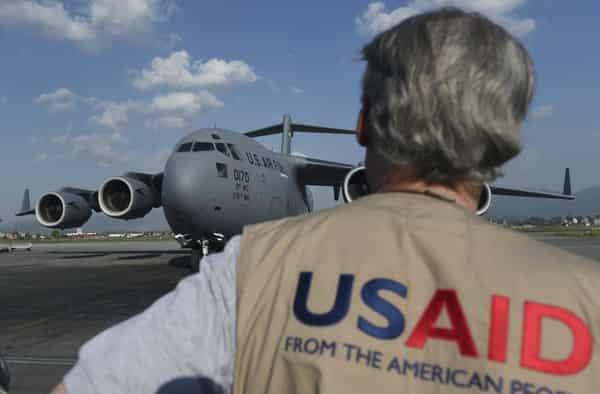
An investigation by the Centre for Collaborative Investigative Journalism (CCIJ) found that Nigeria lost more than N250 billion (about $142.6 million) in unspent grants and contracts following abrupt cuts to United States Agency for International Development (USAID) programmes under the Trump administration.
According to the CCIJ findings, Nigeria ranks among the hardest-hit countries globally, alongside Kenya, Tanzania and Ghana.
The losses stem from the suspension or cancellation of USAID-funded projects in health, governance and development sectors, including major initiatives implemented by firms such as Tetra Tech and Chemonics International.
The impact has been particularly severe in the health sector. Programs under the President’s Emergency Plan for AIDS Relief (PEPFAR), which has saved more than 26 million lives globally, experienced disruptions in Nigeria after the cuts.
With more than two million people living with HIV in the country, health facilities reported drug shortages that forced rationing of antiretroviral medicines.
Healthcare workers and patients reported interruptions in treatment, a development health professionals warned could increase the risk of transmission and undermine years of progress in HIV control.
At the global level, UN humanitarian chief Tom Fletcher described the US pledge as a major commitment despite the reduced funding, noting that the United States had long been the world’s largest humanitarian donor. He said reforms under the UN’s “Humanitarian Reset” were aimed at delivering aid more efficiently in a constrained funding environment.
Earlier this month, the UN launched its Global Humanitarian Appeal for 2026, seeking $23 billion to assist 87 million people, down sharply from previous appeals. The UN estimates that around 240 million people worldwide are in need of emergency assistance due to conflict, climate shocks and disease.
President Trump has repeatedly defended cuts to foreign aid, including during his address to the United Nations General Assembly, where he argued that US taxpayers should no longer fund what he called inefficient international systems.