 Follow Us on Google News


 Follow Us on Google Discover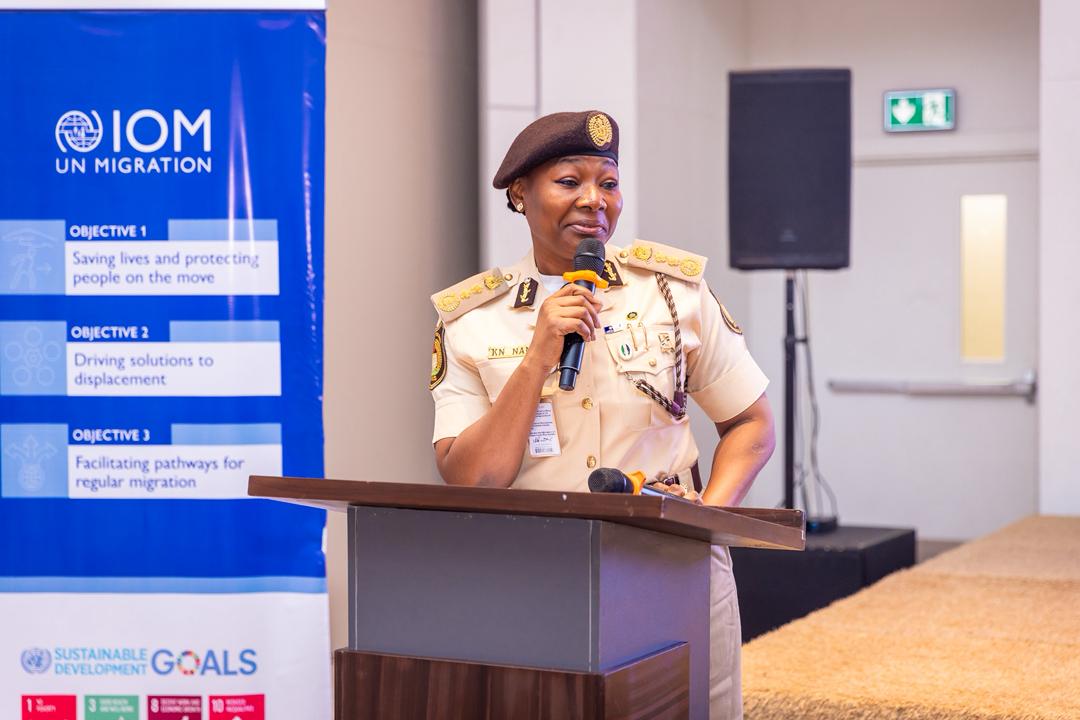
The Comptroller General of the Nigeria Immigration Service (NIS), Kemi Nandap, has said the Service is strengthening its legal and operational frameworks to improve border security, safeguard Nigeria’s territorial integrity and enhance service delivery.
Nandap made this known on Tuesday in Abuja at the maiden edition of the NIS Law Week, themed “Leveraging Technology and Strengthening Legal Framework for a Secure and Efficient Immigration Service.”
Represented by the Deputy Comptroller in charge of Human Resources, Agolayan Ayeni, the Comptroller General said the Service has made substantial investments in border management infrastructure and is committed to ensuring that these initiatives operate strictly within the rule of law and existing statutory provisions.
She highlighted key advancements, including upgrades to the Migration Information and Data Analysis System (MIDAS), deployment of digital surveillance tools at border posts, installation of e-Gates at international airports, and the implementation of Advanced Passenger Information (API) and Passenger Name Record (PNR) systems.
“Significant resources have been committed to protecting Nigeria’s borders. It is therefore critical that these technological gains are supported by robust legal frameworks, clear operational guidelines and full compliance with statutory provisions in line with global best practices,” she said.
Nandap described the inaugural Law Week, organised by the NIS Legal Unit, as a milestone initiative expected to usher in a new phase of professionalism, institutional accountability and purpose-driven service delivery anchored on the rule of law.
She noted that while technology has improved efficiency, it has also introduced new threats, including cyber-enabled crimes, smuggling of migrants and trafficking in persons, stressing the need for a strengthened legal-operational framework to effectively address these challenges.
“The Nigeria Immigration Service remains committed to upholding professionalism, transparency and accountability. Our operations must balance innovation with strong legal safeguards to ensure secure and efficient services for the public,” she added.
The Comptroller General further emphasised the importance of synergy between the Legal Unit and other directorates, noting that effective collaboration is essential for achieving the Service’s statutory mandate.
She assured that the NIS will continue to work closely with relevant stakeholders to combat transnational crimes and build the capacity of its officers to investigate, prosecute and prevent immigration-related offences.
Earlier, the Director of Legal Services, Oluwatoyin Yusuf, said the role of the Legal Unit extends beyond legal interpretation to ensuring that innovation within the Service is firmly grounded in a sound legal framework that promotes efficiency, transparency and respect for the rule of law.
She stressed the need for continuous review and adaptation of the NIS’s legal and operational systems to keep pace with technological advancements and evolving global security challenges.

