 Follow Us on Google News


 Follow Us on Google Discover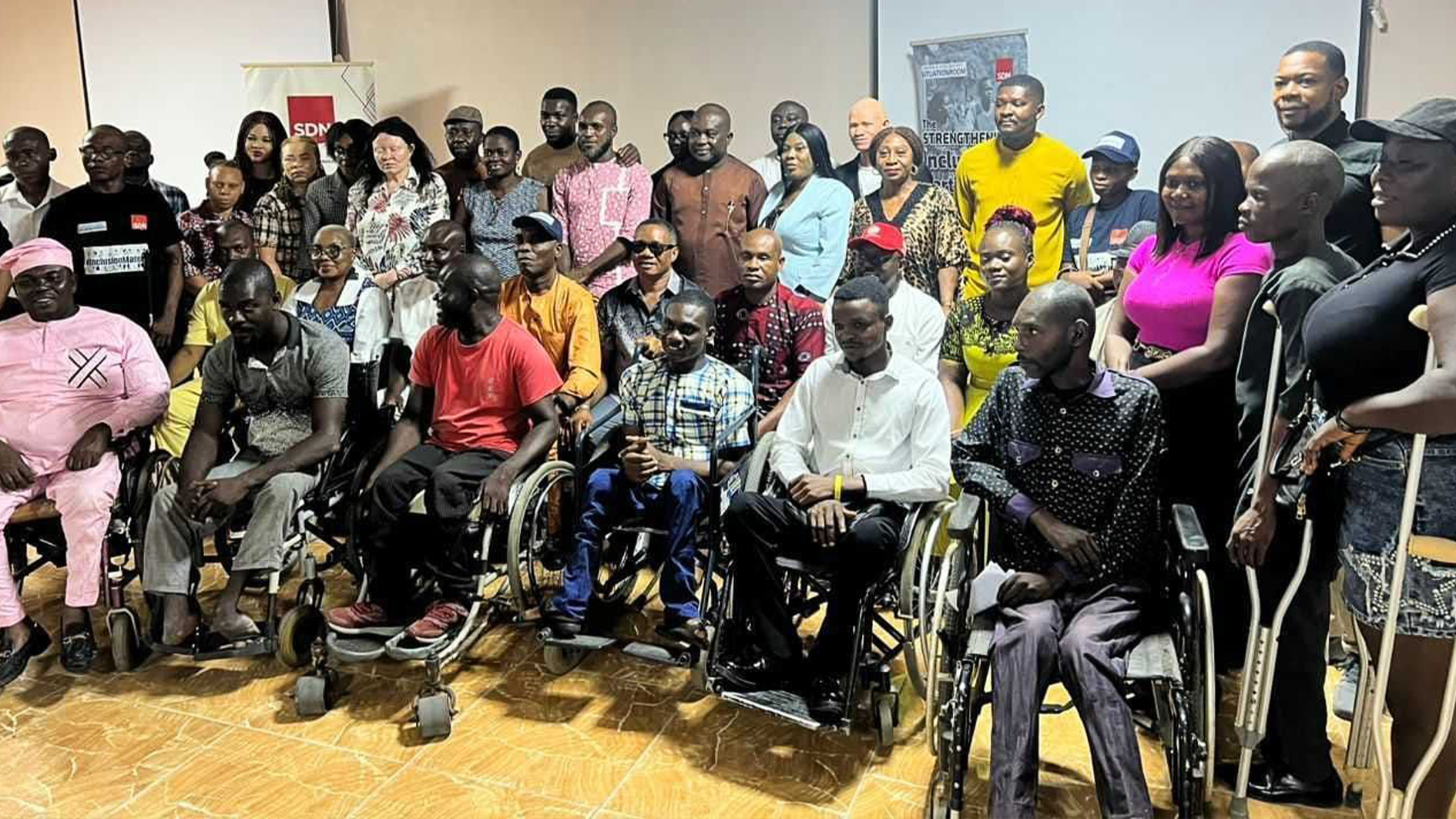
Persons with disabilities (PWDs) have issued a strong call for full inclusion in Nigeria’s electoral process, pressing authorities to move beyond promises and deliver practical support that guarantees their right to vote and be voted for.
The demand took centre stage at a multi-stakeholder roundtable on inclusion hosted by the Stakeholder Democracy Network (SDN), where participants spotlighted persistent barriers—from inaccessible voter registration and PVC collection to limited participation in party politics.
SDN Country Director, Florence Ibok-Abasi, set the tone, stressing that inclusion must be intentional and tailored to the diverse realities of PWDs, including those with visual, hearing, and mobility challenges.
“Persons with disabilities are not a homogenous group. Their needs differ, and our responses must reflect that if we are serious about inclusion,” she said.
Ibok-Abasi highlighted SDN’s sustained advocacy, noting that the group has worked closely with the Rivers State Government to push gender, youth, and disability-focused reforms, while amplifying PWD demands during past election cycles.
She recalled how these demands were integrated into a governorship debate and driven through engagements with political parties to force attention on disability inclusion.

On its part, the Independent National Electoral Commission (INEC) says it is stepping up efforts to bridge the gap.
The Rivers State Head of Voter Education and Publicity, Geraldine Ekelemu, outlined measures including the creation of a disability-focused department, decentralised voter registration at ward level, and an online component for easier access.
She added that sign language interpreters are now deployed during election processes, ensuring voters with hearing impairments are not shut out of critical moments like result announcements.
INEC, she said, is also leveraging data to understand the specific needs of voters with disabilities and deploy appropriate assistive materials on election day.
But for many participants, progress must translate into real-time support at polling units.
Mrs Ifeyinwa Djegbada welcomed INEC’s openness to alternative voting methods such as toe voting for those unable to use their hands, describing it as a step in the right direction.
She, however, urged the National Orientation Agency to scale up awareness campaigns targeted at PWDs, while calling on political parties to open their doors wider—not just to voters, but to candidates with disabilities.
Another participant, Nwosu Justice, credited SDN’s advocacy for increasing awareness among PWDs but warned that deep-rooted discrimination still limits their participation—even within families.
“Awareness is growing, but acceptance is still a battle we must fight,” he said
The roundtable closed with a unified resolve among stakeholders to dismantle barriers and build an electoral system where disability is not a disadvantage—but a voice fully counted.

