 Follow Us on Google News


 Follow Us on Google Discover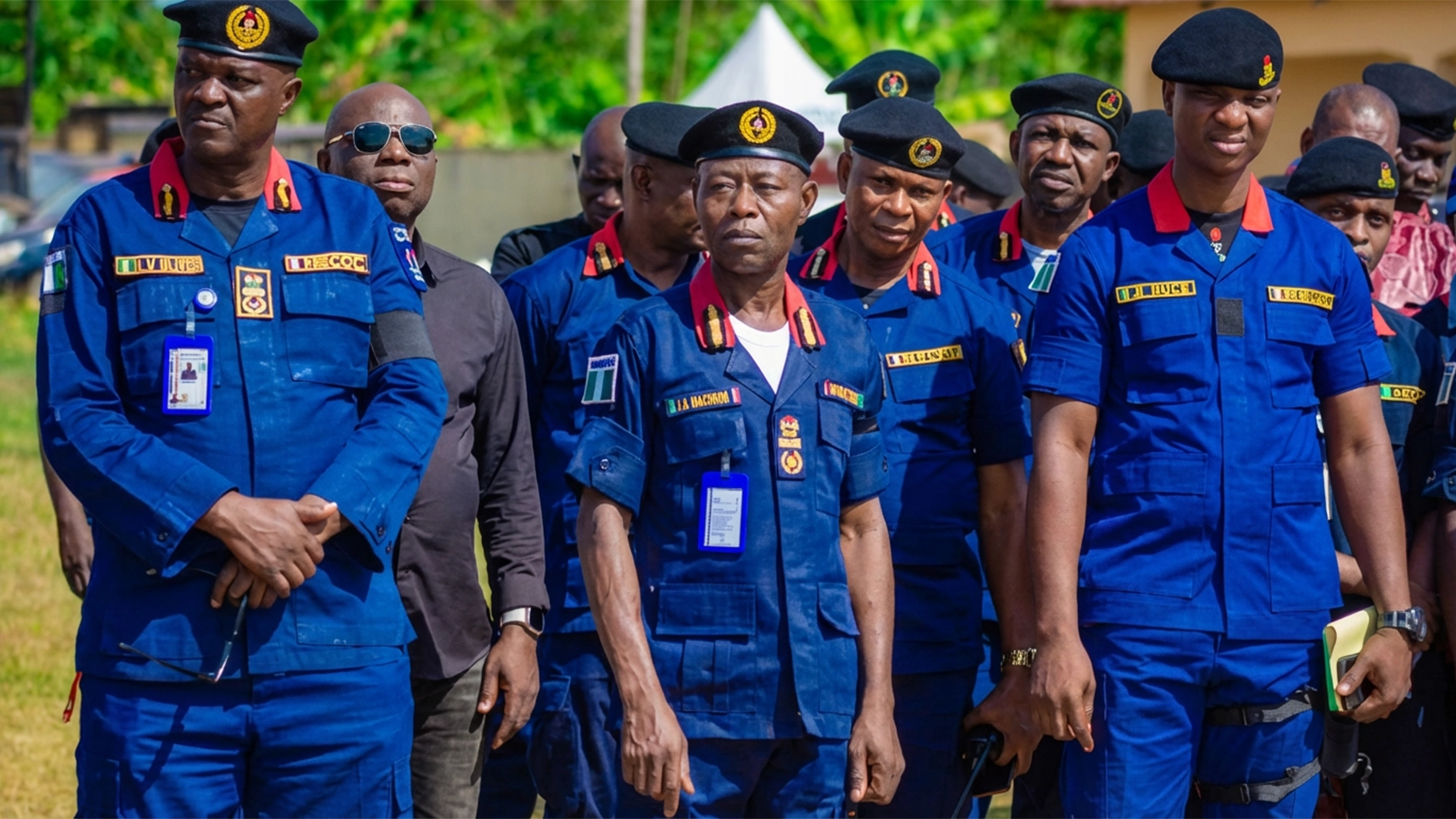
…Lawyers seek autopsies, prosecution where evidence warrants
…NBA, families demand answers as cause of deaths remains unknown
…Probe faces test over detention conditions, medical care, possible negligence
…Don’t give us money, Adeyanju advises FG
The deaths of 37 suspected illegal miners in the custody of the Nigeria Security and Civil Defence Corps (NSCDC) in Niger State have opened a difficult test about the Federal Government’s promise to hold public officials accountable when people die under state custody.
What began as an NSCDC operation against suspected illegal mining has rapidly become a major test of the government’s handling of custodial deaths, with President Bola Ahmed Tinubu ordering a full and transparent investigation, while the Minister of Interior, Olubunmi Tunji-Ojo, has suspended the Niger State Commandant and other officers connected with the detention facility.

The 37 detainees died on September 17, shortly after they were arrested during operations targeting suspected illegal mining activities around M.I. Wushishi and Lukoto villages in Niger State. The NSCDC initially said the detainees were found dead following a suspected disease outbreak and that their bodies had been deposited at the General Hospital, Minna, for medical examination.
But reports of overcrowding and poor ventilation at the detention facility, coupled with accounts from survivors and relatives of the deceased, have intensified questions over what happened before the deaths.
The controversy has also triggered protests in Minna and prompted the Niger State Government to impose a curfew, while calls have grown for an independent determination of the cause of death and possible responsibility.
For the Federal Government, therefore, the issue has moved beyond explaining how 37 people died.
The more consequential question is whether the investigation will establish responsibility and, where the evidence supports it, lead to criminal prosecution.
President Tinubu, in ordering the investigation, drew a clear distinction between the government’s duty to enforce the law and its obligation to obey the law while doing so.
The President said the fact that the detainees were suspected of illegal mining did not remove their rights to life, dignity and humane treatment while in government custody.
He directed that the investigation should cover the circumstances of their arrests, their condition when taken into custody, the conditions in which they were detained, the number of people held in the facility, medical attention provided and the events leading to their deaths.
More significantly, Tinubu said suspension of officers should not substitute for a determination of criminal responsibility where evidence warrants prosecution.
“The suspension of officers is only an administrative step and must not substitute for a proper determination of criminal responsibility where the evidence warrants prosecution,” the President said.
The Federal Government has consequently placed considerable responsibility on the 10-member independent committee constituted by the Interior Minister.
The panel is chaired by retired Deputy Director-General of the Department of State Services, Jonathan Kure, while former Director-General of the Nigerian Law School, Professor Isa Hayatu Chiroma (SAN), is secretary.
Other members are retired Assistant Inspector-General of Police Hosea Hassan Karma; Professor Olayinka Buhari, professor of Histopathology and former Chief Medical Director of the University of Ilorin Teaching Hospital; representatives of the Minna Emirate Council and Niger State Government; National Secretary of the Miners Association of Nigeria, Liman Sulaiman; human rights lawyer, Deji Adeyanju; Blueprint newspaper’s Zainab Suleiman Okino; and public affairs analyst, George Agbakahi.
The composition gives the panel representation across security, medicine, law, government, traditional institutions, mining, civil society, media and public affairs.
Adeyanju said he accepted the responsibility solely to protect the interests of the victims and ensure that the truth is established, advising the Federal Government against providing money for the committee.
“I urge the Government not to make any monetary provision, stipend or honorarium for members of the committee, as this is a national duty for which we should be prepared to sacrifice.
“I will not accept any such payment, and I will not participate in or tolerate any attempt to compromise the investigation or cover up wrongdoing. I undertake to take care of my hotel, transportation and other expenses myself,” he pledged, adding that if there is any attempt to shield those responsible or suppress the truth, he will expose it.
“The victims deserve justice, and the Nigerian factor as we know it must not be allowed to prevail,” he said.
The Federal Government said the committee would establish the identities of the deceased and investigate their arrests, detention, the causes and circumstances of the deaths, as well as responsibility, complicity, negligence and misconduct.
It is also expected to recommend appropriate action, compensation where applicable and measures to prevent a recurrence.
The committee has two weeks to submit its report and has been empowered to access relevant facilities and documents, visit locations connected with the incident and request memoranda from members of the public.
The Interior Ministry has also directed that all records and material evidence relating to the incident be preserved and made available to investigators.
Tunji-Ojo warned that attempts to destroy or conceal evidence, intimidate witnesses or obstruct the investigation would be treated as a serious offence.
The government has meanwhile suspended the Niger State NSCDC Commandant and 20 other officers pending the conclusion of the investigation.
Those affected include officers responsible for the station guard, arrests and investigation, intelligence and investigation, legal services, duty supervision and guards at the facility.
Lawyers demand forensic answers
The government’s commitment to accountability has also drawn scrutiny from lawyers and human rights advocates who want the investigation to go beyond official explanations.
An Abuja-based constitutional lawyer and human rights activist, Okueyelegbe Maliki said the panel must be genuinely independent and have unhindered access to detention, medical and other relevant records.
He said the investigation should establish the condition of the cell, the number of detainees, the medical care provided and the events immediately preceding the deaths.
Maliki also called for preservation and proper examination of available forensic and medical evidence, notwithstanding reports that the bodies had already been buried.
He urged the government to publish the findings so that the families and the wider public would know what was established and who, if anyone, was responsible.
According to him, criminal prosecution should follow wherever the evidence supports it, while affected families should receive appropriate compensation.
Martins Almagani of Godwin Sunday Ogboji, SAN & Co., also said Section 33 of the Constitution guarantees the right to life, including for persons in custody.
The lawyer argued that the suspension of the officers was not sufficient and called for the publication of the panel’s report at the end of its assignment.
Almagani also advocated independent autopsies to establish the exact cause of the 37 deaths and urged that officers found criminally responsible, regardless of rank, should face prosecution.
He said the incident had further exposed concerns surrounding the condition of detention facilities and called for urgent reforms.
Similarly, Aloy Ejimakor, constitutional lawyer, has urged the Federal Government to ensure that the investigation did not become another “paper probe.”
Ejimakor called for the publication of autopsy, pathological and toxicological findings and urged the committee to comply strictly with its two-week deadline.
He also called for the preservation of detention logs, medical records and other relevant evidence, as well as protection for survivors and relatives who may have information about the circumstances surrounding the deaths.
Also, human rights lawyer, Bayo Akinlade, is insisting that those involved in the incident should be handed over to the Police for immediate investigation and prosecution.
Akinlade, a former chairman of the Nigerian Bar Association (NBA), Ikorodu branch, said those responsible for the deaths should face prosecution for murder or manslaughter, depending on the findings of the investigation.
He also called for regular oversight of detention facilities across the country, involving the NBA, magistrates, the Legal Aid Council of Nigeria and the National Human Rights Commission (NHRC). According to him, state and federal authorities should establish effective oversight mechanisms for all detention facilities to prevent a recurrence of the deaths.
However, Lagos based lawyer, Stephen Azubuike thinks differently.
He faulted the composition of the investigation committee.
He said: “The immediate suspension of the officials is a right step in the right direction. The idea of immediate investigation is also welcome. But what blinks the eyelid is the composition of the committee set up and led by a retired Deputy DG of DSS.
“To my mind, Nigeria is equipped with highly competent security operatives who can swiftly swing into action, without any ceremonial announcements, to investigate the incident and make a report of their findings. If the report raises doubts, we may then consider an independent committee to review the entire process. That’s the way to go.
“The ultimate outcome of the investigation exercise must preserve hope in our law enforcement institutions, given the already ugly outlook.”
NBA demands answers
The Nigerian Bar Association has said it will take its constitutional and institutional watchdog role seriously.
In a statement endorsed by its national president, Oyinkansola Badejo-Okusanya (SAN), the body said it has constituted a team headed by a respected Senior Advocate of Nigeria resident in Minna and former General Secretary of the NBA, Mr Jonathan Gunu Taidi.
“He will lead a team of members of the NBA Minna Branch to commiserate and engage with the families of the deceased, engage with the surviving detainees and their families and, as far as possible, independently establish the circumstances surrounding their arrest, detention and deaths.
“The team will also engage with relevant authorities and monitor the investigations now underway. We expect that all relevant evidence will be preserved; that proper forensic and medical investigations will be conducted; that surviving detainees and other material witnesses will be protected and permitted to give their accounts without intimidation; and that the findings of the investigations will be made public to the fullest extent permitted by law,” it said.
Where the evidence discloses criminal or other legal responsibility, the NBA said it expect those responsible to be brought before the law, irrespective of rank or office, adding that when that process reaches the courts, the NBA will be there.
“We will monitor any prosecutions arising from this incident to ensure that justice is pursued for those who died and also that every defendant is afforded the fair trial our Constitution guarantees.
“The anger generated by these deaths is understandable. We nevertheless appeal for calm and urge citizens to allow the investigations to proceed unhindered. Violence and destruction will not restore the lives that have been lost, and we must not create further victims.
“The fact that 37 Nigerians went into government custody and did not return to their families alive demands answers, and those answers must come from evidence, not conjecture; and from a process that commands public confidence, not one that merely manages public outrage.
“The NBA will follow that process closely and insist on the truth. We will insist on accountability where responsibility is established.
“And we will insist that, whatever a person’s station in life and whatever offence he or she may be suspected of committing, the dignity and life of every Nigerian in the custody of the State remain inviolable,” the body declared.
Beyond illegal mining
The tragedy has introduced a second dimension to the Federal Government’s campaign against illegal mining.
The government has maintained that its crackdown on illegal mining will continue, citing the need to protect the country’s natural resources and address activities linked to wider security and economic concerns.
But the President’s position is that enforcement cannot operate outside the law.
“While the Federal Government would continue to combat illegal mining and other criminal activities across the country, enforcement operations must be conducted strictly within the law and with full respect for the dignity and fundamental rights of every person in custody,” Tinubu said.
That position effectively places two obligations on the state: the enforcement of laws against illegal mining and the protection of people arrested in the course of that enforcement.
The second obligation becomes particularly significant when suspects die inside a government-controlled detention facility.
The 37 detainees were suspects, not convicted persons. Their detention consequently placed a continuing duty on the state and its officers to safeguard their lives and provide appropriate care. The circumstances of their deaths could therefore raise wider questions about arrest procedures, detention capacity, supervision, medical screening, access to healthcare, record-keeping and the individual responsibility of officers entrusted with detainees.
Families await answers
For the families of the 37 dead men, the panel’s assignment is not an abstract administrative exercise.
They want to know how their relatives were arrested, what happened after they were taken into custody, the conditions in which they were held, what medical attention they received and what caused their deaths.
They will also want to know what happens if the investigation establishes wrongdoing.
Those questions are now at the centre of the Federal Government’s accountability test.
The outcome will depend not merely on whether the committee produces a report, but on whether its findings are made public, whether evidence is preserved and acted upon, whether criminal responsibility is pursued where established and whether the government implements measures capable of preventing another mass death in custody.
While the Interior Ministry has promised a transparent investigation, the President has promised accountability where evidence establishes responsibility, but the 37 deaths have now put both commitments under scrutiny.

