 Follow Us on Google News


 Follow Us on Google Discover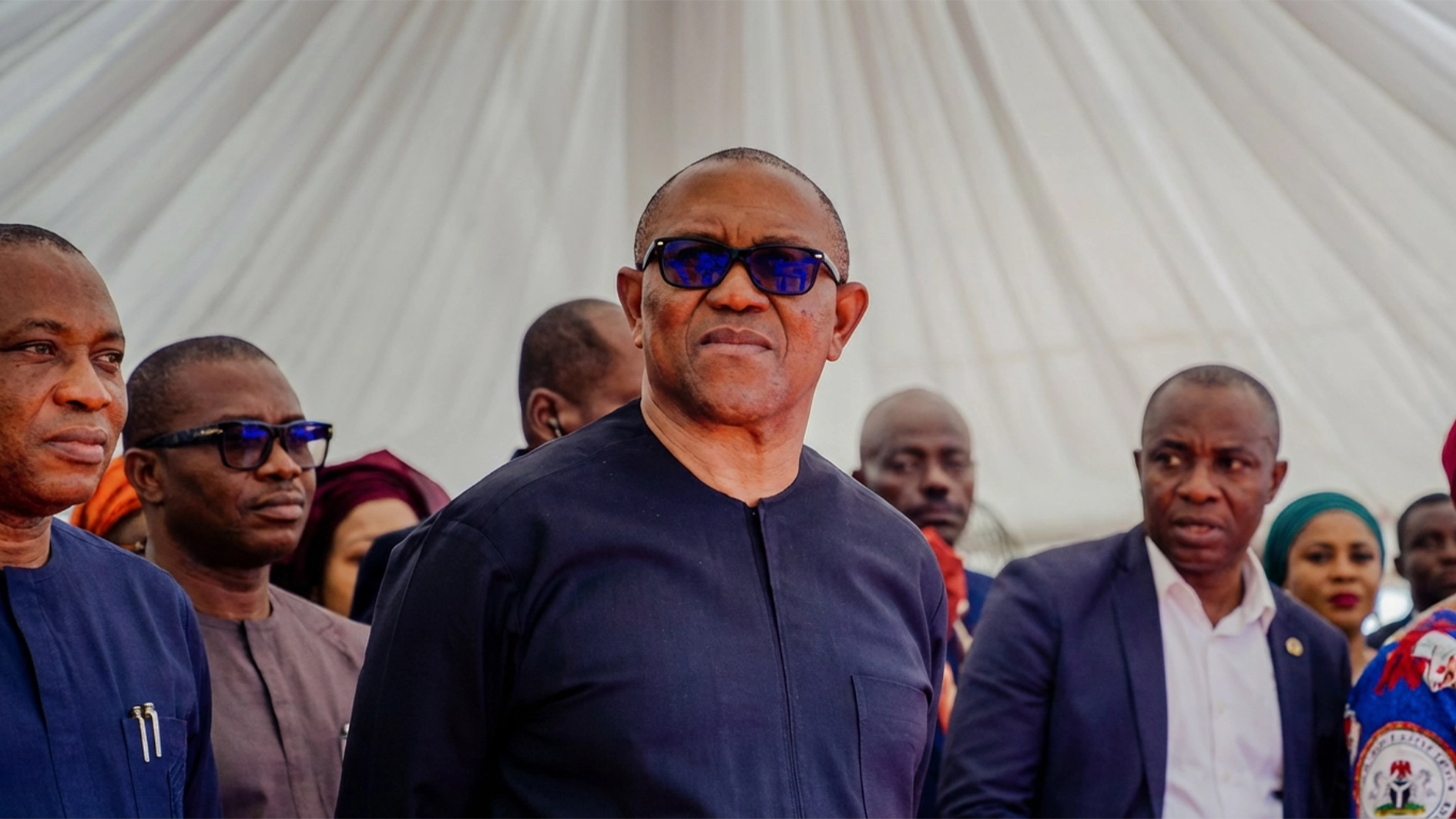
Why he remains untouched, by Farotimi
Presidential candidate of the Nigeria Democratic Congress (NDC), Peter Obi, has unveiled an expansive vision for Nigeria’s future, declaring that his dream is to build a united, secure, productive and prosperous nation where every citizen has access to opportunities and hope.
Prominent among his visions for the country is to raise power generation capacity from its present 4,000 megawatts (MW) to 10,000MW, if elected in 2027.
Meanwhile, human rights lawyer and activist, Dele Farotimi, declared that if Obi had any incriminating baggage in his past, the administration of President Bola Tinubu would have uncovered and weaponised it long ago.
Speaking in Abuja while accepting his nomination as NDC’s presidential candidate for the 2027 election, Obi said the mission before him transcended personal ambition, declaring that it “is about rescuing Nigeria from its present challenges” and restoring confidence in its future.
According to him, the dream of a New Nigeria remains achievable despite the mounting economic, social and security challenges.
Obi said millions of Nigerians were struggling under the weight of insecurity, poverty, unemployment and poor governance, stressing that the country’s future “depends on leaders who are willing to confront these challenges” with courage, competence and accountability.
He described the moment as a defining one in Nigeria’s history, arguing that families across the country were worried about their safety, parents were increasingly concerned about the future of their children, while many young people were losing faith in the possibility of achieving success in their homeland.
Despite the grim realities, Obi maintained that Nigerians possess the resilience and determination needed to rebuild the country.
At the heart of his vision is national unity. He argued that Nigeria could not achieve meaningful progress while remaining divided along ethnic, religious, regional and political lines.
The former governor of Anambra State promised to raise healthcare spending to at least 10 per cent of the nation’s Gross Domestic Product (GDP), arguing that stronger investment was a necessity to rebuild hospitals, train healthcare professionals and improve service delivery.
According to him, Nigeria’s power generation capacity is less than 10 per cent of what South Africa and Egypt are generating for their citizens.
“Today, Nigeria is a country with the highest number of citizens without access to electricity in the whole world. About 100 million Nigerians don’t have access to electricity.
“In today’s world, it is unacceptable. A country of over 200 million people only generates and distributes 4,000mw. The biggest economies in Africa, South Africa and Egypt, generate over 40,000MW,” he lamented.
Faratomi, while defending Obi’s integrity, argued that despite emerging as one of the most potent political threats to the ruling establishment, no anti-corruption agency or security institution has been able to pin a corruption scandal or criminal allegation on the former governor and acclaimed trader.
Obi, according to the activist, has spent years under the political microscope and yet remains untouched by the scandals and controversies that have consumed many public office holders.
“Peter Obi has been one of the biggest problems for the Tinubu hegemony. If there was anything incriminating against him, Nigerians would have heard about it by now. This is a government that does not hesitate to deploy the instruments of state power against perceived opponents,” Farotimi said.
He argued that anti-graft agencies had had every opportunity to investigate Obi, especially given his growing influence and persistent criticism of the Tinubu administration.
Farotimi described Obi as an “uncommon politician” whose public conduct and personal discipline distinguished him from many of his contemporaries.
However, he stopped short of offering a blanket political endorsement, insisting that while he respects Obi as an individual, he remains unconvinced about the organisational strength and ideological depth of the opposition political structure around him.

