 Follow Us on Google News


 Follow Us on Google Discover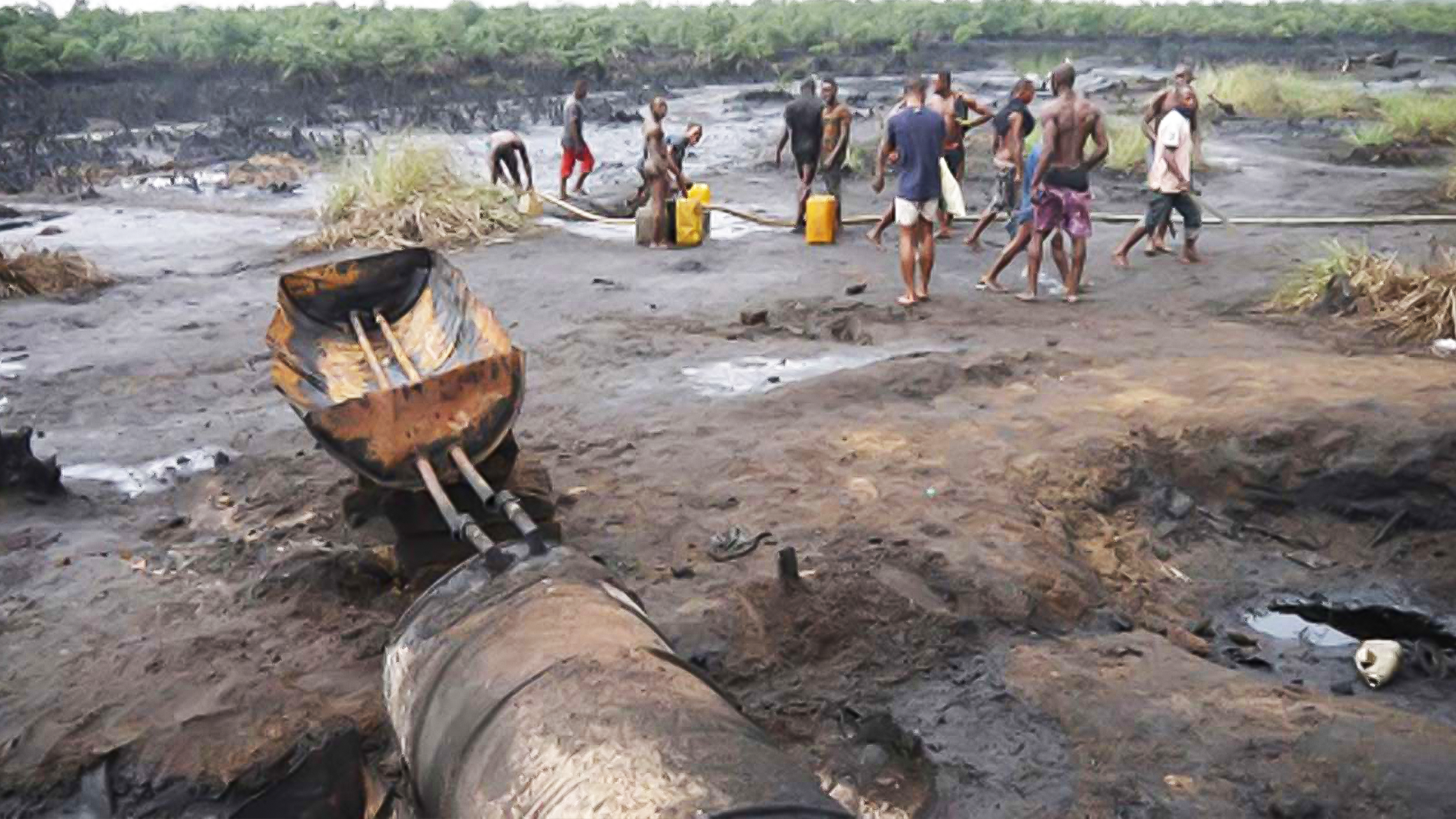
Amid the inability to fund remediation of polluted water and land in the Nigeria Delta region, over 125,000 barrels of crude oil have been spilt in the oil-producing region to worsen the country’s rising environmental degradation.
Multinational oil companies, including the Dutch Shell and U.S. Exxon Mobil, Agip, and others, recorded over 4,339 oil spill incidents between 2022 and the first half of 2026, linked to sabotage and rising equipment failures.
A crude oil spill of 125,000 barrels is equivalent to about 19.9 million litres of oil, enough to fill approximately 602 tankers, each with a capacity of 33,000 litres. A spill of this magnitude could contaminate thousands of hectares of farmland, forests, mangroves, or wetlands, depending on the terrain, weather conditions, and the speed of the emergency response. In riverine areas, the oil could spread across extensive waterways, polluting drinking water sources, destroying aquatic life and livelihoods, and leaving ecological damage that may take years or even decades to remediate.
Coming within the period when the Nigerian government already criminalised vandalism and spent billions to protect oil facilities in the oil-rich states, a report obtained from the country’s oil monitoring satellite indicates that while the number of reported incidents fluctuated over five years, environmental damage was largely driven by a handful of catastrophic spills rather than the overall frequency of incidents.
Data reviewed by The Guardian show that 2022 was the worst year by spill volume, with 1,124 incidents discharging 50,599.99 barrels of oil, accounting for about 40 per cent of the total volume recorded during the period. By contrast, 2023 recorded the highest number of incidents, with 1,442 spills, but a significantly lower volume of 20,223.51 barrels, suggesting that many of the spills were relatively small.
The figures further show that 2024 recorded 1,170 incidents and 31,577.84 barrels, while 2025 witnessed a sharp decline to 463 incidents and 16,481.85 barrels. In the first part of 2026, 140 incidents had already resulted in 7,108.40 barrels of oil spilt.
The data, monitored by the National Oil Spill Detection and Response Agency (NOSDRA), showed that the companies reporting the highest number of spill incidents were not always responsible for the largest volumes of pollution.

A major outlier was Eroton Exploration and Production Limited, which reported just 14 spill incidents in 2022 but accounted for 36,569.89 barrels of spilt oil, representing nearly three-quarters of the total volume recorded that year. The incident remains the single largest contributor to oil pollution in the dataset.
In the period, Shell Petroleum Development Company (SPDC) remained among operators with consistently high spill volumes, as the company recorded 384 incidents and 3,519.05 barrels in 2022 before reporting 632 incidents and 9,952.15 barrels in 2023, the highest number of incidents by any operator during the period. In 2024, SPDC recorded fewer incidents, 337, but the volume of oil spilt surged to 15,857.87 barrels, making it the largest polluter by volume that year.
Similarly, the Nigerian Agip Oil Company (NAOC) remained one of the operators with the highest frequency of spills. It reported 446 incidents in 2022, 496 in 2023, and 466 in 2024, although the corresponding spill volumes were considerably lower than SPDC’s in some years, at 5,618.66, 3,883.92, and 3,576.09 barrels, respectively.

