 Follow Us on Google News


 Follow Us on Google Discover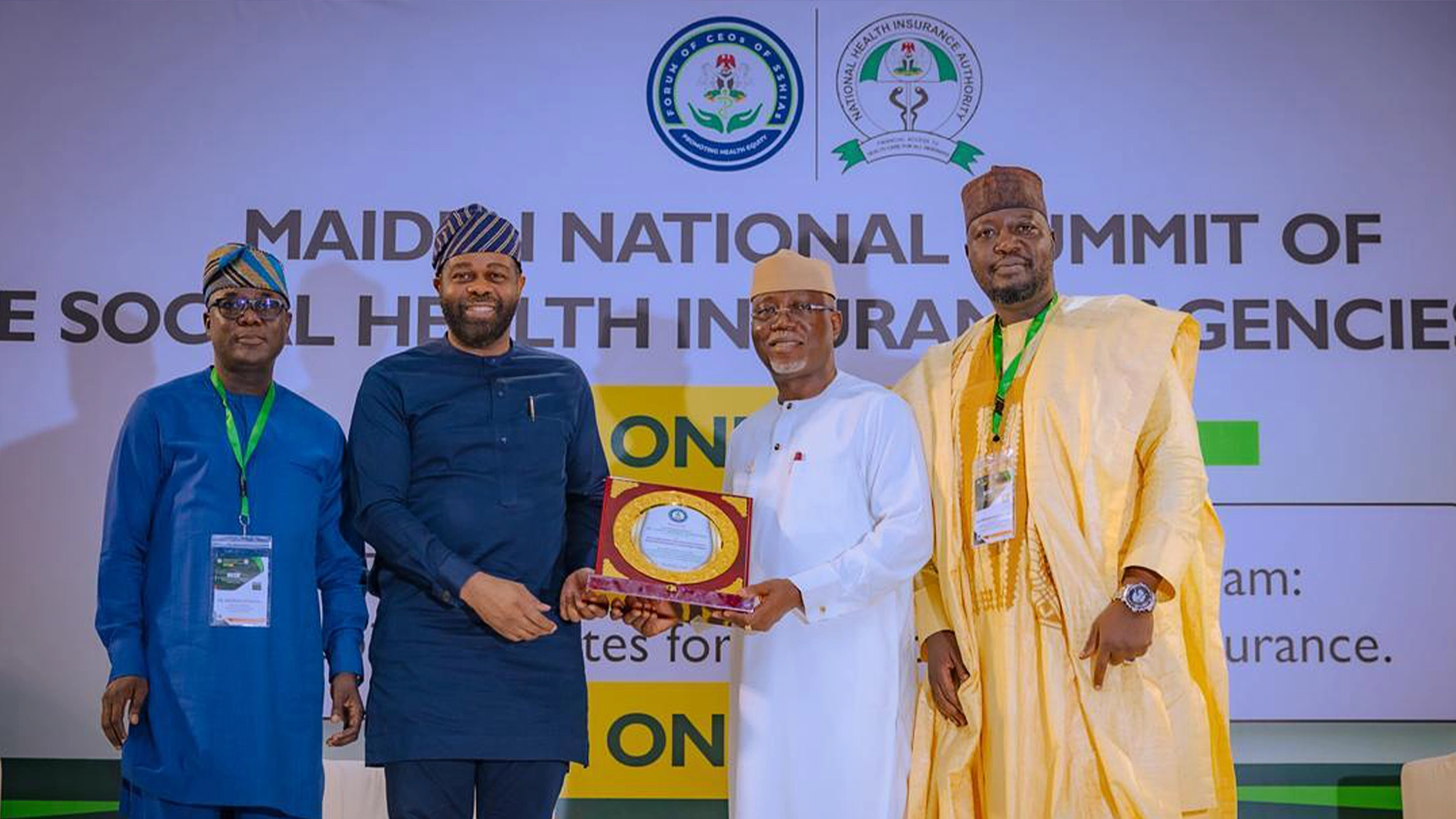
... Aiyedatiwa unveils N1bn Lucky Ayedatiwa fund
… Approves new salary structure for health workers
Governor of Ondo State, Lucky Aiyedatiwa, on Monday disclosed the inclusion of retirees into the state’s health insurance scheme at no cost to the pensioners amid mounting economic pressures in the country.
According to Aiyedatiwa, the state government would assume full financial responsibility for enrolling all retirees under the Orange Health Insurance Scheme (ORANGHIS), a decision he said was informed by the rising cost of medical care in old age and the increasing healthcare needs of pensioners.
The governor also revealed that the state had become the first in the country to implement the newly approved salary structure for health workers, a reform he emphasized will reduce brain drain and encourage retention of skilled professionals.
Aiyedatiwa revealed this during the maiden national summit of State Social Health Insurance Agencies (SSHIAs) held at the International Culture and Event Centre (The Dome), Akure, which attracted policymakers, health insurance managers, development partners, and government officials from across the country.

Speaking on the theme, “Economic Realities and the Universal Health Coverage Dream: Mobilizing States for Scalable Health Insurance,” the governor stated that the debate around healthcare financing had become more urgent due to inflationary pressures and worsening economic conditions affecting households nationwide.
He noted that financial constraints often force families to delay seeking medical attention until conditions become severe and costlier to treat, stressing that social health insurance remains the instrument for shielding citizens from catastrophic health expenditure.
The governor also announced the approval of a N1 billion Hospital Intervention Fund targeted at expanding and modernizing healthcare facilities across the state, explaining that the fund, separate from routine health expenditure, was designed to enhance hospital capacity and improve service delivery.
“When households are squeezed economically, healthcare is often the first casualty. Individuals delay seeking medical attention until a minor ailment becomes a life-threatening and financially ruinous emergency.
“This is exactly why social health insurance is no longer just a social service; it is an economic necessity. It is the most potent weapon we have to protect our citizens from catastrophic health expenditures,” he said.
In his address, the Commissioner for Health, Dr. Banji Ajaka, described the summit as a timely platform to address critical challenges in Nigeria’s health sector.
Ajaka stated that the current economic realities required states to adopt innovative financing strategies to sustain healthcare delivery, adding that reliance on traditional funding models was no longer sufficient.
On his part, the Ekiti State Commissioner for Health and Chairman of the Forum of Health Commissioners, Dr. Oyebanji Filani, commended Ondo State for recording the lowest neonatal and infant mortality rates in Nigeria.
Citing data from the National Demographic and Health Survey, he said neonatal mortality stood at three per 1,000 live births and infant mortality at eight per 1,000.
He also commended President Bola Tinubu for increasing fiscal resources available to states, stressing that emphasis should now be placed on effective utilization and that universal health coverage should be treated as a prioritization framework rather than merely a financing issue.
In his goodwill message, Chairman of the Forum of Chief Executive Officers of State Social Health Insurance Agencies and Director-General of the Katsina State Contributory Healthcare Management Agency, Dr. Kabir Mustapha, stated that the summit marked the first coordinated gathering of all state health insurance agencies and the Federal Capital Territory under a unified platform.
Meanwhile, Director-General of the National Health Insurance Authority (NHIA), Dr. Kelechi Ohiri, said rising out-of-pocket expenditure continued to expose Nigerians to financial hardship.
He noted that over 90 per cent of Nigerians remained outside the formal insurance system, stressing that universal health coverage was essential to protecting citizens from medical poverty.

