 Follow Us on Google News


 Follow Us on Google Discover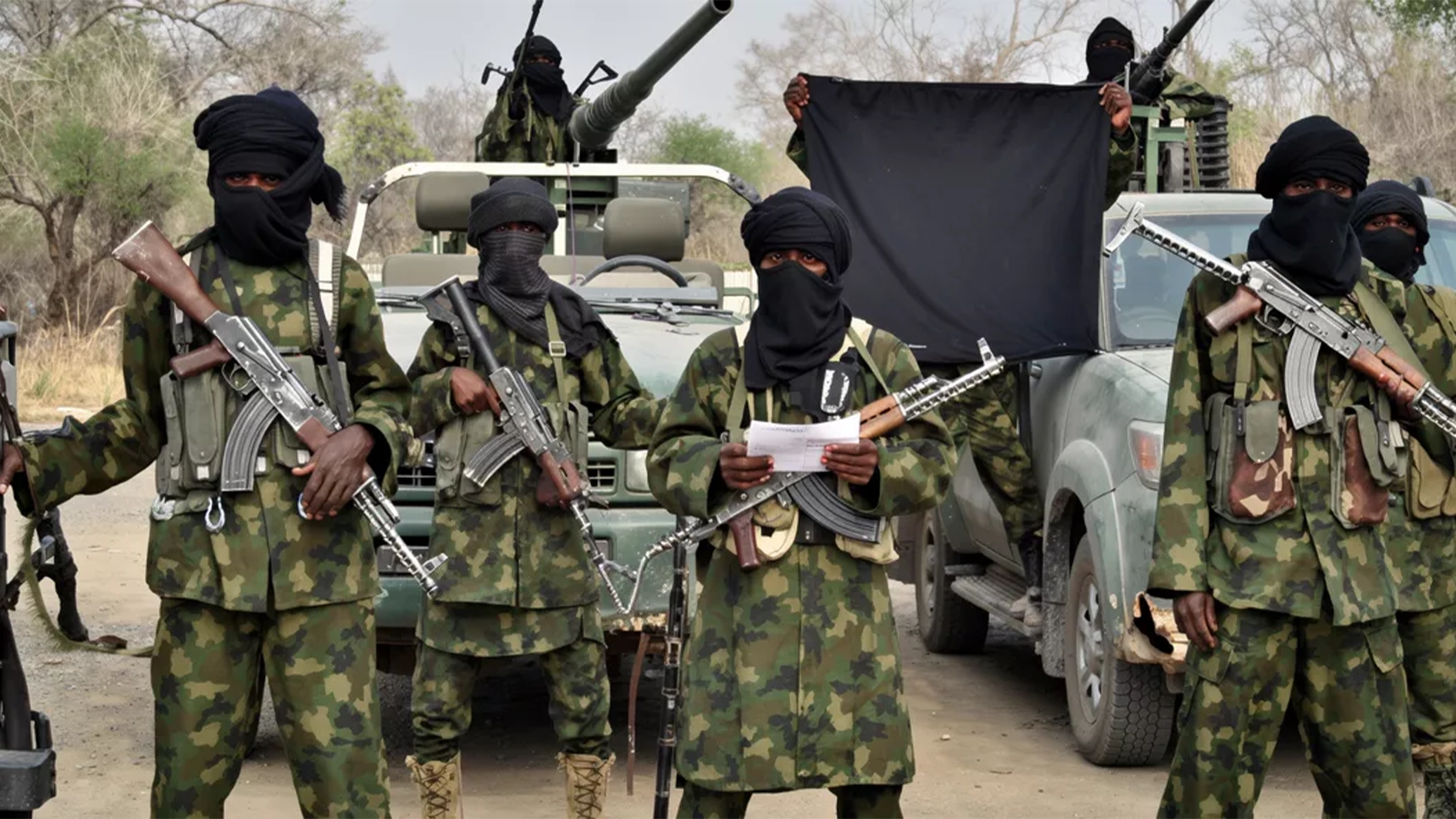
Despite strategic steps by the current administration to bolster Nigeria’s image in the international community, the country’s insecurity challenges tarred such efforts with Nigeria ranking fourth in the Global Terrorism Index (GTI) 2026 released yesterday.
Nigeria recorded its most lethal year of terrorism since 2020, with deaths surging by 46 per cent to 750 fatalities in 2025. The country’s position worsened from 2024 as it moved up two places to become the fourth most impacted nation by terrorism globally.
This is despite the Federal Government’s allocation of N6.57 trillion to security and defence in the 2025 budget, one of the largest in the nation’s history.
Pakistan topped the index, followed by Burkina Faso in second position and the Niger Republic, which is third in the ranking.
The GTI 2026, which measures the impact of terrorism in countries in 2025, was released by the Institute for Economics & Peace (IEP), a non-profit think tank headquartered in Sydney, Australia.
The Sahel region of Africa, which has become the “global epicentre of terrorism,” accounted for nearly half of all terrorism-related deaths for the third consecutive year in 2025. The index ranked 163 countries for 13 years according to the impact of “terrorism” based on indicators such as the number of attacks, deaths, injuries and hostages.

The report stated that Islamic State West Africa Province (ISWAP) and Boko Haram were responsible for most of the terror attacks in the country in 2025. Civilians were the most targeted group in 2025, accounting for 67 per cent of the attacks, while the military accounted for 19 per cent.
The surge comes amid escalating violence in many parts of the country, particularly in the North-East, North Central and North-West, where extremist groups continue to expand operations.
Globally, terrorism deaths fell by 28 per cent in 2025, dropping to 5,582, with 81 countries recording improvements. However, Nigeria stood out as a major exception. While several countries in sub-Saharan Africa recorded declines, Nigeria was the only country in the region where both deaths and incidents increased simultaneously.
The report also showed that terrorism remains heavily concentrated, with nearly 70 per cent of global deaths occurring in just five countries — Pakistan, Burkina Faso, Nigeria, Niger, and the Democratic Republic of the Congo.
Boko Haram was responsible for Nigeria’s second most lethal terrorist attack of the year. In May, armed militants raided the neighbouring villages of Mallam Karamti and Kwatandashi in Kukawa local government area, Borno State.
While Borno remains the epicentre of Nigeria’s terrorism crisis, accounting for more than two-thirds of all attacks and deaths in 2025, together, ISWAP and Boko Haram accounted for 80 per cent of all terrorism-related deaths in Nigeria in 2025. The report revealed that
Lakurawa, a relatively new group that surfaced in 2024, recorded 10 attacks and 74 deaths in 2025.
Startled by the resurgence in terrorist attacks, the Sultan of Sokoto, Muhammadu Sa’ad Abubakar, has asked the military to adopt a more aggressive approach against terrorists. The monarch made the call on Wednesday night, after declaring Friday Eid-el-Fitr, marking the end of Ramadan, the Islamic holy month of fasting.
Asking rhetorically: “Are we now back to the bad old days?”, the Sultan expressed deep concern and dismay over the resurgence of bomb attacks in Borno, questioning whether the nation is relapsing into the troubling period many believed had passed.
He emphasised that the redeployment of military and security leadership must go beyond routine exercises, urging authorities to take proactive measures by confronting terrorists at their strongholds rather than reacting after attacks occur.
According to the Chairman, National Traditional Rulers Council of Nigeria (NTRCN), “relocation of army and other security chiefs should not be ceremonial. Take the war to the terrorists where they are. Don’t wait for them to strike before you defend or find remedies. This you must do so that, as a nation of great people, we can have peace in our country.”
“We have always condemned this thing. It is un-Islamic, and we insist it is not recognised by Islam and should not be attributed to Islam,” the monarch said. The Sultan advised Nigerians to continue to promote peace and unity wherever they live.
MEANWHILE, opposition parties and civil society organisations have faulted the President Bola Tinubu-led administration for the country’s poor ranking while accusing government officials of prioritising political engagements and personal indulgences over the safety of Nigerians.
The GTI findings revealed that the increased funding has yet to translate into improved security outcomes, as Nigeria remains one of the few countries where both terrorism deaths and incidents rose in the past year.
Spokesperson of the African Democratic Congress (ADC), Bolaji Abdullahi, said that Nigeria’s escalating terrorism is a direct consequence of government inattention and political preoccupation. According to him, the APC-led administration is simply preoccupied with winning the 2027 election rather than protecting Nigerians.
He said the lack of leadership and prioritisation at the highest levels has worsened the insurgency, noting that Nigeria is technically still in a state of emergency for security, yet no additional measures have been taken.
He called on the government to acknowledge that its current measures are not working and ask for help, including regional and international cooperation, while also stressing the need for the country to repair its relationships with neighbouring countries like Niger, Burkina Faso, and Mali to restore joint operations against insurgents.
National Publicity Secretary of the Peoples Democratic Party (PDP), Ini Ememobong, accused the APC-led federal government of failing Nigerians while prioritising political indulgences.
“We call on the President and the entire security hierarchy to stop performing reactive responses that have defined post-attack communications and rather adopt a whole-of-society approach towards solving insecurity. Nigerians are tired of being killed for no reason.”
Former presidential candidate, Peter Obi, raised the alarm over Nigeria’s worsening security situation. Obi, in a statement posted on his X (formerly Twitter), described the report as a “painful indictment of failed leadership,” noting that Nigeria recorded one of the highest increases in terrorism-related deaths.
He expressed concern that while many countries are witnessing a decline in terrorism, Nigeria appears to be moving in the opposite direction, attributing the trend to poor governance and systemic failures. He lamented that Nigerians continue to lose their lives daily, while those in positions of authority have failed to take decisive action.
Security expert, Kabir Adamu, blamed Nigeria’s worsening terrorism crisis on a combination of socio-economic deprivation, governance gaps, and geographic vulnerabilities. He explained that northern Nigeria’s fragile socio-economic conditions have made local populations more susceptible to insurgent influence, while weak institutions and poor implementation of counter-terrorism strategies have allowed groups like ISWAP and Boko Haram to expand their operations.
According to him, military operations alone cannot resolve the crisis, adding that the problem must be tackled from the grassroots. He noted that despite increased funding and equipment for security forces, over-reliance on kinetic operations fails to address the underlying causes of insurgency.
“What the report is saying is that kinetic operations alone cannot address terrorism. It must be a whole of government and whole of society approach. From the report, socioeconomic condition is one of the major reason why Nigeria has seen a deterioration. Then it is obvious that one of the best mechanisms is to address socioeconomic conditions. And I think we have lessons to learn from Iraq. Iraq used to be the most terrorism affected country in the world.”
For the national coordinator of the Coalition of Northern Groups (CNG), Jamilu Aliyu Charanchi, Nigeria’s terrorism crisis stems largely from a lack of true leadership. According to him, the government possesses capable security forces and human capacity but fails to deploy them effectively due to political inaction and corruption.
He said insurgency persists because the financiers and sponsors of terrorism are not being targeted. He warned against over-reliance on foreign military assistance, insisting that Nigeria’s security solutions must be locally solved.
Public policy and security analyst with the Civil Society Legislative Advocacy Centre (CISLAC), Salaudeen Hashim, linked the rise in terrorism to failures in governance and elite capture of resources. He explained that when citizens are deprived of adequate public services and opportunities, some are drawn to insurgent groups as an alternative, exacerbating recruitment for terrorist organisations.
He noted that political interference and misallocation of resources compromise security personnel and intelligence, leaving gaps that insurgents exploit.
The IEP report identifies a significant shift in the mechanics of radicalisation, noting that the process is becoming faster, more decentralised, and increasingly tethered to online environments. Lone-wolf attacks, particularly involving radicalised youth, have emerged as a primary concern for global security agencies.
The Islamic State (IS) and its regional affiliates maintained their status as the world’s deadliest terrorist organisation in 2025. The group was reportedly responsible for nearly 17 per cent of all recorded attacks globally and continues to pose a significant threat despite territorial losses in previous years.
IN a related development, Nigeria’s defence and security architecture is being undermined by entrenched corruption risks driven by secrecy, weak oversight and fragile accountability systems, a new report warned yesterday, raising concerns over the country’s ability to effectively combat insurgency, banditry and other security threats.
The 2025 Government Defence Integrity Index (GDI), released on Thursday by Transparency International Defence and Security in collaboration with Civil Society Legislative Advocacy Centre (CISLAC) and Transparency International Nigeria, ranked Nigeria as facing a “very high” risk of corruption, with critical weaknesses cutting across financial management, operations and procurement.
The report, signed by Executive Director, CISLAC/TI Nigeria, Auwal Ibrahim Musa, called for urgent reforms to strengthen transparency, improve oversight mechanisms and embed anti-corruption safeguards within defence operations.
The report paints a troubling picture of a defence system weighed down by opaque spending practices, limited scrutiny and systemic governance failures—factors it says are directly weakening operational effectiveness and eroding public trust amid worsening insecurity.
Nigeria continues to battle insurgency in the North-East, banditry in the North-West and farmer-herder conflicts in the Middle Belt, yet the report notes that the very institutions tasked with addressing these crises are constrained by deep-rooted integrity challenges .
At the heart of the findings is a pattern of extensive secrecy around defence finances, which the report identifies as a major driver of corruption risk. Large portions of defence expenditure are concealed through classified budgets, security votes and off-budget mechanisms, leaving citizens, civil society and even oversight bodies with limited visibility into how public funds are utilised.
Although defence budgets are formally presented to the National Assembly, the report observed that disclosures focus largely on projected allocations, with actual spending, supplementary budgets and classified expenditures escaping meaningful scrutiny.
Financial risk was consequently rated critical at 16 out of 100, reflecting what the report described as “fragile and insufficient” transparency systems. Despite constitutional provisions empowering the National Assembly and audit institutions to oversee defence spending, the report found that these mechanisms are largely ineffective in practice.
Legislative oversight is described as reactive and inconsistent, hampered by limited technical expertise, frequent turnover in defence committees, conflicts of interest and patronage-driven appointments.
Similarly, the Auditor-General’s capacity to provide independent scrutiny is undermined by delays in the publication of reports, outdated legal frameworks, and chronic underfunding. These structural weaknesses, the report noted, have left Parliament struggling to exercise sustained control over defence policy and expenditure, reinforcing high corruption risks across the sector.
In one of its findings, the report identified defence operations as the weakest link in Nigeria’s security governance, assigning a critical score of 12 out of 100. It noted the absence of a formal framework that recognises corruption as an operational risk, meaning anti-corruption safeguards are not embedded in military planning, deployment or command decisions.
This gap, according to Francesca Grandi, has far-reaching consequences. “Of the 17 countries we assessed, not one has a military doctrine that treats corruption as an operational risk. That is a critical gap,” she said, warning that the lack of safeguards exposes civilians to extortion and abuse while weakening trust in security forces.
The report further highlighted recurring cases of diversion of operational funds, procurement irregularities and substandard equipment, all of which directly affect troop safety and mission effectiveness.
Defence procurement was also flagged as a major vulnerability, scoring 23 out of 100, with risks driven by pervasive secrecy and extensive legal exemptions. While procurement is nominally guided by the Public Procurement Act, most defence acquisitions are classified on national security grounds, effectively shielding them from public scrutiny.
The report noted that while legal safeguards against procurement fraud exist, they remain largely ineffective in practice due to weak enforcement and limited transparency.
Nigeria’s military personnel system presents a mixed picture, with a moderate risk score of 50 out of 100. While there have been documented cases of disciplinary action, including court-martials and personnel dismissals for corruption-related offences, systemic concerns persist.
These include weak compliance with asset declaration requirements, opaque promotion processes, concerns over payroll integrity and the continued risk of ghost workers. Whistleblowing mechanisms were also described as ineffective, with personnel reluctant to report misconduct due to fear of retaliation and lack of trust in existing protections.
Beyond institutional weaknesses, the report underscored the role of restricted civic space in limiting accountability within the defence sector.
Across the 17 countries assessed, including Nigeria, civil society organisations and the media face significant barriers in accessing information and engaging in defence policy discussions.
This exclusion, the report warned, further weakens oversight and allows corruption risks to persist unchecked.
“Without stronger oversight, greater transparency and meaningful space for civil society engagement, corruption in the defence sector will continue to undermine security,” the report stated.

