 Follow Us on Google News
 Follow Us on Google Discover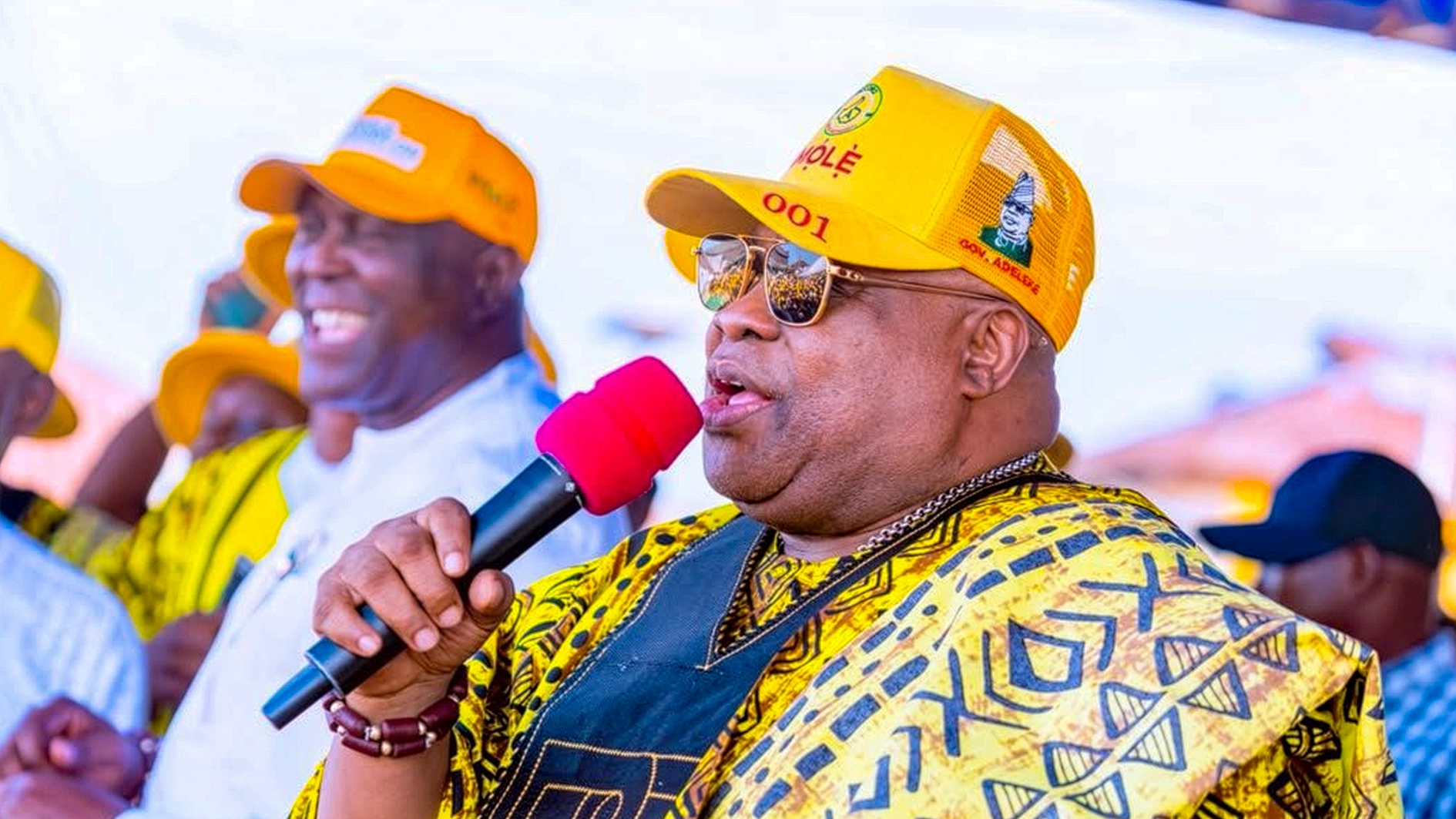
• President orders anti-graft agency to vacate reported court order
• Atiku, Obi challenge Presidency’s account, question anti-graft agencies’ autonomy
• ADC, SDP fault President’s intervention, seek explanation over alleged court order
• Makinde, Yoruba leaders warn against misuse of federal institutions
• Lawyers say President lacks powers to direct EFCC’s operational decisions
• Adeleke sues EFCC, seeks N2b damages over account restriction
• ICPC deploys operatives across Osun to curb vote buying
President Bola Tinubu’s directive to the Economic and Financial Crimes Commission (EFCC) to vacate the reported court order freezing the Osun State Government’s bank accounts yesterday triggered a nationwide debate over the independence of anti-corruption agencies and the integrity of the August 15 governorship election.
Opposition leaders, senior lawyers, Yoruba leaders and Oyo State Governor Seyi Makinde questioned both the original account restriction and the President’s intervention, warning that the controversy risks eroding public confidence in the rule of law, the neutrality of anti-graft agencies and the credibility of the forthcoming poll.
Tinubu argued that the timing of the action could undermine public confidence in the election.
In a statement, the President said although the EFCC acted within its statutory powers by obtaining a court order, the decision to freeze the state’s accounts days before the election could create the impression that federal institutions were being used to influence the electoral process.
He said he became aware that the EFCC had secured a court order on August 5, 2026, freezing the Osun State Government’s accounts.
He described the timing of the action as inappropriate, adding that every decision taken by a federal institution is ultimately attributed to the Presidency.
The President reaffirmed his commitment to the operational independence of anti-corruption and law enforcement agencies, insisting that they must continue to carry out their statutory responsibilities professionally and without political interference.
“Osun State is only a few days away from its gubernatorial election. Therefore, nothing ought to be done to give an impression that the EFCC or indeed any other agency of the Federal Government is being used to interfere with the election,” the President said.
Tinubu also spoke by telephone with Osun State Governor Ademola Adeleke, informing him of his directive to the EFCC to vacate the court order freezing the state government’s bank accounts.
The phone conversation was disclosed by the President’s Special Adviser on Information and Strategy, Bayo Onanuga, in a post on X.
“President Tinubu, in a phone conversation with Governor Ademola Adeleke on Thursday, informed him about his directive to the EFCC to lift the court order on the Osun State Government account,” Onanuga wrote.
The presidential aide, however, did not state which of the two leaders initiated the call.
Atiku, Obi question anti-graft agencies’ independence over Osun account freeze
HOWEVER, former Vice President and African Democratic Congress (ADC) presidential candidate, Atiku Abubakar, and the presidential candidate of the National Democratic Congress (NDC), Peter Obi, questioned the independence of Nigeria’s anti-corruption agencies following President Bola Tinubu’s directive to the EFCC.
In a statement by his Senior Special Assistant on Public Communication, Phrank Shaibu, Atiku said the President’s intervention had undermined repeated assurances that anti-graft agencies operate independently of the Presidency.
He also challenged Tinubu to direct the Independent Corrupt Practices and Other Related Offences Commission (ICPC) to release former Kaduna State Governor, Mallam Nasir El-Rufai, if the President indeed possesses the authority to issue operational directives to anti-corruption agencies.
Atiku argued that while the EFCC had publicly explained the reasons for freezing the Osun State Government’s accounts, it never stated that it obtained a court order, despite the President’s explanation being based on the existence of one.
“If indeed there was a court order, why did the EFCC omit such a fundamental fact from its official account? If there was none, then the President has introduced into the public discourse a legal process that exists nowhere in the EFCC’s own narrative. Nigerians deserve a coherent explanation instead of conflicting versions from the same government,” he said.
The former vice president maintained that the President’s action had cast doubt on claims that the EFCC enjoys operational independence.
“President Tinubu cannot have it both ways. He cannot claim that he neither knew of nor interferes in the operations of the EFCC and, in the very next breath, announce that he has directed the Commission to discontinue its action and return to court. If the EFCC promptly complies with that directive, then Nigerians have before them undeniable proof that the Commission is not as operationally independent as the President wants the country to believe,” he said.
Atiku added that the controversy extends beyond the freezing of the Osun State Government’s accounts, warning that it has broader implications for the credibility of the country’s anti-corruption institutions and adherence to the rule of law.
While acknowledging that reversing the freezing of the Osun State Government’s accounts could ease concerns ahead of the governorship election, Atiku said it did not address the circumstances that led to the action.
“The unanswered questions remain: who authorised the freezing of the account of an opposition-controlled state just days before a governorship election, and why was such an extraordinary action taken at such a politically sensitive moment?
Nigerians deserve answers. Democracy is not measured by the ability to reverse an injustice after public outrage; it is measured by the discipline to prevent such injustice from occurring in the first place,” he added.
Also reacting, Peter Obi warned that while corruption must be confronted decisively, the anti-graft campaign should never be weaponised for political purposes.
“I have always supported a relentless fight against corruption. However, that fight must never become a tool for political intimidation or the suppression of democracy,” he wrote on his verified X account.
According to the former Anambra State governor, the timing of the action inevitably raises legitimate questions about the neutrality of state institutions.
“If investigations had been ongoing for months, why take such a drastic step on the eve of an election?” he asked.
Obi maintained that institutions in a democracy must not only be impartial but must also be seen to be impartial, warning that the growing perception that federal agencies are being deployed to achieve partisan objectives poses a grave danger to Nigeria’s democratic development.
He insisted that where evidence of wrongdoing exists, the Constitution provides a clear legal pathway through the courts, adding that no agency should exercise powers beyond those granted by law.
Obi urged all relevant authorities to ensure that nothing undermines the credibility of the forthcoming Osun governorship election, stressing that the electorate must be allowed to determine their future freely without intimidation or institutional interference.
ADC, SDP presidential candidate fault Tinubu over EFCC’s Osun account reversal
SIMILARLY, the African Democratic Congress and the presidential candidate of the Social Democratic Party (SDP) criticised President Tinubu over his directive to the EFCC, describing the move as evidence of executive interference in the operations of the anti-graft agency.
In a statement, ADC National Publicity Secretary, Bolaji Abdullahi, said the party welcomed the President’s decision to reverse the action but questioned his claim that the EFCC had acted on the strength of a court order.
The party argued that Tinubu was either misinformed or had deliberately misrepresented the facts, noting that the EFCC never claimed in any of its public statements that it had obtained a court order before placing the restriction on the state’s accounts.
“What we find most curious about the statement is the President’s repeated reference to an alleged court order authorising the freezing of the Osun State Government’s accounts. This is a remarkable new twist. In all of its public statements on this matter, the EFCC never once claimed that it had obtained a court order,” the party said.
The ADC asked where the President obtained the information about the alleged court order, insisting that if such an order existed, the EFCC should have disclosed it while defending its action.
“It is either the President was misinformed or he had chosen to misrepresent the facts. Either possibility is deeply disturbing,” it added.
The party further argued that the President’s admission that he directed the EFCC to discontinue the case undermined claims that the anti-graft agency operates independently.
According to the ADC, if the President could direct the commission to withdraw a court action because of its political implications, it followed that he could also direct its actions in other operational matters.
The party also described the reversal as a response to sustained public outrage rather than a voluntary act of restraint, arguing that the EFCC would not have acted as it did without believing it had the backing of the Federal Government.
Also, the presidential candidate of the Social Democratic Party said President Tinubu, rather than EFCC Chairman Ola Olukoyede, should be held responsible for the controversy surrounding the freezing and subsequent unfreezing of the Osun State Government’s accounts.
Rejecting calls for the removal of the EFCC chairman, the SDP presidential candidate maintained that the anti-graft agency was only carrying out its statutory responsibilities.
“The person who should resign is President Bola Ahmed Tinubu. I don’t have enough evidence to suggest that the EFCC chairman should resign. The only person who is at fault here is the President himself,” he said.
He argued that while the EFCC has the legal authority to obtain court orders freezing accounts under investigation, it was unconstitutional for the President to publicly direct the agency to reverse such actions.
According to him, any party dissatisfied with the freezing of an account had adequate legal remedies through the courts rather than executive intervention.
“If EFCC wrongly froze the account of Osun State Government, there are legal remedies. The Attorney General of Osun State could have gone to court. The President ordering the EFCC is already an impeachable offence because EFCC is part of the legal process in Nigeria,” he said.
The SDP presidential candidate added: “A failed government is one in which the explanation is worse than the problem,” while urging Nigerians across party lines to work towards a change of leadership in 2027.
Yoruba leaders, Makinde, warn against misuse of federal institutions
PROMINENT Yoruba leaders and Oyo State Governor Seyi Makinde also faulted the freezing of the Osun State Government’s accounts, warning that the increasing deployment of federal institutions in opposition-controlled states poses a serious threat to Nigeria’s democracy and constitutional order.
Speaking with The Guardian, National Publicity Secretary of the Yoruba Leaders of Thought, Bayo Aina, described the President’s intervention as an act of statesmanship but argued that the controversy could have been avoided if due process had been followed from the outset.
Aina urged President Tinubu to caution political actors around him against taking actions capable of destabilising the South-West, noting that Governor Ademola Adeleke had publicly pledged support for the President’s re-election bid and that there was no justification for political desperation capable of threatening regional peace.
Also reacting, President of the Yoruba Ronu Leadership Forum, Akin Malaolu, described the EFCC’s action as unlawful and a dangerous manifestation of executive overreach. He argued that beyond directing the commission to unfreeze the accounts, President Tinubu should institute an investigation into the circumstances that led to the action or publicly demand an explanation from the anti-graft agency.
“Nigerians deserve to know how such a directive came about if the President was indeed unaware,” he said.
Malaolu rejected the EFCC’s claim that it possesses unilateral powers to freeze accounts for 72 hours without obtaining a court order, insisting that such powers are unknown to Nigerian law.
According to him, “The freezing of Osun State Government’s accounts without a valid court order is an affront to constitutional democracy, federalism and the rule of law. It amounts to executive impunity under the guise of official action.”
He argued that although President Tinubu eventually directed the commission to reverse the action, the intervention did not completely absolve the administration of responsibility because the incident occurred under its watch.
Commending Governor Adeleke for challenging the action, Malaolu warned that anti-corruption agencies must never become instruments for undermining constitutional governance or influencing electoral outcomes.
For his part, Governor Makinde condemned what he described as the growing use of federal institutions to interfere with governance in opposition-controlled states.
Writing on his verified X account, the governor said although no government should be insulated from investigation or public scrutiny, the selective deployment of institutions such as the EFCC against perceived political opponents weakens public confidence in democratic institutions.
“The freezing of an official state government account without due legal process goes beyond the powers vested in the EFCC by law,” Makinde said.
He added that the timing of the action, coming on the eve of the Osun governorship election, created the impression of an attempt to influence the electoral process.
Makinde urged federal institutions to remain faithful to their constitutional mandates by acting with fairness, professionalism and political neutrality, stressing that democracy cannot thrive where public institutions are perceived as instruments of political intimidation.
He called on Nigerians, civil society organisations and the international community to remain vigilant in defence of democratic institutions, insisting that the rule of law must prevail over political expediency.
Lawyers fault Tinubu’s order on Osun account freeze, warn against EFCC interference
LAWYERS have questioned the directive by President Bola Tinubu to unfreeze the Osun State Government’s bank account, warning that such intervention could undermine the anti-graft agency’s independence and weaken the country’s democratic institutions.
While some legal experts argued that the timing of the EFCC’s decision to place a Post-No-Debit (PND) restriction on the account, barely days before the governorship election, raised legitimate concerns, they insisted that any executive directive reversing the action would create a dangerous precedent and expose the commission to allegations of political control.
Ibadan-based Senior Advocate of Nigeria (SAN), Yomi Alliyu, said although the timing of the account restriction might raise eyebrows, the law empowers the EFCC to take preventive measures where there is suspicion that public funds could be misused.
He queried whether a governor suspected of intending to deploy state resources for election purposes should be immune from investigation or preventive action.
“The EFCC is an independent statutory body by law and, as such, is not subject to the dictate of anybody, including the President,” Alliyu said.
According to him, the directive by the President to the commission to lift the restriction would establish a dangerous precedent that could haunt the administration in future.
He noted that such a development would inevitably raise questions about previous actions of the EFCC, including the prolonged detention of former Kaduna State Governor Nasir el-Rufai and former Central Bank of Nigeria Governor Godwin Emefiele.
“The EFCC has done what is expected of it under the law. This is only subject to judicial review and not executive interference. Governor Ademola Adeleke has the right to challenge and set aside the interim order through the court, not through presidential intervention,” he added.
Also, human rights lawyer Festus Ogun expressed concern over the freezing of the account so close to the election, stressing that although the EFCC possesses statutory powers to request a PND restriction, such powers must be exercised with restraint and in strict compliance with the law.
He cited the Court of Appeal’s decision in EFCC v. Attorney-General of Benue State (2022) LPELR-58696(CA), which held that the commission could only seek such restrictions where there was reasonable suspicion that the account was linked to financial crime.
Ogun explained that the EFCC’s request of August 5, 2026, would lapse after 72 hours unless supported by a valid court order, adding that any continued restriction beyond that period without judicial backing would become unlawful.
He maintained that while every effort should be made to prevent the diversion of public funds, anti-corruption agencies must not be used as political instruments.
“The functionality of a state should not be crippled because of political interests. The interest of the people of Osun matters more,” he said.
Ogun described the presidential directive to unfreeze the account as a welcome development from the standpoint that the original restriction appeared questionable given its timing.
However, he said the directive simultaneously exposed the institutional weakness of the EFCC.
According to him, if the President could simply order the commission to reverse its operational decision, it would reinforce public perception that the anti-graft agency lacks operational independence.
“The Presidency referred to a court order. Does that mean the President can make a directive contrary to a court order? Can the President simply wake up and direct the EFCC to unfreeze an account? I do not think that is good for our democracy or in building strong institutions,” Ogun said.
He urged the country to strengthen institutions that act independently rather than those that merely respond to the wishes of political office holders.
Also reacting, Associate Professor and Director of the Abuja School of Social and Political Thoughts, Sam Amadi, said he remained a strong supporter of the EFCC’s anti-corruption mandate but was disappointed by the way the Osun State Government’s account was frozen.
“I support the prosecution of every politician who has stolen Nigeria’s money, irrespective of political party. But freezing the Osun Government’s account in this manner is terrible,” Amadi stated.
In other reactions by lawyers, Senior Advocate of Nigeria (SAN), Douglas Pepe, said the President cannot lawfully issue directives to the Commission in the discharge of its statutory responsibilities.
Pepe explained that although the President appoints the EFCC Chairman, the Commission is a statutory investigative agency expected to perform its functions independently and without external influence.
According to him, any presidential directive instructing the EFCC to freeze or unfreeze a state government’s account, or to commence or halt enforcement actions, would undermine the agency’s independence and amount to executive interference in the administration of justice.
He maintained that decisions on investigations, asset freezing and other enforcement measures must be guided strictly by the law and available evidence, rather than political considerations.
Also speaking, a law professor, Prof. O. G. Izevbuwa, said the President has no constitutional power to order the EFCC to freeze or unfreeze any state government’s bank account.
Responding to questions on the issue, Izevbuwa said such powers do not exist in a constitutional democracy governed by the rule of law.
“He has no such power in a sane democracy,” the professor said.
The legal scholar noted that while the President exercises general supervisory authority over agencies within the executive arm of government, the EFCC is expected to discharge its statutory responsibilities independently and in accordance with the law.
Both legal experts warned that allowing political authorities to dictate the operational decisions of anti-corruption agencies would erode public confidence in their impartiality, weaken the rule of law and compromise the independence required for effective anti-corruption enforcement.
Adeleke sues EFCC, seeks N2b over freeze on Osun account
OSUN State Governor Ademola Adeleke has filed a N2 billion suit against the Economic and Financial Crimes Commission over the restriction placed on the state’s Federal Statutory Allocation Account.
The suit, filed before the Federal High Court in Abuja, challenges the legality of the Post-No-Debit directive issued by the anti-graft agency to First Bank Nigeria Limited.
The Attorney-General of Osun State and the state’s Accountant-General were joined as second and third plaintiffs, while the EFCC, its Chairman and First Bank were listed as first, second and third defendants, respectively, in the originating summons filed by a legal team led by M. T. Adekilekun (SAN).
The plaintiffs argued that the restriction placed on account number 2017170947 was unlawful, unconstitutional and capable of crippling the operations of the state government.
They asked the court to award N2 billion in exemplary and aggravated damages against the defendants for what they described as unlawful interference with public funds.
The state government urged the court to determine whether the EFCC and its chairman had the legal authority to freeze, block or restrict a state’s statutory allocation account without following due process.
Relying on Sections 1, 6, 36, 44 and 162 of the 1999 Constitution, as well as provisions of the EFCC Establishment Act and the Money Laundering (Prevention and Prohibition) Act, the plaintiffs contended that the anti-graft agency could not lawfully issue a Post-No-Debit directive without first obtaining and serving a valid court order.
They also asked the court to determine whether the EFCC’s August 5, 2026 letter directing First Bank to freeze the account amounted to “an egregious act of executive lawlessness” and an unlawful resort to self-help.
According to the suit, the restriction amounted to an abuse of statutory powers, interfered with the state’s constitutional responsibilities and threatened its ability to deliver essential services.
The plaintiffs are seeking a declaration that the action violated “the fundamental constitutional principles of due process, the rule of law and the financial autonomy of a federating unit.”
The state government also questioned First Bank’s decision to comply with the EFCC’s directive without first being served with a valid court order, arguing that the bank breached its duty of care by denying the state access to the account.
It maintained that the restriction could disrupt salary payments, government programmes and other constitutional obligations.
Among the reliefs sought is an order setting aside the EFCC’s letter, referenced CR:3000/EFCC/ABJ/HQ/PFS/TA/OSUN/VOL.17/666, dated August 5, 2026, and signed by Assistant Commander of the EFCC, Adenike Babalola, on behalf of the Director of Investigation, directing First Bank to place a Post-No-Debit restriction on the account.
The plaintiffs also asked the court to declare all restrictions arising from the letter unlawful, unconstitutional, ultra vires, null and void, and to order First Bank to immediately remove all restrictions on the account and restore the state government’s unrestricted access to the funds.
They further sought a perpetual injunction restraining the EFCC and its chairman from interfering with the statutory allocation account or any other Osun State Government account without following due process.
A similar injunction was sought against First Bank, restraining it from complying with future requests to restrict government accounts unless such directives are backed by the legally prescribed procedure.
The plaintiffs also asked the court to award the cost of the suit against the defendants.
No date had been fixed for the hearing as of the time of filing the suit.
ICPC to deploy operatives across Osun councils to curb vote buying
THE Independent Corrupt Practices and Other Related Offences Commission (ICPC) has said it will deploy operatives to all 30 local government councils and the area office in Modakeke to curb vote buying and other electoral offences during the August 15 governorship election in Osun State.
The Resident Anti-Corruption Commissioner (RACC) in Osun, Yussuf Olatunji, disclosed this yesterday in Osogbo during a sensitisation and awareness campaign against vote buying and other electoral offences.
As part of the campaign, ICPC officials, accompanied by personnel of the Independent National Electoral Commission (INEC), members of the National Youth Service Corps and civil society organisations, staged a solidarity march from Igbonna Market to the Alekuwodo area of Osogbo to discourage vote buying.
Speaking on the sidelines of the programme, Olatunji said the campaign was aimed at reminding residents that “our votes are priceless, our democracy is sacred, and our future must never be sold.”
He said ICPC operatives would be stationed across the state to monitor the election and arrest anyone involved in vote buying or vote selling.
“ICPC operatives and officers would be deployed in all the 30 local government councils and the area office in Modakeke to watch out for and arrest anyone who engages in vote buying and selling. Such individuals would be prosecuted in the court of law,” he said.
Olatunji urged voters to protect the integrity of the electoral process by rejecting all forms of electoral corruption, warning that exchanging votes for money undermines democratic governance.

