 Follow Us on Google News


 Follow Us on Google Discover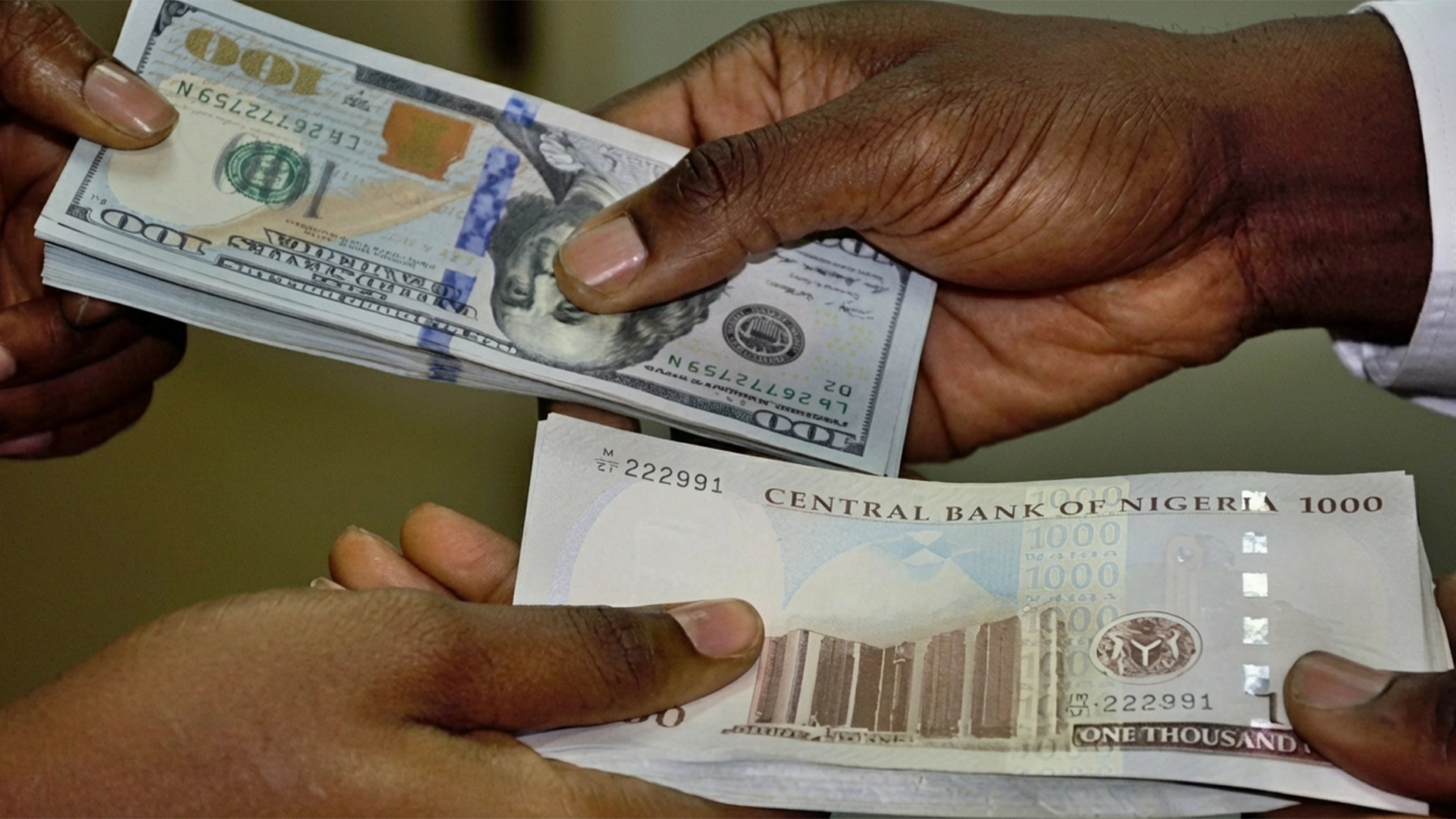
Chairman, Alliance for Economic Research and Ethics (AERE), Dele Oye, has raised the alarm that an estimated eight million micro, small and medium enterprises (MSMEs) shut down across Nigeria between January 2023 and June 2024, representing about 20 per cent of the country’s estimated 40 million SMEs.
He also warned that the scale of the collapse exposed a deepening crisis in the sector, describing it as an existential threat to Nigeria’s economic foundation.
He noted that the record $4.375 billion traded in Nigeria’s foreign exchange market within a single week has exposed structural weaknesses in the country’s currency market rather than signalling improved liquidity or stability.
He disclosed the figures in a policy brief titled “The Gap: Nigeria’s Industrial Policy 2025 vs. The Lived Reality of SMEs.”
According to Oye, research consistently shows that as many as 95 per cent of Nigerian SMEs fail within their first five years of operation, highlighting the urgent need for policies that go beyond design to effective implementation.
Quoting the National President of the Association of Small Business Owners of Nigeria (ASBON), Femi Egbesola, Oye described the situation as a humanitarian crisis.

“Many businesses simply cannot cope with the harsh economic environment. Owners are closing their shops, unable to meet loan obligations or manage skyrocketing operational costs. Several people have died under the pressure; others are in the hospital. It’s a humanitarian crisis,” Egbesola said.
Oye identified three major factors driving SME failures: macroeconomic instability, limited access to affordable finance and soaring energy costs.
He, however, commended the Federal Government’s newly introduced Nigeria Industrial Policy 2025 (NIP2025), describing it as an ambitious framework designed to reposition the country’s manufacturing sector.
On the policy championed by the Federal Ministry of Industry, Trade and Investment, the Minister of State for Industry, Senator John Owan Enoh, explained that it sought to raise manufacturing’s contribution to Nigeria’s Gross Domestic Product (GDP) to 15 per cent by 2030 and 25 per cent by 2035, while boosting exports, creating jobs and positioning Nigeria as Africa’s leading industrial hub.
Oye noted that the policy rightly recognised MSMEs as central to achieving those objectives, pointing out that the sector contributes 46.32 per cent of Nigeria’s GDP and accounts for about 87.9 per cent of total employment.
He said the policy promised single-digit loans, industrial clusters, technology incubation centres, skills development programmes and fiscal incentives aimed at supporting businesses. Despite these commitments, Oye argued that there remained a wide gap between policy intentions and the realities confronting entrepreneurs.
“For millions of Nigerian entrepreneurs struggling to survive, the NIP2025 reads less like a practical roadmap and more like a distant promise,” he said.
According to him, inflation, which climbed to 33.4 per cent in July 2024, persistent naira depreciation and the removal of fuel subsidies have sharply increased production and transportation costs, forcing many SMEs to downsize their workforce by as much as 70 per cent.
He also lamented the limited access to affordable financing, noting that only between 15 and 20 per cent of SMEs had access to formal bank credit.
Energy shortages remain another major burden, with businesses enduring prolonged power outages and relying heavily on generators. Oye noted that diesel costs alone consumed as much as 30 per cent of revenue for many SMEs.
He argued that previous industrial policies failed largely because of weak implementation rather than the absence of good ideas.
According to him, although government interventions had increased credit availability over the years, most SMEs use borrowed funds to cover operational expenses such as rent, inventory and energy costs instead of expanding production because of the difficult business environment.
To reverse the trend, Oye called on the Federal Government to declare an SME emergency and introduce targeted measures, including genuine single-digit interest loans, energy support for productive sectors and a moratorium on multiple taxation by state and local governments.
He also recommended loan products that align with SME cash flow cycles through longer repayment periods, revenue-based financing and appropriate grace periods.
In addition, he urged the government to prioritise the development of SME industrial clusters by providing reliable electricity, water, roads and security in selected locations within one year.
Oye also cautioned against the growing practice of pricing domestic transactions in dollars, warning that increasing dollarisation could weaken the naira, heighten exchange rate risks for businesses and consumers, and undermine confidence in the local currency.
In a statement titled “What a Record FX Week Really Reveals About Nigeria’s Market,” Oye said the historic turnover, recorded in the week ended July 24, 2026, should not be interpreted as evidence that Nigeria’s foreign exchange market had become deeper, more resilient or broadly accessible.
According to him, the market recorded total spot and derivatives turnover of $4.375 billion during the review period, representing an 83.4 per cent increase from $2.386 billion recorded the previous week.
He argued that unusually high trading volumes could simply reflect a temporary surge in activity driven by a handful of large transactions rather than sustained improvements in market fundamentals.
Oye noted that the latest figure followed a series of volatile weekly outcomes, with turnover rising to $3.053 billion in the week ended July 3, falling to $1.631 billion the following week before recovering to $2.386 billion and then surging to $4.375 billion.
According to him, the fluctuations demonstrate that high transaction volumes do not necessarily translate into a market capable of providing stable access to foreign exchange for manufacturers, small businesses, households and long-term investors.

