 Follow Us on Google News
 Follow Us on Google Discover
 IT was the Patriots, under the late Chief Rotimi Williams, that pointed out how Nigeria’s constitution was founded on a lie. The Patriots discovered that by saying that ‘We the people’, the military architects of the grundnorm lied, stressing that there was no citizen input in the making of what came to be known as the 1999 Constitution.
Only the military politicians that kept their hearts and mind on the political leadership of the country know why they jettisoned the 1979 Constitution, which was the product of the 1978 Constituent Assembly.
With intentions that are wanting, the Ibrahim Babangida regime, which experimented with diarchy as a system of government, embarked on a never-ending transition programme.
Pretending that the regime was intent on getting the nation on the path to durable democracy, the regime went far in indoctrinating a two-party system. As that trial and error went on, the same regime created states and local government councils.
After eight years of taking Nigerians on a windy road of statecraft, the Babangida regime boxed itself into a tight corner by annulling a presidential election of 1993, which was adjudged to have satisfied the fundamental ingredients of democratic balloting. As the apostle of diarchy and doublespeak stepped aside, a fresh attempt was made to put the nation back to civility and national cohesion.
At the inception of the General Abdulsalami Abubakar’s interregnum, emotive complaints have started building up in the minds of civilian politicians about the state of governance and social development in the country. It was obvious that the people have become tired of the excesses of the military.
The Abdulsalami regime decided to keep the politicians busy and give them a sense of preparation for eventual takeover of the reigns of political power. The political commission of 1998 was born. A new constitution, which not only cannibalised the 1979 Presidential Constitution, but also made overt efforts to skew the structure of the federation was promulgated. Although the constitution provided for two-chamber National Assembly, with a 360-member lower House and 109-member senate, the texture and tone of the executive arm showed a maximum presidency.
Perhaps, given the hunger for the return of democratic rule, the civilians failed to scrutinize the document around which the transition was being executed. To make matters worse, it was a retired military officer and former head of state that the military prepared to execute the devious document. He helped to preserve the lie!
However, perturbed by the inconsistencies and contradictions in the constitution, members of the National Assembly decided to embark on a review. And to carry out that assignment a Joint Constitutional Review Committee, made up of 80 legislators with 40 members each from the Senate and House of Representatives, was set up.
Headed by the then Deputy Senate President, late Senator Haruna Abubakar, the JCRC, which had a joint chairman in the then Deputy Speaker of the House of Representatives, Prince Chibudom Nwuche, failed to revise the constitution. The committee however, succeeded in expending huge sums of money running into billions of naira.

President Olusegun Obasanjo set up another review panel. This time around, membership was drawn from the three main political parties, namely the All Peoples Party (APP), Alliance for Democracy (AD) and the Peoples Democratic Party (PDP). The President appointed former Ambassador Yusuf Mamman from the AD to head the panel and gave the committee terms of reference as well as no-go areas in the review effort.
As the Yusuf Mamman panel embarked on a merry-go-round to the different parts of the country, it gathered criticisms. Both the Presidential committee and the National Assembly Review Committee; dispersed without etching a better article of faith for the country. The cycle was to begin afresh in 2003.
But by far the boldest attempt to recalibrate the opaque constitution by President Obasanjo was when he convoked the National Political Reform Conference (NPRC).
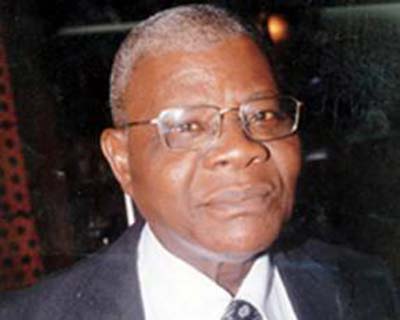
The conference headed by eminent jurist, Justice Niki Tobi, was inaugurated on February 21, 2005 and after five months; the meeting came to a close. The delegates were hosted to a dinner on July 24, 2005.
The conference perused and deliberated more than 700 memoranda from citizens and agreed on 187 recommendations. The other two subjects the conference deliberated upon, namely Tenure of President/Governors and Resource Control; were not only contentious, but explosive. Delegates found it hard to strike a unanimous note on those issues.
The bone of contention over the issue of resource control was whether there should be an increase from 13 per cent to 17 per cent in derivation revenue from the centre.
The sharp division between delegates from the north and those from the south, especially, south-south; revealed the fault lines in the nation. In fact, the chairman Media and Strategy Committee of Northern Delegates Forum, Alhaji Magaji Danbata, said, “to support a greater percentage allocation to derivation in a country whose government depends on one commodity for most of its revenue would only lead to a gross imbalance in the development of the various regions in the country with obvious implications for its stability and security.”
He added, “this implication is most obvious at 50 per cent derivation and above, whereby the South-South would have more money than the central government alone and all the other geo-political zones combined.”
The decision on the contentious issue of resource control made the South-South delegates to stage a walkout in the dying days of the conference.
Former President Umaru Musa Yar’Adua saw the negative impact a faulty electoral process was having on nation-building efforts and decided to empanel the Justice Mohammed Lawal Uwais Electoral Review Committee. It was all part of the national conversation to tinker with the constitution. More or less, every president or legislative plenary has attempted to review the constitution since 1999. The exercise has become a steady occurrence such that it is not easy to fathom whether the appeal is for the usually large budget that attends it or a genuine desire to remove the cogs left in the document by its military authors.
What happened in 2014 appeared to be a genuine response to the continuous call for a constitutional conference. But dithering over the appropriate nomenclature to use in convoking the conference nearly marred that effort by the Goodluck Jonathan administration. The prodigious work done by that National Conference in terms of far-reaching resolutions and recommendations is begging for implementation.
Recently, the Eighth National Assembly hinted at its desire to tinker the constitution. What will be new this time around?
What are the guarantees that the present plenary would succeed where others failed? Or could it be that with the declining revenue from oil, all fears are gone and even the nay-sayers are now ready to confront the nation’s nightmares? Is restructuring going to feature in the latest review exercise? Can the NASS overcome the stringent stipulations by the military in the constitution that impedes amendment, creation of states and state police? Has this Eighth NASS the political will to tear down the walls of separation in the 1999 Constitution?
It seems there are still more questions than answers, regarding Nigeria’s constitution that refuses to mend!

