 Follow Us on Google News


 Follow Us on Google Discover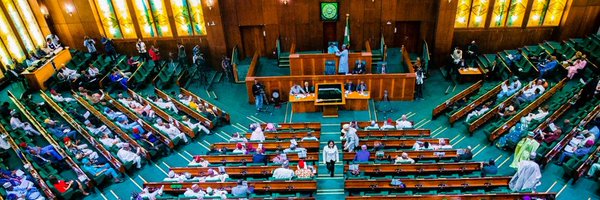
The House of Representatives Committee on Urban Development has queried the change of name and ownership of a government financial institution from Urban Development Bank of Nigeria Plc to Infrastructure Bank Plc without legislative approval.
[ad]
The lawmakers also demanded details on how the bank was transformed, projects embarked on and funded by the bank, information on donor agencies in partnership with the bank, as well as details of fund utilisation, among other inquiries.
Chairman of the Committee, Hon. Awaji-Inombek Abiante, issued the directives when he led committee members on an oversight visit to the bank in Abuja on Wednesday.
The bank is dedicated to providing financial solutions to support key long-term infrastructure projects, including transportation infrastructure, municipal common services, mass housing and district development, solid waste management and water provision, and power and renewable energy projects.
[ad]
It is a government-sponsored but private sector-driven development finance institution.
Abiante expressed concern over the ownership of Infrastructure Bank Plc. He stated that the bank, formerly known as Urban Development Bank of Nigeria Plc, was established in 1992 under Decree No. 51 of the 1992 under the administration of Rtd Gen Ibrahim Babangida.
He noted that there was no legislation authorising the change of name or adjustment in the ownership structure of the bank. He observed that the bank’s operations were based on a decision by the Federal Executive Council (FEC), which is not a lawmaking body, and stated that this was not the correct procedure.
The Rivers lawmaker also expressed concern about reductions in shares belonging to government institutions.
[ad]
Earlier, the Acting Managing Director of the bank, Nkiru Chime, in her address, noted the crucial role of the lower chamber in creating national policies for urban management, addressing environmental degradation, and overseeing agencies responsible for urban development.

She added that this included creating vital urban renewal and slum upgrading initiatives, which she emphasized are central to fostering a sustainable and thriving Nigeria.
[ad]

