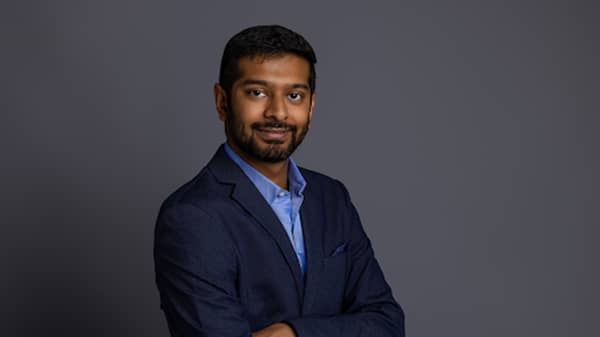
“The merger of AI and blockchain goes beyond a simple technological pairing – it changes how we handle data, build predictive systems, distribute them and create more digital trust,” says Rahul Arulkumaran, AI Engineering Manager at Yuma. His view reflects the significant potential that develops when artificial intelligence connects with cryptocurrency, a partnership that is set to reshape digital interactions. Digital leaders gather in New York’s financial district to discuss the future direction of AI and blockchain. Among these innovators, Rahul Arulkumaran stands out through his expertise in connecting these advancing technologies. Rahul currently serves as a member of the Forbes Council, where he helps shape the narrative and public perception of Decentralized AI. He is widely regarded as one of the leading experts in the field, known for his impactful research contributions. His work is frequently cited by industry professionals and startups developing solutions within the Decentralized AI ecosystem. Notably, his research has influenced protocol design decisions in the Bittensor ecosystem and has been referenced in several subnet implementation guides. In addition, he has been recognized as a “Top 1% Mentor” on mentorship platforms such as Topmate.
Breaking New Ground in Digital Infrastructure
The joining of AI and blockchain shows a key change in technological development. Rahul Arulkumaran explains, “We’re seeing the rise of decentralized AI systems that solve traditional centralized problems, offering better transparency, security, and operational efficiency across digital platforms.” This shift goes beyond theory, backed by clear market data. Current valuations place the global Decentralized AI market at $40.45 billion in 2024, with projections indicating growth to $405.84 billion by 2032.
Rahul Arulkumaran’s work at Yuma puts him among the leading experts in this technological advancement. At Yuma, Rahul leads a team of engineers and researchers dedicated to building interoperable Decentralized AI protocols, while shaping industry standards for model incentivization and performance transparency. “We focus on creating AI models that work with blockchain networks, using distributed ledgers’ permanent record-keeping and transparent operations to build more reliable AI systems,” he describes. Their methods address ongoing challenges in AI development, particularly regarding data protection and algorithmic transparency.
Advancing Privacy Through Decentralized Systems
Decentralized AI brings new changes to how artificial intelligence works, addressing key problems in the field. Rahul Arulkumaran explains, “Traditional centralized AI models face questions about their hidden processes and possible data misuse. Decentralized systems offer open, verifiable decision-making that anyone can review.” Recent global research backs this change, with 28% of participants saying that shared networks could improve AI model results.
A leading AI ethicist balances the discussion: “Decentralized AI shows potential, but we must watch for bias and misuse in these new systems. While the technology offers answers, we must think carefully about its ethical effects.” Her views highlight the need for ongoing ethical oversight as the technology grows. The field keeps developing, creating ways to protect data better while following strict ethical guidelines.
Technical Challenges and Solutions
The growth of decentralized AI faces technical challenges that need solving. Rahul Arulkumaran explains these issues: “Right now, we’re working on making systems bigger, getting different parts to work together, and building better ways for networks to agree. Each problem gives us a chance to make the technology better.” A detailed study from Distributed Ledger Tech Magazine shows that decentralized AI requires deep knowledge of specific methods, tools, and technologies.
These technical issues mean the tech industry needs more training. Still, the possible benefits keep driving teams to improve these systems. Industry experts say we need common guidelines and better ways for different blockchain networks to work together. These upgrades would help more industries start using decentralized AI.
Practical Applications and Future Impact
Rahul Arulkumaran’s work on the S&P 500 Oracle, which runs on the Bittensor blockchain to predict market moves, reached “over 75% directional accuracy at a 5-minute scale, doing better than usual research results.” This real-world success shows the benefits of joining AI predictions with blockchain-checking systems. The project demonstrates how combining these technologies creates valuable tools for analyzing markets and predicting trends while keeping data secure.
Rahul Arulkumaran is seeing broader effects: “This technology opens up advanced AI tools, letting smaller companies and individuals use powerful systems that were once only available to big tech companies.” The success of projects like the S&P 500 Oracle points to a future where decentralized AI systems become key parts of many industries, from finance to healthcare. This combination aims to build better, more transparent, and more available tech solutions for companies and individuals.